Is Cardboard Recyclable? a Practical UK Guide
Yes, cardboard is recyclable in the UK, with paper and cardboard reaching an 80.3% recycling rate in 2025. Whether a particular box gets recycled depends on contamination, coatings and local collection rules.
A household may be flattening delivery boxes beside an already-full recycling bin, while a warehouse worker is wrestling with a cage of cartons, tape and protective fillers. Both are handling a material that performs strongly in the UK system, but “recyclable” describes the clean fibre, not every object made partly from cardboard.
The useful question isn't just is cardboard recyclable, but whether the item is clean, dry, suitably designed and prepared for the collection route available locally. That distinction matters for a pizza carton, a heavily printed mailer, a laminated food tray and a plain corrugated shipping box alike.
Table of Contents
- The Short Answer for UK Households and Businesses
- How Cardboard Recycling Actually Works in the UK
- What Makes Cardboard Unrecyclable in Practice
- Compostable Cardboard or Recyclable Cardboard
- UK Kerbside Rules and the Simpler Recycling Shift
- Coatings, Laminates, and Mixed-Material Packs
- A Practical Disposal Playbook for UK Businesses
The Short Answer for UK Households and Businesses
Yes, cardboard is recyclable in the UK. The latest government dataset records 4,069 thousand tonnes of paper and cardboard packaging recycled from 4,852 thousand tonnes arising in 2025, an achieved recycling rate of 80.3% (UK waste statistics dataset).
That covers ordinary corrugated delivery boxes, brown kraft card and clean pizza-style cartons. A household putting a flattened box into the council's paper-and-card collection is using the intended route. A fulfilment centre sending clean corrugated fibre through trade waste, a baler or a dedicated cardboard collection is doing the same thing at a larger scale.
The catch appears when the box is no longer a clean fibre product. Wet board loses its useful structure. Grease and food residue can make the fibres unsuitable for reprocessing. Tape, plastic windows, polystyrene inserts and composite liners add materials that sorting equipment and paper mills may remove, reject or send to disposal.
The four-second sorting test
A practical check works better than relying on the recycling symbol:
- Dry: the board hasn't absorbed water, drinks or other liquid.
- Empty: no food, crumbs, sauce or product residue remains.
- Mostly fibre: there isn't a substantial plastic, foil, wax or laminated layer.
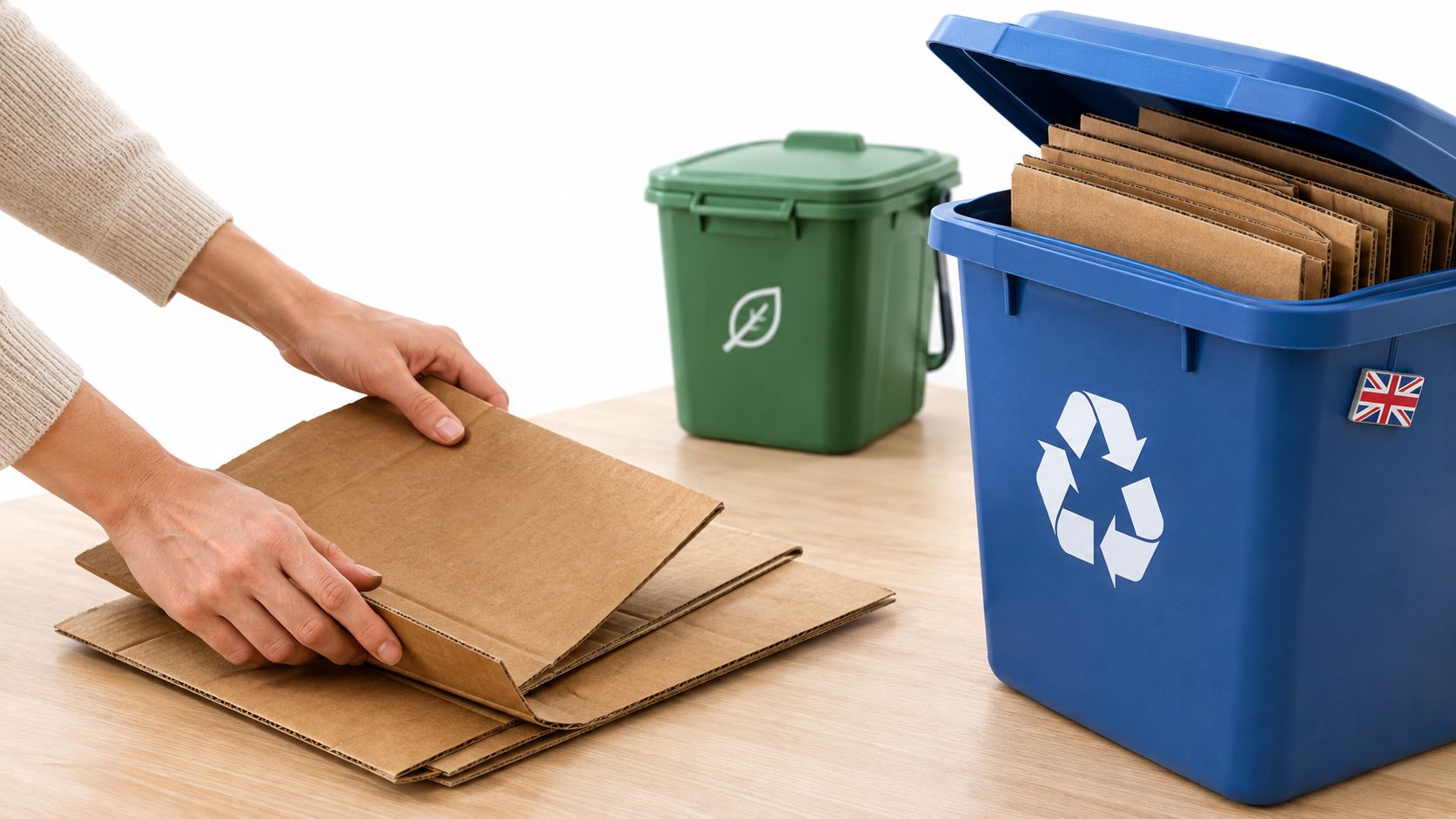
- Prepared: large boxes are flattened, and removable tape or inserts are taken off where practical.
- Locally accepted: the council or trade contractor accepts that format in its collection stream.
WRAP's UK recycling guidance says paper and cardboard contaminated with food, grease, paint or dirt shouldn't go into recycling, and recommends removing plastic inserts, polystyrene and packing tape (WRAP recycling guidelines).
Practical rule: Clean, dry and empty cardboard is normally recyclable. Saturated, greasy or heavily mixed-material packaging needs a different disposal decision.
The three issues that decide the outcome are contamination, coatings and collection rules. A box can pass the first two tests and still need to be flattened, separated or placed in a particular bin because each council and contractor operates its own acceptance requirements.
How Cardboard Recycling Actually Works in the UK
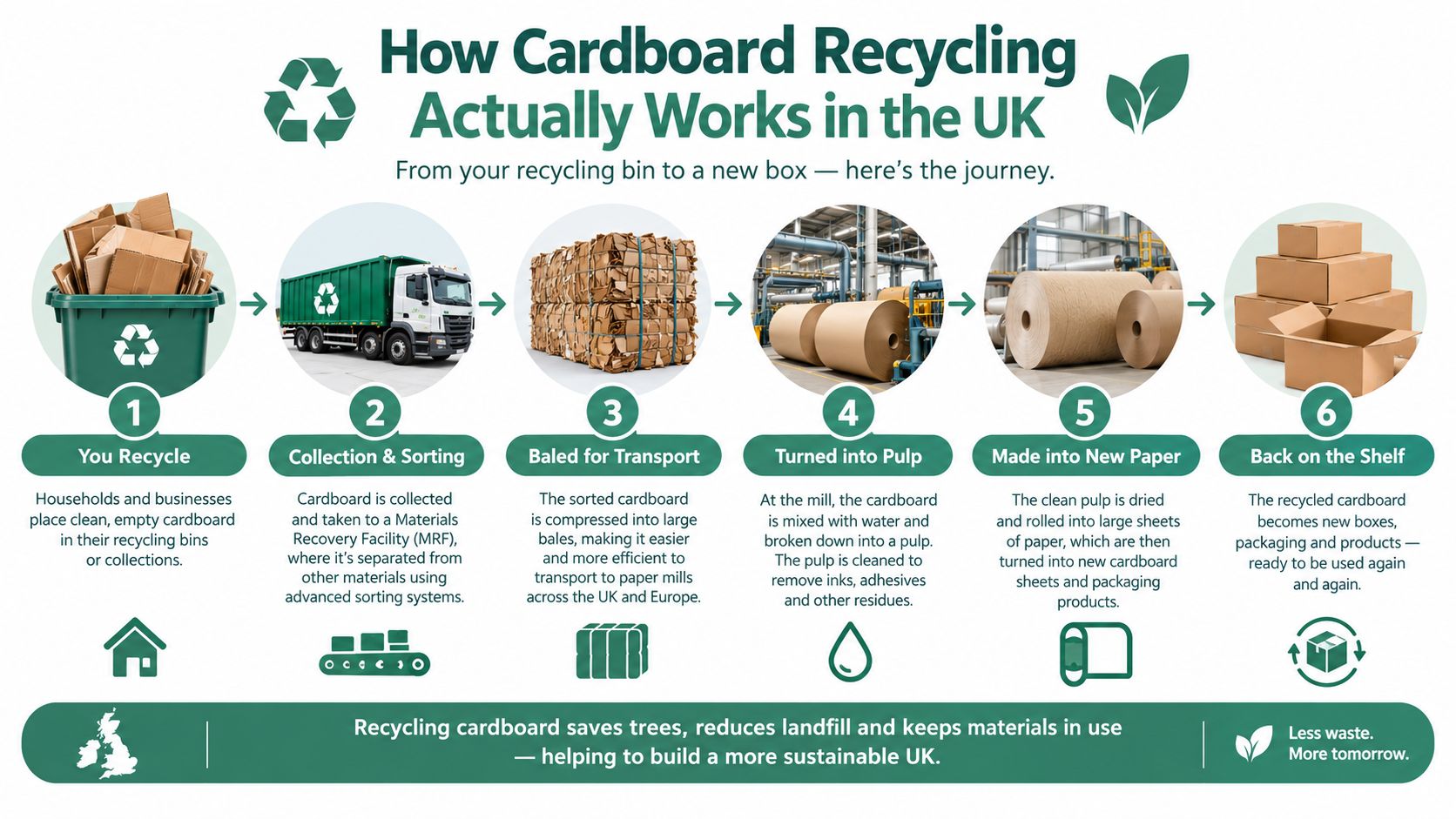
A cardboard box doesn't travel straight from a kerbside bin to a new box. It passes through a chain of collection, sorting, preparation and pulping, and each stage can affect the quality of the recovered fibre.
From collection to a sorted bale
- Collection: A refuse collection vehicle or trade-waste vehicle collects household recycling, commercial cardboard or a separated fibre stream.
- Transfer: Loads move to a transfer station or a Materials Recovery Facility (MRF). Some clean commercial cardboard goes directly to a paper mill or specialist merchant.
- Sorting: Star screens and other mechanical equipment separate flat paper and card from containers and residual material. Optical sorters can identify material types, although clean source separation reduces the burden on the plant.
- Quality control: Operators and equipment remove obvious contamination. Staples and ordinary printing inks aren't the same problem as a greasy food stain, but excessive tape, plastic and wet material reduce bale quality.
- Baling: Sorted cardboard is compressed into dense bales for storage and transport.
- Pulping: A paper mill mixes recovered corrugated fibre with water and processing chemicals. Screens and cleaning stages remove staples, tape, inks and other unwanted material before the pulp is formed into new paper products.
The mill then turns the cleaned fibre into brown paper, fluting or linerboard for further packaging manufacture. UK mills and packaging groups such as Saica, Smurfit Kappa and DS Smith are important destinations for domestic old corrugated containers, commonly abbreviated to OCC.
What the box becomes
A product such as Kraft Pillow Boxes, made from recyclable 350gsm card, illustrates the value of choosing a straightforward fibre format. Manilla kraft pillow boxes with or without windows can suit retail, gifting and small products, but any window or other attached component still needs to be considered separately during disposal.
The strongest part of the system is its potential to keep fibre in circulation. A recovered box can become new linerboard or another paper product, then enter packaging manufacture again. Industry descriptions often present this as a fast closed loop, but the actual timing depends on collection, transport, mill capacity and product specifications, so businesses should focus on clean feedstock and reliable segregation, not a fixed turnaround promise.
What Makes Cardboard Unrecyclable in Practice
A box usually fails because of what has happened to it after manufacture. The board grade may be perfectly suitable for recycling, yet the load can be downgraded when moisture, food, plastic or hazardous residues enter the stream.
Four contamination categories
Moisture is the first warning sign. Rain-soaked boxes, leaking parcels and cardboard stored directly on a warehouse floor lose fibre strength and can develop mould while awaiting collection. A damp box may also contaminate neighbouring material inside a bin, cage or bale.
Food and grease create the familiar pizza-box problem. Plain, empty pizza card can enter a paper-and-card stream, but cheese, sauce and oily patches can bind to the fibres and spoil the material. Council acceptance varies, so a lightly marked lid may be treated differently from a box with saturated food residue.
Attached non-paper components include large plastic windows, bubble-wrap linings, polystyrene mouldings and excessive packing tape. A small amount of ordinary tape may be dealt with during processing, but removing loose and substantial pieces at the point of unpacking gives the material a better chance.
Chemical contamination is a separate risk. Packaging stained with industrial oil, paint, solvents or other residues shouldn't be placed with ordinary cardboard. It may require a controlled waste route rather than household or general commercial recycling.
| Condition | Recyclable? | Disposal Route |
|---|---|---|
| Clean, dry corrugated box | Usually yes | Flatten and place in the accepted paper-and-card collection |
| Dry box with modest removable tape | Usually yes, after preparation | Remove tape where practical, then recycle |
| Food-stained or greasy board | Often no | Follow council guidance, or use the appropriate residual or food-waste route |
| Wet, mouldy or soaked cardboard | Usually no | Residual waste, unless the contractor provides another approved route |
| Box with plastic window, polystyrene or bubble lining | Fibre may be recyclable after separation | Remove components and route each material correctly |
| Paint, oil or solvent-stained packaging | No for ordinary recycling | Use the relevant controlled commercial waste route |
| Plastic-laminated or waxed board | Depends on construction and local capability | Check the specification and contractor acceptance |
The practical test is simple: if the box is dry, holds its shape and shows no visible food or oil staining through the outer ply, it is likely to be accepted. If it is saturated, greasy or visibly laminated, it shouldn't be treated as ordinary cardboard recycling.
Compostable Cardboard or Recyclable Cardboard
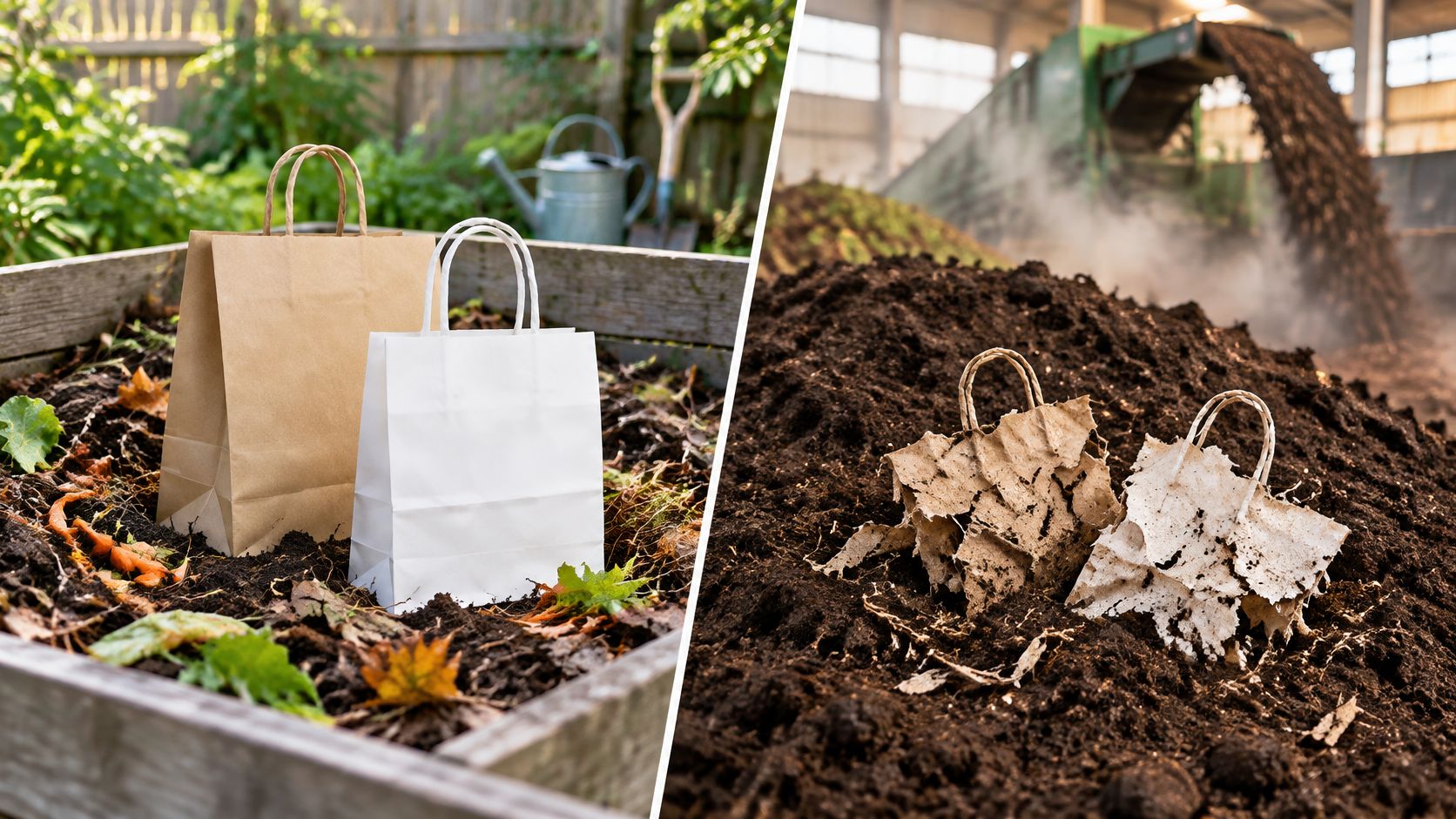
Recycling and composting solve different problems. Recycling aims to recover usable fibre, while composting breaks suitable organic material down under managed biological conditions. Plain corrugated board and uncoated kraft card can break down in a composting environment, but that doesn't automatically make composting the preferred route.
For clean, uncoated cardboard, recycling normally preserves the material's fibre value. It should go into the paper-and-card stream where the local authority or commercial contractor accepts it. Composting becomes more relevant when the board is food-soiled and the local food-waste or composting service specifically accepts that material.
Compostable doesn't mean universally compostable
A compostable mailer may require industrial composting conditions, rather than a garden compost heap. Buyers should look for recognised specifications such as TÜV OK Compost or EN 13432, then confirm that the local waste contractor accepts the item. A “biodegradable” label is weaker. It indicates that material may break down through biological action, but doesn't prove that it will compost within the required conditions or timeframe.
Compostable packaging also shouldn't be placed in paper recycling. Its fibres or plant-based components may not behave like conventional paper in a mill, and any film, adhesive or coating can become a contaminant. The disposal route must match the certification and the collection service, not merely the marketing language on the pack.
Choosing for a product line
A business choosing between recycled-content boxes and compostable alternatives should start with the actual waste route available to customers. A clean recycled-content carton can be a sensible choice for a product that remains dry and enters a well-established cardboard collection system. A certified compostable format may suit food-soiled applications, but only where customers and waste contractors have access to the relevant composting route.
The practical decision sequence is:
- Clean fibre: specify recyclable, uncoated board where protection requirements allow.
- Food contact: confirm whether grease resistance changes the end-of-life route.
- Compostable format: verify certification and local acceptance before making the claim.
- Customer instructions: explain which component belongs in which stream.
Businesses comparing claims and materials can also consult this guide to compostable mailing bag myths, particularly where “biodegradable” and “compostable” are being used interchangeably.
UK Kerbside Rules and the Simpler Recycling Shift
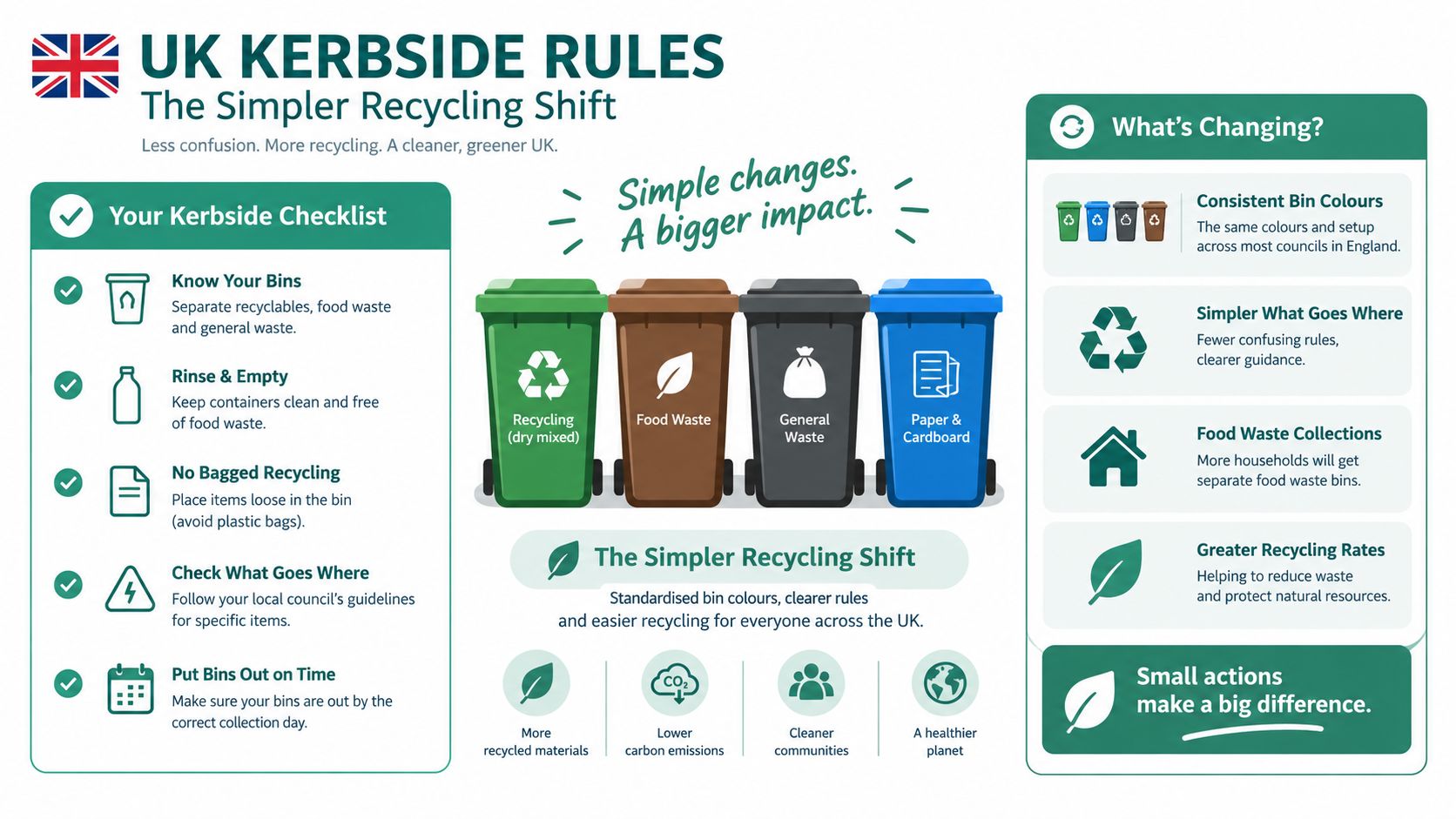
A recyclable box still needs to fit the collection system. Councils commonly ask residents to flatten large boxes so they fit inside the recycling container, keep the material dry and remove loose tape, plastic and polystyrene. The Isle of Wight Council advises households to flatten and bundle large extra cardboard, while Telford and Winchester tell residents to rip, cut or flatten oversized pieces before collection (Isle of Wight cardboard guidance).
That isn't merely a tidiness preference. An unflattened carton can fill a bin quickly, block the lid or prevent the collection crew from taking the container. The same preparation matters at workplaces, where a cage containing air-filled boxes costs space and can make collection less efficient.
What changes in England
From 31 March 2026, England's Simpler Recycling rules require waste collectors, by default, to collect paper and card separately from other dry recyclables from households. Local authorities may still use a combined dry-recycling arrangement in certain circumstances, so residents should check the local service rather than assume a particular bin colour (Simpler Recycling household guidance).
The policy also separates fibre-based food and drinks cartons, such as Tetra Pak-style packs, from ordinary paper and card. Those composite cartons belong in the plastic stream under the stated household guidance, not with corrugated boxes or paperboard.
The grey areas
Pizza boxes expose the limits of a simple yes-or-no rule. Some councils accept a box once clean sections have been torn away, while others give more restrictive instructions for any food-soiled packaging. The safest approach is to remove heavily contaminated sections only where the council permits it, and to follow the local service's published guidance.
Businesses should audit their packaging specifications before the separate-stream model takes effect. That means identifying waxed food boxes, laminated mailers, composite cartons and formats that regularly arrive wet or greasy, then confirming the accepted route with the trade-waste contractor.
Paper and card are particularly vulnerable to contamination in co-collected dry recycling, which is why the government guidance gives separate collection a prominent role. The exact operational answer still depends on the authority, contractor and sorting arrangement serving the premises.
Coatings, Laminates, and Mixed-Material Packs
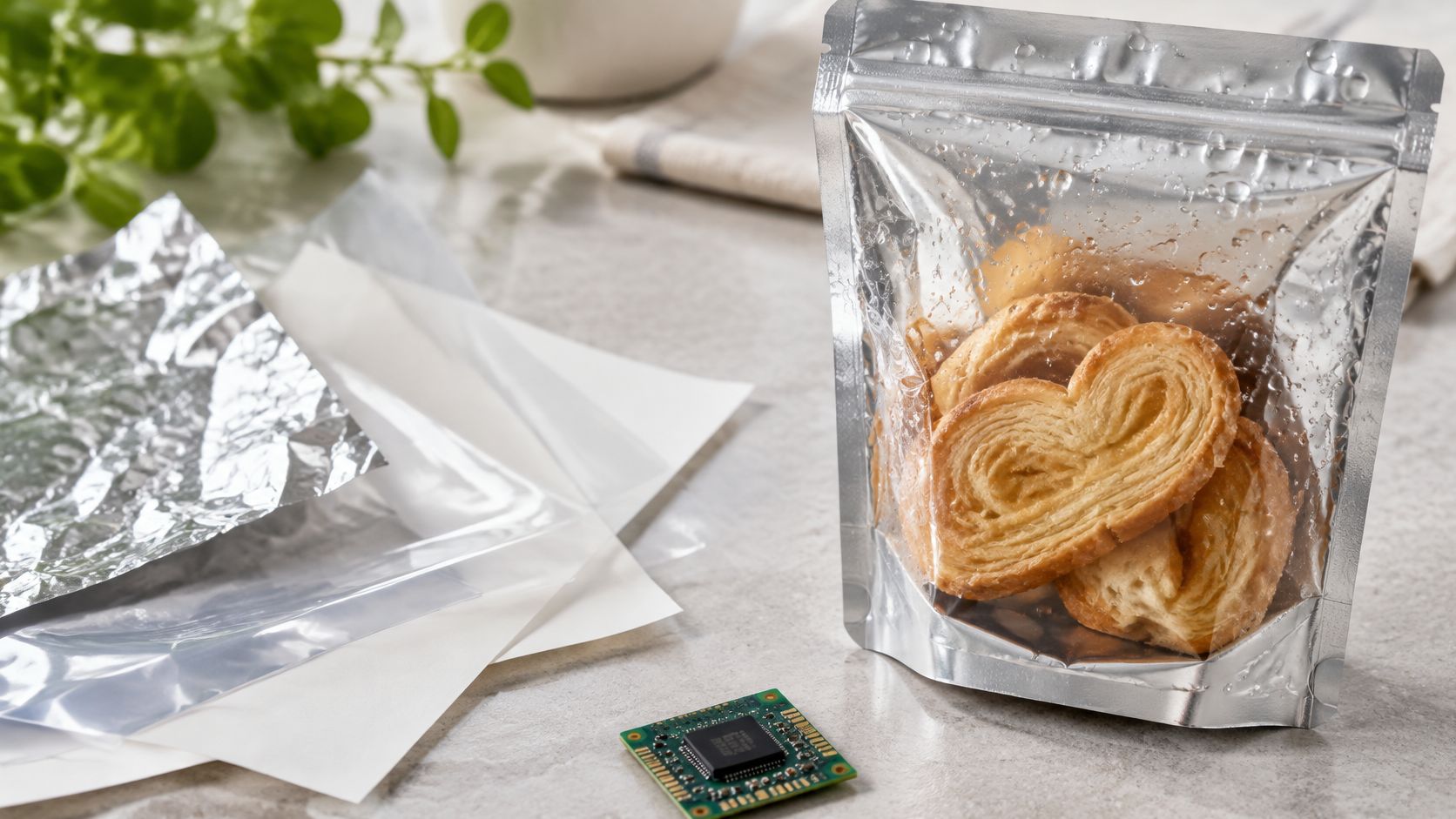
Cardboard becomes difficult to recycle when the fibre is carrying too much of something else. A thin print layer is normal. A plastic film, foil barrier, wax coating or silicone release surface can change how the item behaves in a hydrapulper and whether the resulting material is usable.
UK recyclability assessments flag packaging with more than 10% non-paper content as amber and more than 15% as red (UK Parliament packaging recycling figures). Those thresholds are useful design signals, not permission to add a particular amount of plastic. A supplier's assessment should consider the whole pack, its components and the capability of the intended recovery system.
Common problem materials
- Polyethylene and PLA linings: These can appear in takeaway cups and food-service board. Some specialist systems can separate them, but ordinary paper recycling shouldn't be assumed.
- Aluminium foil layers: Aseptic cartons combine fibre with polymers and foil. Their composite construction means they follow a different route from corrugated board.
- Wax coatings: Produce boxes and specialist food packs may resist moisture, but that same coating can interfere with fibre recovery.
- Silicone release surfaces: Baking sheets and release papers aren't equivalent to plain kraft card.
- Plastic windows: Envelope-style mailers and presentation boxes may contain a clear film that needs removal or specialist processing.
In the hydrapulper, clean fibre disperses into pulp. Non-paper layers may separate as larger pieces, fragment into small particles or remain attached to fibres. When contamination reaches the wrong part of the process, the material can lower bale quality and increase reject disposal.
Questions for packaging suppliers
A buyer should ask for more than a recycling logo:
- What is the coating or laminate material?
- What is the coating weight and how much of the pack is non-paper?
- Is the film fully removable by standard paper-mill equipment?
- Does the supplier have evidence for the specific recycling claim?
- Are windows, adhesives, inks and barrier layers included in the assessment?
- Does the claim apply to UK collection and reprocessing systems?
Extended Producer Responsibility for packaging increases the importance of these answers because producers need better visibility of material composition and end-of-life performance. For broader context on wisdom for low-waste packaging choices, businesses can compare material simplicity, reuse potential and disposal infrastructure rather than judging a pack by appearance alone.
Food businesses should also review guidance on sustainable packaging for food, especially where grease resistance and recyclability pull specifications in different directions.
| Coating or Laminate | Typical Non-Paper Content | Recycling Outcome |
|---|---|---|
| Plain print on corrugated board | Low, surface treatment only | Generally suitable for cardboard recycling when clean and dry |
| Light functional coating | Must be confirmed by supplier | May be accepted, depending on mill capability |
| Plastic-lined board | Can move towards amber classification | Check specialist acceptance and recyclability evidence |
| Foil and polymer composite | Substantial mixed material | Keep out of ordinary paper-and-card recycling |
| Waxed or grease-resistant board | Variable | Often requires specific assessment |
| Plastic window or film | Additional non-paper component | Remove where practical or use a route that accepts the complete pack |
A Practical Disposal Playbook for UK Businesses
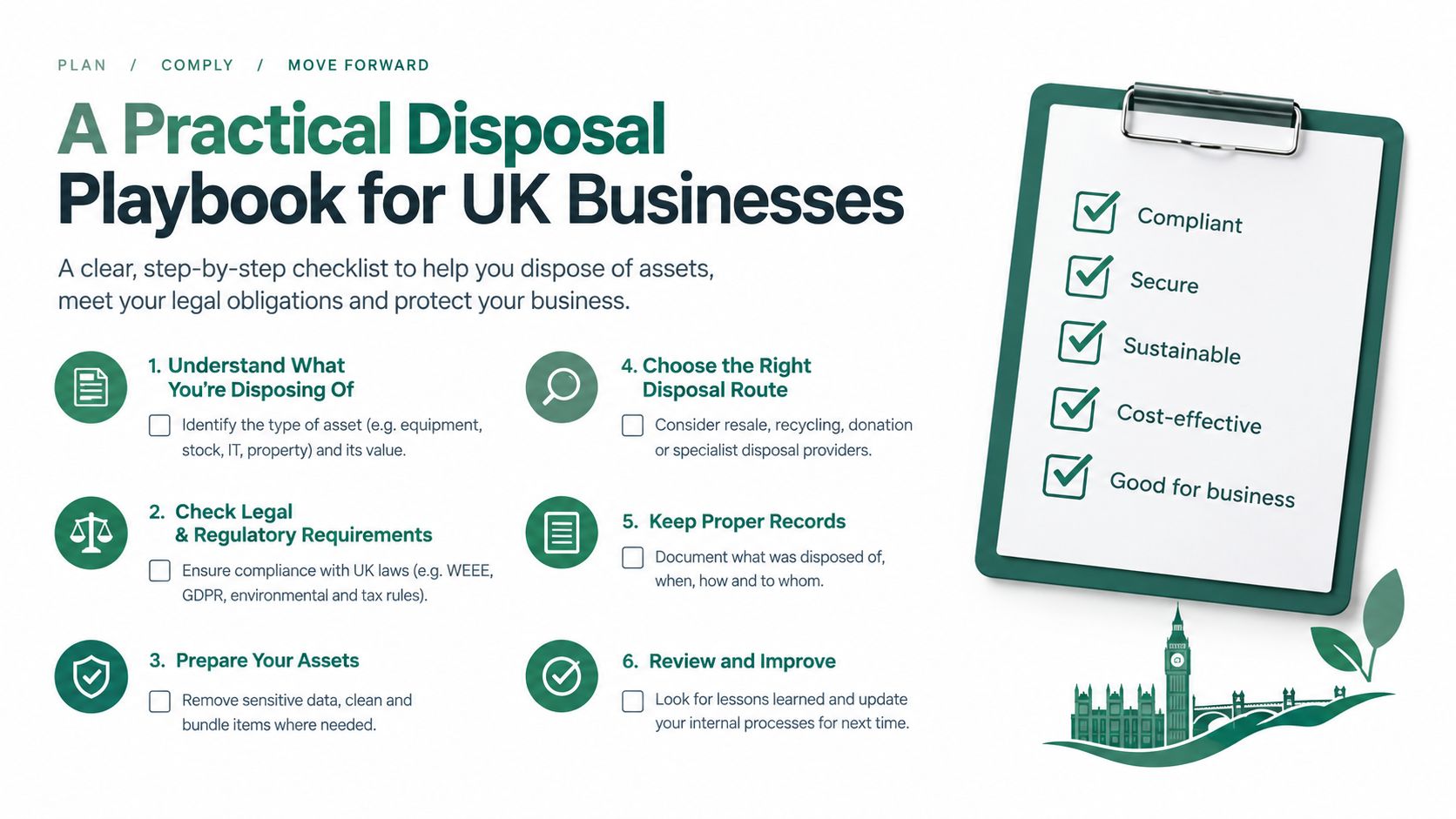
A warehouse, fulfilment centre or office can improve cardboard recovery without redesigning every process at once. The strongest results come from controlling the material at the point where staff unpack it, rather than trying to rescue a contaminated bale later.
Six operating steps
1. Separate at source. Create a clearly marked corrugated-cardboard zone near unpacking areas. Use separate cages for kraft, greyboard and composite cartons where those materials follow different routes, and make the signage match the separate paper-and-card approach coming into force in England from March 2026.
2. Control contamination. Give staff a short briefing on wet boxes, food-stained board, plastic liners and polystyrene. A clean carton shouldn't be placed into the same cage as a leaking or greasy one, because contamination spreads during storage and transport.
3. Challenge the specification. Procurement teams should ask suppliers for FSC-certified, uncoated corrugated board and should consider a minimum 70% recycled content where feasible, while checking that the resulting strength and moisture performance suit the product. The target should be documented as a purchasing preference, not treated as proof that every finished pack is recyclable.
4. Choose baling or loose collection. A baler can make sense where a site produces a steady, concentrated cardboard stream. Smaller premises may find loose collection more practical, particularly when equipment, floor space and safe operating procedures would outweigh the handling benefit.
5. Keep the evidence chain. Commercial waste movements should be supported by waste transfer notes. Packaging producers and businesses with relevant obligations may also need to retain Packaging Waste Recovery Note or Packaging Waste Export Recovery Note evidence, commonly abbreviated to PRN and PERN, alongside their Extended Producer Responsibility reporting records.
6. Capture operational data. A monthly waste audit can record material type, visible contamination, collection method and rejected loads. The useful outcome isn't a decorative dashboard. It is a procurement change, a revised staff instruction or a supplier conversation based on what the site throws away.
A checklist for the next shift
- Mark the fibre zones: Separate corrugated board from composite cartons and residual waste.
- Protect storage: Keep cardboard under cover and off wet floors.
- Remove obvious attachments: Take off polystyrene, plastic inserts and unnecessary tape.
- Brief agency and temporary staff: Put the decision rules beside the unpacking station.
- Review rejected loads: Ask the contractor what caused rejection and change the source process.
- Specify simple packs: Use the least complex board structure that protects the product.
Businesses reviewing their supply options can compare recyclable cardboard boxes with other formats, then match the box grade and construction to the intended collection route. Packaging Panda supplies recyclable cardboard boxes, mailing and protective packaging, including made-to-order packaging options for UK businesses.
For businesses that want to reduce contamination at the source, Packaging Panda supplies recyclable cardboard boxes, mailing materials and protective packaging for dispatch and fulfilment operations. Review the available formats, identify where mixed materials are creating disposal problems, and choose packaging that fits both the product and the UK recycling route.