Recyclable Cardboard Boxes: The UK Business Guide
A UK retailer can pack a full day's orders, stack the parcels by the loading bay, and still face the same customer complaint by evening: too much plastic, too much void space, and too much packaging to dispose of. The problem often starts with a rushed box specification, not with the material itself. A carton that's too large needs extra fill, while one that's too weak can arrive crushed and create avoidable returns.
Recyclable cardboard boxes give businesses a practical route towards lower-plastic fulfilment, but the switch works best when procurement teams treat it as an operational decision. Board grade, box dimensions, supplier reliability, collection arrangements and Extended Producer Responsibility (EPR) costs all affect the result. The right carton protects the product, fits the carrier network and enters an established UK recycling stream without relying on vague environmental language.
Table of Contents
- Why UK Businesses Are Switching to Recyclable Cardboard
- Understanding Board Grades and Material Specifications
- Recyclability Claims and UK Certification Standards
- Matching Box Types to Your Business Use Case
- Getting Sizing and Strength Right First Time
- Cost Analysis and Extended Producer Responsibility Fees
- Buying Guide for UK Wholesale Suppliers
Why UK Businesses Are Switching to Recyclable Cardboard
A small e-commerce operation may begin with a simple change. Customers mention plastic waste in reviews, packing staff spend time cutting down oversized cartons, and finance teams see the cost of tape, void fill and damaged deliveries rising together. Replacing plastic-heavy packaging with recyclable cardboard can address several of those pressures, but only if the box is designed for the actual product and dispatch process.
The commercial case extends beyond customer perception. The UK's packaging system already has a substantial paper-and-cardboard recovery route, so fibre-based packaging isn't dependent on a niche collection service. In 2024, UK official waste statistics recorded 5,479 thousand tonnes of paper and cardboard packaging waste arising and 4,069 thousand tonnes recycled, producing a 74.3% recycling rate under the main government methodology. The same dataset reports an alternative 2024 methodology of 86.4%, based on 4,709 thousand tonnes arising and 4,069 thousand tonnes recycled. These figures are set out in the UK government's official waste statistics.
That infrastructure matters to a wholesaler or fulfilment manager. A box can only be called a practical recyclable choice if customers and waste contractors can place it into a collection route that mills and reprocessors use. Paper and cardboard packaging is one of the strongest-performing packaging streams in the UK, and it sits above the broader packaging average under both reported methodologies.
Regulation is changing the packaging calculation
EPR makes packaging selection a finance and compliance issue as well as a brand issue. Packaging producers and businesses that place packaged goods on the UK market need to understand the data and fee obligations relevant to their activity. Fibre-based packaging is becoming attractive partly because policy recognises its established recovery performance and gives it a lower base fee than plastic.
Consumer expectations still matter, but they shouldn't dictate technical decisions alone. A thin mailer may look sustainable while offering poor protection for a fragile item. A properly specified corrugated carton can reduce breakage, minimise unnecessary void fill and give the customer clear end-of-life instructions. Practical guidance on the wider meaning of sustainable packaging is available in this guide to sustainable packaging.
Practical rule: Choose the lightest board that survives the handling environment, not simply the lightest board available.
A switch to recyclable cardboard therefore works best as a controlled packaging redesign. The retailer should map the product range, test representative parcels, review carrier constraints and calculate total cost before changing every carton. That approach protects the environmental benefit from being undermined by oversizing, repeat deliveries or unnecessary material use.
Understanding Board Grades and Material Specifications
A carton that survives warehouse stacking may be excessive for a lightweight online order. Board selection affects protection, storage space, shipping weight and the material cost attached to each dispatch. Procurement teams do not need to become packaging engineers, but they should understand construction, flute profile, board weight and fibre content before placing a wholesale order.
Start with wall construction
Single-wall corrugated board contains one fluted layer between two liners. It suits lighter products, routine parcel handling and operations where storage efficiency matters. Cosmetics, clothing, books and many small retail items often fit this specification, provided the contents do not create high point loads or demand exceptional stacking strength.
Double-wall board contains two fluted layers and an additional liner. Its deeper structure improves resistance to compression, punctures and rough handling. Heavy homeware, multiple packed items, dense products and cartons destined for palletised storage may justify the extra material. Double-wall board also raises cost, storage footprint and shipping weight, so calculate the benefit where the product itself is light.
Read the flute profile
The flute is the formed paper layer inside corrugated board. B-flute provides a relatively compact profile, useful when print quality, internal space and resistance to everyday crushing must be balanced. BC-flute combines two flute profiles in a double-wall structure, creating stronger board for heavier or more vulnerable loads.
Grammage measures the mass of paper per area, but it does not provide a complete strength specification. Boards with similar grammage can perform differently because liner quality, recycled fibre content, flute geometry, moisture and manufacturing consistency affect crush resistance. Read the supplier datasheet alongside edge crush test results, or an equivalent board performance measure, where shipments face stacking or compression.
Select fibre content for the job
Recycled-content board works well for many general shipping applications. Virgin fibre can suit products requiring a higher strength-to-weight ratio, a particular appearance or a specific food-contact requirement. Food businesses should request the relevant declaration of compliance from the supplier rather than assuming that brown cardboard is suitable for direct contact.
The common purchasing error is over-specification. A luxury cosmetics brand may need a clean, well-finished single-wall mailer with a fitted insert, while a homeware seller shipping dense ceramic products may need stronger construction and internal separation. The outer box can look modest and still require substantial internal protection.
Choose the lightest board that survives the handling environment, but the lightest board that survives the handling environment.
For businesses comparing Cardboard Boxes, ask whether single-wall and double-wall options are available, whether mailing and storage formats can match the product range, and whether the supplier explains board performance clearly. A datasheet and sample provide a sounder basis for selection than a broad “eco” label.
Recyclability Claims and UK Certification Standards
A carton's environmental claim needs checking against its full specification. Recyclable describes the available recovery route after use, while made from recycled content describes the fibre used during manufacture. Review the board, inks, coatings, adhesives and attached components together, because any of these can affect sorting and reprocessing.
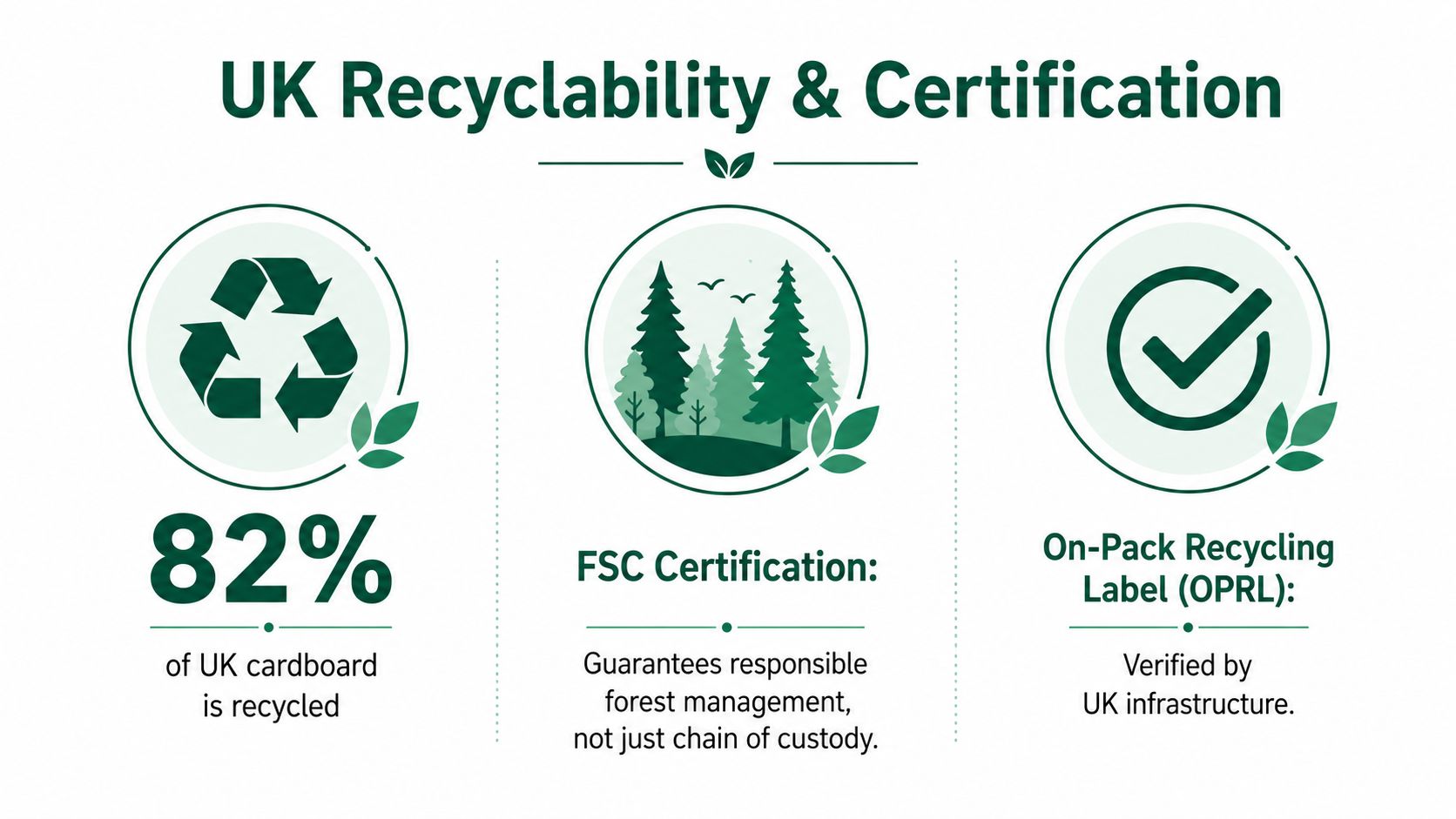
As noted above, paper and cardboard packaging achieved a 74.3% recycling rate in 2024. The stronger procurement question is whether your specific carton specification can support that recovery route in practice. The official UK waste dataset provides the methodology behind the figure. Suppliers should state which material is being assessed and avoid presenting a general paper recycling rate as proof that every finished box will be recovered.
Check what certification actually covers
FSC certification covers responsibly managed forest sources and chain of custody through the supply chain. It does not confirm that every finished box will suit every local collection system. Ask for the supplier's certificate scope and the product's chain-of-custody status, then assess the box construction and end-of-life route separately.
Use these checks during specification and supplier review:
- Material composition: Is the carton predominantly paper-based? Does it include plastic film, laminated panels or fittings that are difficult to separate?
- Printing and finishing: Are the inks, coatings and adhesives suitable for the declared recycling route?
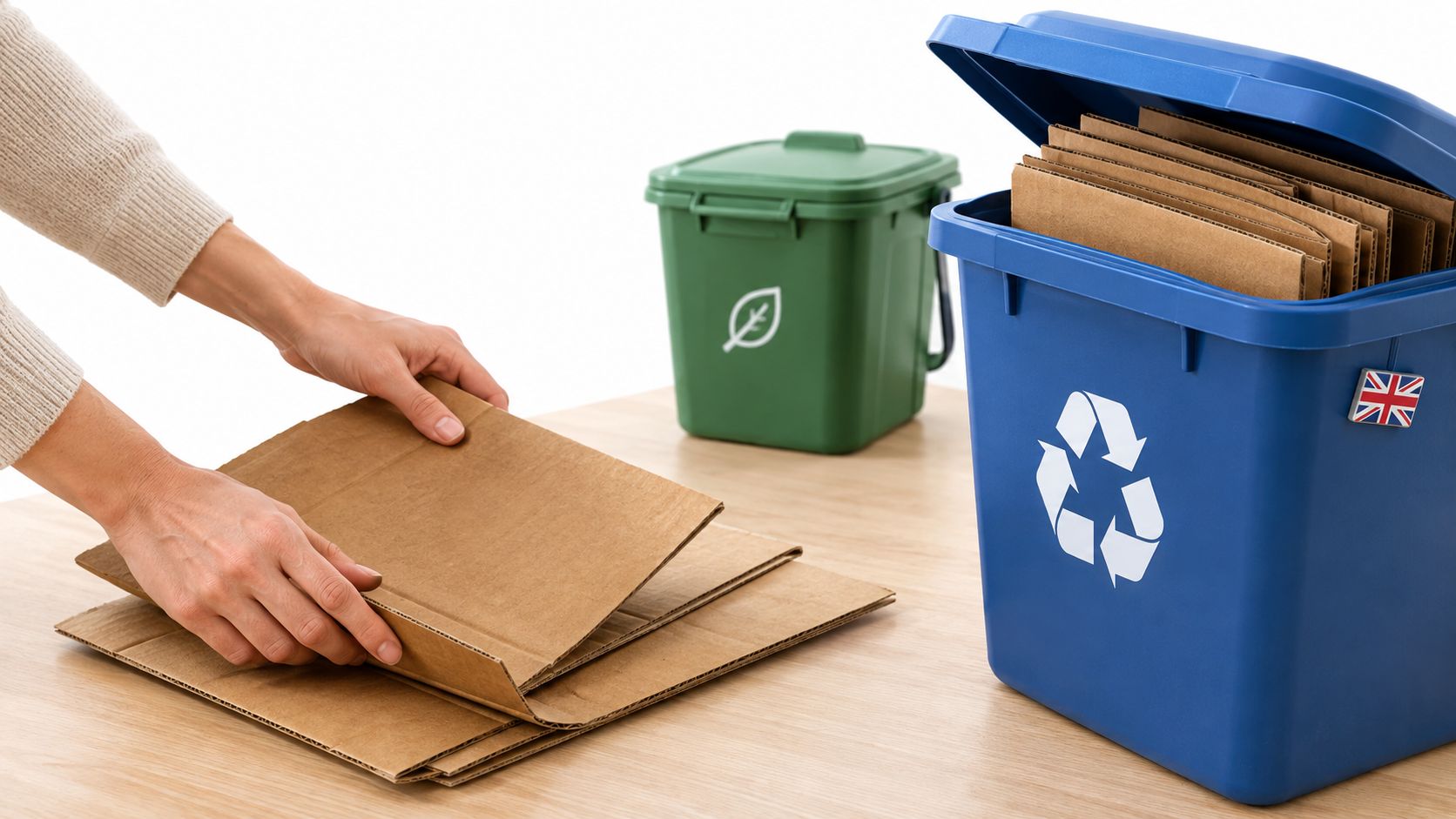
- Customer instructions: Can customers remove non-paper parts and keep the box clean and dry where local guidance requires this?
- Evidence: Will the supplier provide a technical specification, certification details and precise claim wording?
Treat policy direction as a procurement signal
Defra's EPR consultation proposed a paper and card packaging recycling target of 85% by 2030, up from a 2024 target of 76%. This is a proposed policy target, not a guarantee of future collection or reprocessing performance. The Defra EPR consultation document sets out that policy context.
For UK businesses, the practical test is straightforward: identify the material, confirm the recovery route, and give customers accurate disposal instructions. Keep supplier evidence with the packaging specification so procurement and EPR reviews can trace the claim back to the actual box.
Matching Box Types to Your Business Use Case
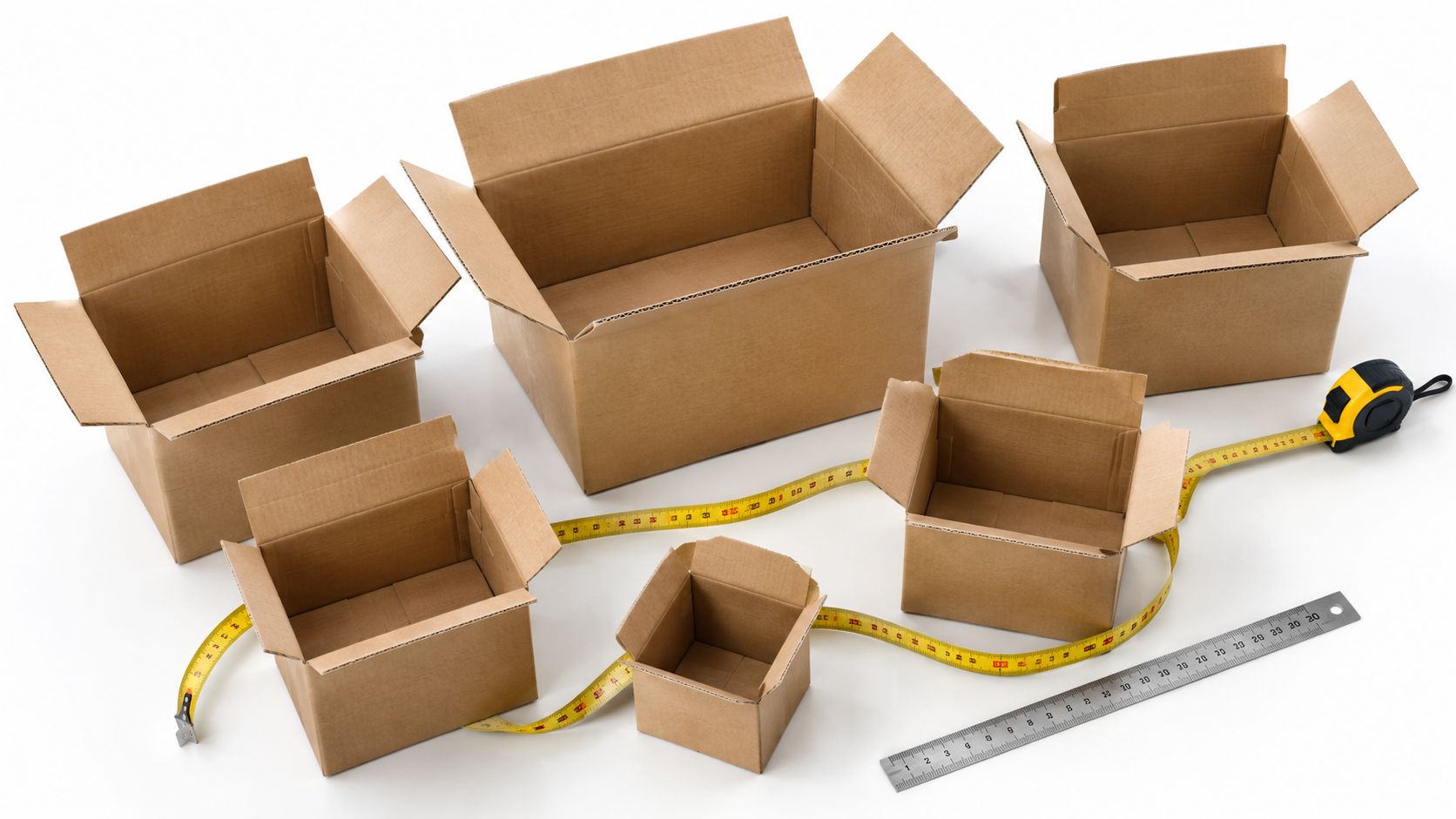
Selecting the right box format comes down to three factors: the product, the dispatch route and the presentation requirement. A standard carton can suit a warehouse picking line, while a single shirt may need only a compact mailer. Glassware requires separation and cushioning that a postal box alone may not provide.
Compare the working formats
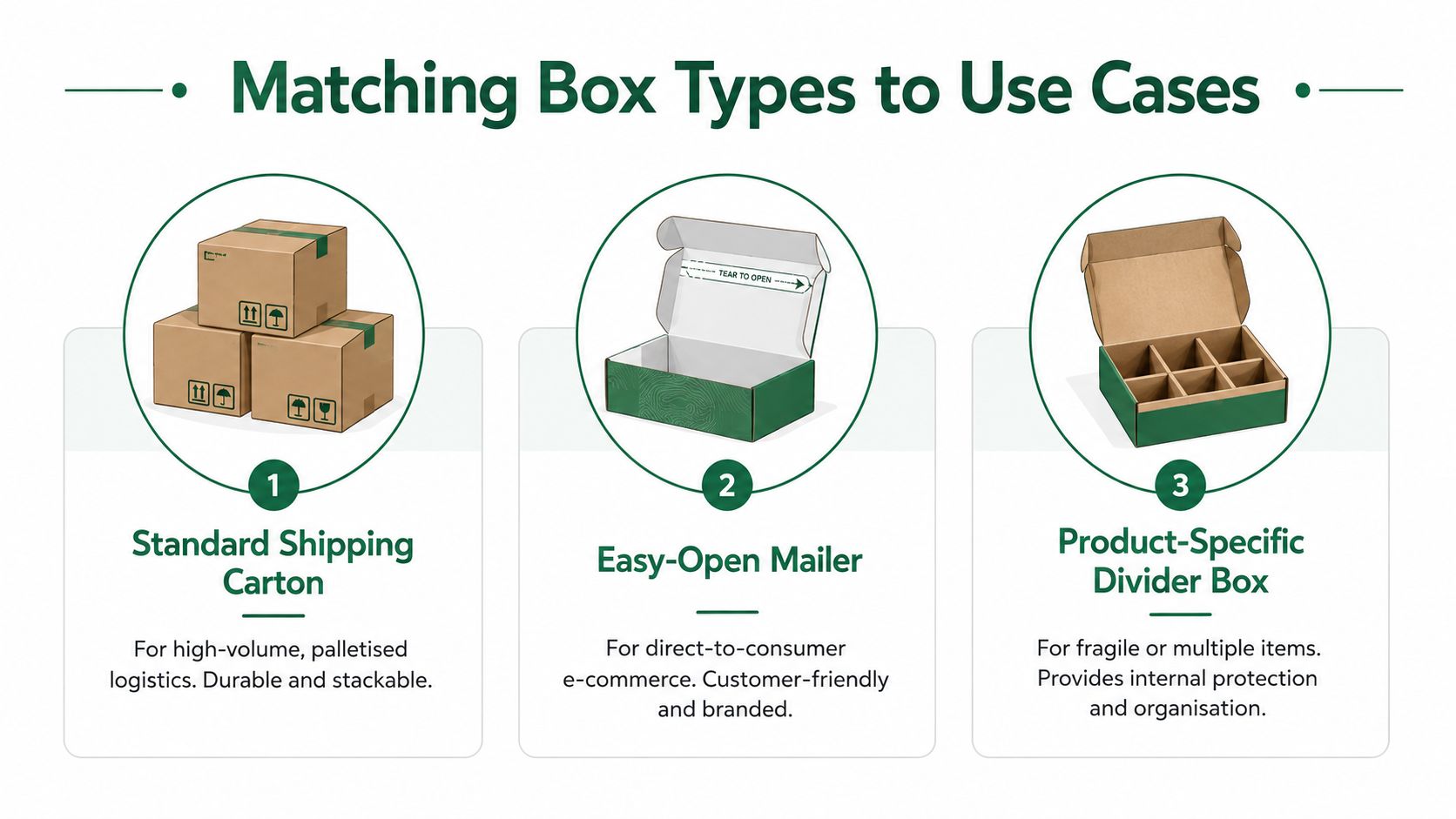
Standard shipping cartons suit high-volume dispatch, particularly where cartons are stacked, labelled and moved through palletised logistics. Their regular shape supports storage and warehouse handling. Single-wall board can suit light goods, while dense or fragile contents may need a higher board grade or internal protection. For businesses reviewing EPR costs, using the smallest suitable carton also limits the amount of paper and card placed on the market.
Postal boxes and easy-open mailers work well for direct-to-consumer orders. They can remove the need for separate outer packaging and make returns simpler when the closure is designed for reuse. Accurate sizing determines whether that benefit holds. Too much internal movement may require void fill, adding material and packing time.
Storage boxes need to match both the load and the stacking method. Lightweight archive material creates different demands from dense components. Check shelf dimensions, access clearance and whether the base can withstand repeated handling before ordering a standard range.
Match specialist formats to presentation and protection
An independent bakery may need a cake box that keeps the product level and supports counter presentation. It should protect decoration without leaving enough headroom for movement. A hat retailer may prefer a shaped presentation format where appearance and storage matter alongside transit protection. A marketplace seller shipping mixed small products may reduce waste and packing time with several right-sized mailer formats instead of one large carton for every order.
Divider boxes suit multi-item orders where products could strike one another during handling. Inserts add board, assembly time and labour, but they can control movement more effectively than upgrading the outer carton.
Use this five-step check before approving a format:
- Place the product in its intended orientation.
- Add protection around vulnerable faces and edges.
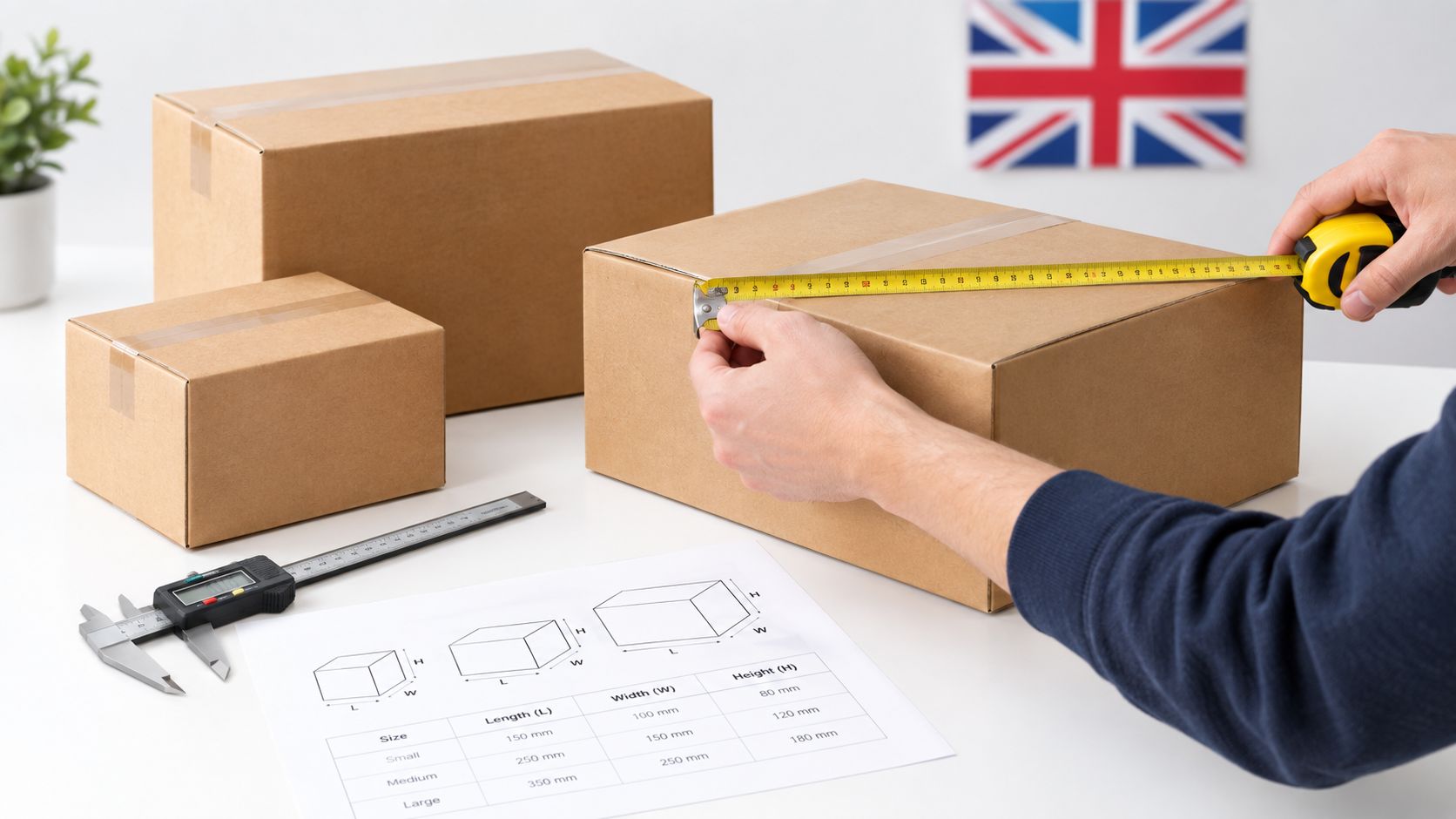
- Measure the complete pack-out, including the product, cushioning and inserts.
- Confirm that the closed carton fits the carrier's accepted parcel profile.
- Test the finished pack with its actual closure, label and handling method.
Businesses shipping heavier goods can compare double-wall cardboard boxes, then confirm suitability with samples. A stronger carton may reduce damage, but it also uses more board and can increase purchase and EPR-related costs. Right-sizing usually gives a better operational result than selecting the strongest carton in the catalogue.
Getting Sizing and Strength Right First Time
A box specification should begin with the packed product, not the shelf label. Measure length, width and height at the widest points, including handles, lids, protrusions and any protective component that must remain in place. Then add the clearance needed for the chosen cushioning method, while keeping the allowance consistent on opposite sides.
Use a repeatable sizing method
For a product requiring light paper cushioning, the internal dimensions should allow the material to surround the vulnerable faces without forcing the carton closed. For a fragile item, the allowance may need to account for edge protection and separation from the outer wall. A carton that only fits when the flaps bow upwards is already under-specified.
The outer dimensions matter to carriers as well as to the packing bench. Excess space increases material consumption and can affect carriage calculations where parcel pricing reflects dimensional size. The practical response isn't to compress the product protection. It's to test a smaller carton or a more efficient insert.
Packing bench test: Pack the heaviest common product, the most fragile common product and the awkward-shaped product before approving a standard carton range.
Specify strength for the handling environment
Edge crush testing assesses the resistance of corrugated board to compression along its edge. It provides a useful indicator for cartons that will be stacked, but it doesn't describe every transit risk. Corner damage, moisture, vibration, punctures and poor pallet alignment can all cause failure even when the board appears strong on paper.
A sensible in-house trial should include:
- Repeat pack-outs: Use the actual product mix, closure method, tape and labels.
- Compression observation: Stack filled cartons in the intended warehouse arrangement and look for bowed panels or collapsing corners.
- Movement checks: Shake or handle the parcel in ways that reflect the courier journey, then inspect product movement and board deformation.
- Post-test review: Record where the carton failed, whether the protection moved and whether the box was larger than necessary.
Heavy goods need a different answer from low-density goods. A large carton filled with lightweight textiles may need panel stiffness but not the same base strength as a compact carton filled with dense hardware. The supplier should receive the product weight, packing orientation, stacking conditions and transit route before recommending a grade.
Cost Analysis and Extended Producer Responsibility Fees
Unit price alone gives an incomplete view of recyclable cardboard. Finance teams should combine the carton price with tape, void fill, storage space, labour, carriage, damage-related returns and EPR obligations. A cheaper box that causes more movement or occupies more carrier space can cost more across the order cycle.
The UK EPR guidance lists a base fee of £196 per tonne for paper and card packaging, compared with £423 per tonne for plastic packaging. The figures appear in the UK government's EPR recycling obligations and waste disposal fee guidance.
| Material Type | EPR Base Fee Per Tonne | Relative Cost Position | Recycling Infrastructure Maturity |
|---|---|---|---|
| Paper and card | £196 | Lower than plastic under the listed base fees | Established UK recovery stream |
| Plastic | £423 | Higher than paper and card under the listed base fees | More dependent on material type and local route |
That fee difference doesn't mean every cardboard carton is cheaper at purchase. Bespoke print, heavier board, inserts and smaller production runs can raise the initial unit cost. The calculation improves when the design removes separate plastic packaging, reduces damage or allows several products to use one standard carton without excessive void space.
Model the purchasing pattern
Wholesale pricing generally becomes more efficient as order volume rises, but the supplier's actual price tiers should be checked rather than assumed. A business should compare the cost per packed order at its normal run rate, including carriage and storage, then test a higher-volume order only if the warehouse can hold the stock without creating a new operational problem.
A useful review of practical cost saving approaches for eCommerce can help finance and operations teams examine packaging alongside wider fulfilment costs. EPR should sit in the same model as waste handling and customer service, not in a separate sustainability spreadsheet.
For a detailed explanation of the obligations, businesses can also review this guide to Extended Producer Responsibility. The strongest financial case comes from measured total cost, not from claiming that recyclable cardboard is always the lowest-priced material.
Buying Guide for UK Wholesale Suppliers
Supplier selection determines whether a recyclable cardboard programme remains reliable during busy trading periods. A technically suitable carton is of limited use if replenishment arrives after the packing line has stopped, carriage charges appear late in checkout or board quality changes between deliveries.
Check the commercial terms first
Ask the supplier to state the minimum order quantity for standard and bespoke products. Custom print and custom dimensions may require a production run, while stocked cartons should have clearer replenishment terms. The supplier's delivery cutoff should be compared with the warehouse's dispatch window, especially where next-day delivery is part of the operating plan.
Free delivery thresholds can affect margin just as much as the carton price. A threshold of £150 is offered by Packaging Panda for free delivery according to its published service information, but each business should calculate whether consolidating orders to reach a threshold creates excessive stock or ties up working capital.
The supplier review should include:
- Lead times: Confirm standard delivery, bespoke production timing and peak-season contingencies.
- Stock visibility: Ask how availability is communicated and whether live order tracking is provided.
- Payment terms: Check whether a credit account can support cash flow without obscuring the true landed cost.
- Pricing structure: Request transparent volume tiers and clarify whether carriage, print setup or sampling fees sit outside the displayed price.
- Business identity: Verify published VAT details, the registered office address and clear contact information.
Validate the product, not just the website
Request samples from each board grade under consideration. The sample should be folded, sealed and packed with the actual product, because a flat sheet doesn't reveal whether the flaps close cleanly or whether the internal dimensions leave damaging movement.
Certification claims should be matched to documentation, including FSC or PEFC details where offered and any relevant packaging-label evidence. Technical support also matters. A capable supplier should help compare single-wall and double-wall options, explain flute choices and identify where a standard carton is adequate instead of pushing an unnecessarily heavy specification.
Packaging Panda supplies recyclable cardboard boxes, mailing and protective packaging, with options across different board grades and made-to-order packaging services. Businesses reviewing Packaging Panda can compare suitable box formats, check delivery and order-tracking services, and request a specification that fits the product rather than relying on a generic sustainability claim.