Types of Tape for Packaging and Fulfilment Guide

A dispatch bench can look organised and still lose time to the wrong roll of tape. A packer reaches for a familiar clear roll, finds that the carton is cold, applies the tape across a dusty flap and sends the parcel into a courier network. The seal lifts later, the order is repacked, and someone has to explain the delay to the customer.
Tape choice affects more than closure. It influences labour, presentation, transit security and packaging recovery. UK fulfilment teams also work across mixed carton sizes, unheated storage areas, courier depots and increasingly demanding sustainability assessments. A tape that works perfectly on a clean, room-temperature carton may fail on a heavier case or a cold dispatch surface.
This guide treats the types of tape as a warehouse catalogue rather than a list of material names. General polypropylene appears first, followed by gummed, paper, reinforced, filament, double-sided and tamper-evident options. Weight bands, temperature and application method are kept close to each profile, so a buyer or packer can move quickly to the relevant job. Teams managing wider operations for logistics can also use the same decision logic when standardising packing procedures across sites.
Table of Contents
- Introduction to Tape Types in UK Packaging and Fulfilment
- How This Reference Catalogue Is Organised
- Core Packing Tape Categories for Cartons and Parcels
- BOPP Packing Tape and Gummed Water Activated Tape Explained
- Paper Tape Twine Reinforced and Filament Tape Profiles
- Double Sided and Tamper Evident Security Tape Uses
- Choosing Tape by Carton Weight Temperature and Environment
- Application Tips Storage and Sustainability Considerations
- Quick Reference Table and Cross References for Tape Selection
Introduction to Tape Types in UK Packaging and Fulfilment
The practical question is rarely, “What tape exists?” It's usually, “Which roll will keep this carton closed through today's dispatch?” A standard e-commerce order may need only a clear polypropylene tape, while a heavier multi-item carton, a cold-stored parcel or a high-value shipment needs a different combination of backing and adhesive.
UK parcel operations commonly use 48 mm tape width, and standard polypropylene tape is often supplied in 48 mm x 66 m rolls designed for handheld tape guns, as shown by UK packaging tape supply guidance. That format fits many packing benches, but a familiar roll size doesn't guarantee a suitable seal. The carton board, load, temperature and handling route still determine whether the closure holds.
A failed seal creates several kinds of waste at once:
- Rework: Staff reopen or retape cartons that should already be in the outbound cage.
- Materials: A second layer of tape and replacement cartons increase consumption.
- Service disruption: Damaged or open parcels can lead to customer complaints and returns.
- Inconsistent packing: Different operators may compensate with excessive tape rather than correcting the specification.
The catalogue is arranged for fast lookup. BOPP and gummed tape cover the main carton-sealing decision. Paper, twine-reinforced and filament profiles address sustainability and strength. Double-sided and tamper-evident products handle mounting and security rather than replacing an outer-case sealer. The final selection table brings weight guidance and temperature notes together for use at the bench.
Practical rule: A tape specification should follow the carton and the route, not the other way round.
How This Reference Catalogue Is Organised
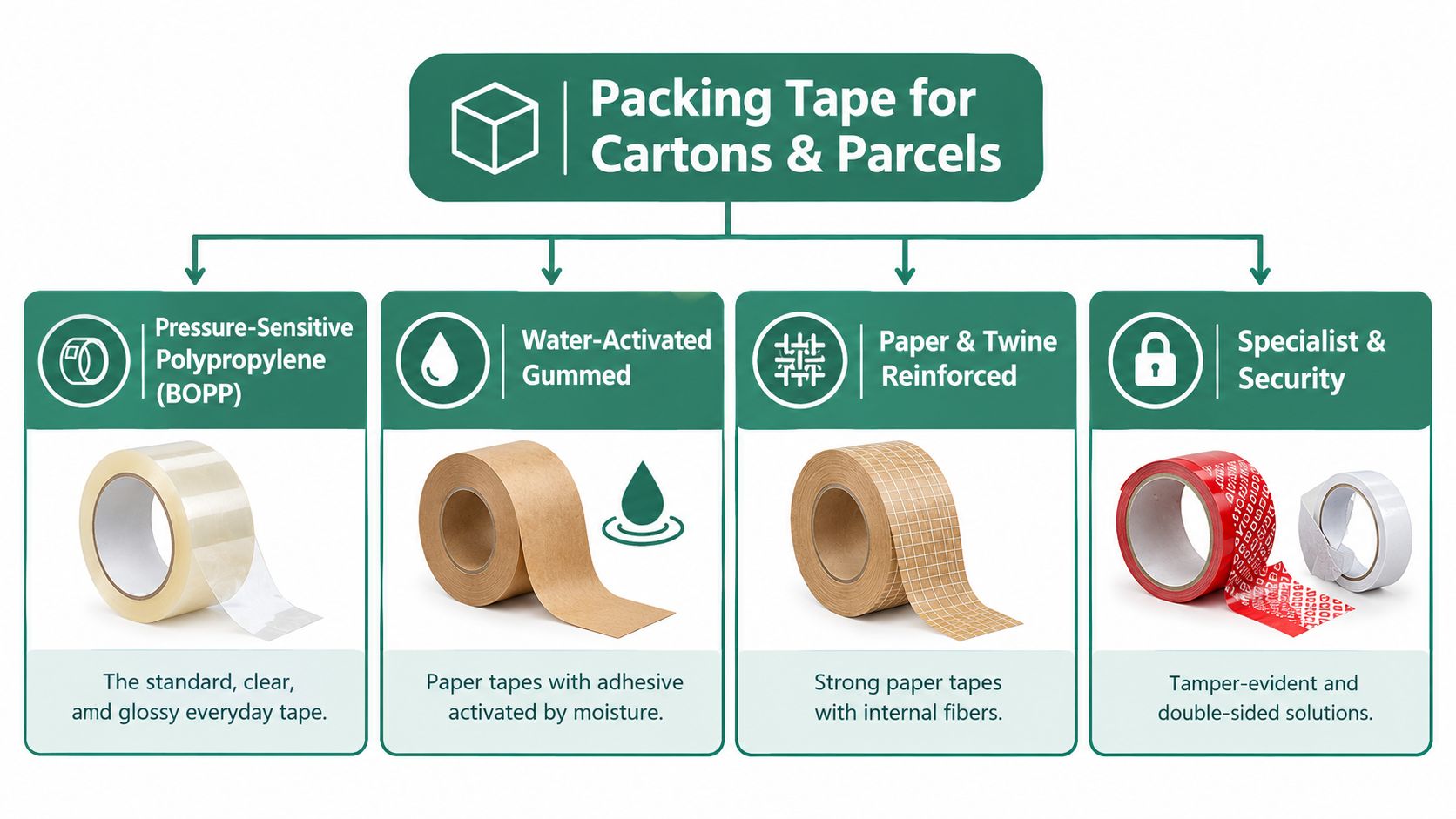
The catalogue uses four broad groups:
- Pressure-sensitive polypropylene: Everyday film tapes applied directly from a roll or dispenser. BOPP is the usual reference point for general cartons.
- Water-activated gummed: Paper-backed tapes whose adhesive bonds after moisture is applied. They suit workflows where carton integration and paper recovery matter.
- Paper and reinforced formats: Self-adhesive paper, twine-reinforced paper and filament tapes. These range from simple hand-tear applications to heavy bundling.
- Specialist and security tape: Double-sided products for fixing and presentation, plus tamper-evident products for visible interference detection.
The automatically generated Table of Contents is useful as a lookup tool. A buyer comparing everyday options can go directly to the BOPP and gummed profile. A fulfilment supervisor dealing with heavier cases can jump to filament and reinforced tape. A brand packing inserts or sealing valuable parcels can use the specialist section without reading the general carton entries first.
Each profile follows the same practical questions, although the presentation varies. The backing and adhesive identify how the tape behaves. The typical use shows where it belongs in a warehouse. The limitations prevent a common misuse, such as substituting double-sided tape for a carton closure or applying a paper adhesive to a chilled surface without checking suitability.
Cross-references matter because tape names can overlap. “Paper tape” may mean self-adhesive paper or gummed tape, while “reinforced tape” may refer to paper with twine or plastic film with glass fibres. The category structure separates those constructions before the selection matrix condenses them into a bench-side decision.
Core Packing Tape Categories for Cartons and Parcels
The main distinction is how the tape bonds. Pressure-sensitive tapes use adhesive that grabs when the tape is pressed onto the carton. Water-activated tapes need moisture before application. Reinforced products add fibres or internal strands to improve resistance to tearing and load movement.
BOPP, or biaxially oriented polypropylene, is the familiar general-purpose film option. It applies quickly with a hand dispenser, gives a clean clear or buff appearance and suits routine carton sealing. Acrylic, hotmelt and solvent adhesives offer different balances of tack, temperature behaviour and bond durability. The Packaging Tapes range groups common parcel, carton and pallet-sealing formats, but the buyer still needs to match the product to the job.
Gummed tape behaves differently on the bench. The operator wets the adhesive, positions the tape and presses it onto the carton. The paper backing can become part of a paper carton recovery stream, and the bond can make interference more obvious than a loose film strip. The trade-off is slower handling and the need for a dispenser or controlled wetting process.
Paper self-adhesive tape sits between those approaches. It can be applied like film tape, but its paper backing may better suit a packaging policy that seeks to reduce plastic film. It still needs a compatible adhesive and a clean carton surface, and “paper” alone doesn't guarantee that every construction will be accepted in every recycling route.
Reinforced and specialist formats solve narrower problems. Paper with twine supports heavier cartons while retaining a paper-facing construction. Filament tape resists tearing and works well for bundling, palletising and demanding closures, although its fibres and adhesive require careful consideration during recovery. Double-sided tape mounts components rather than closing a carton, while tamper-evident tape adds a visible security function.
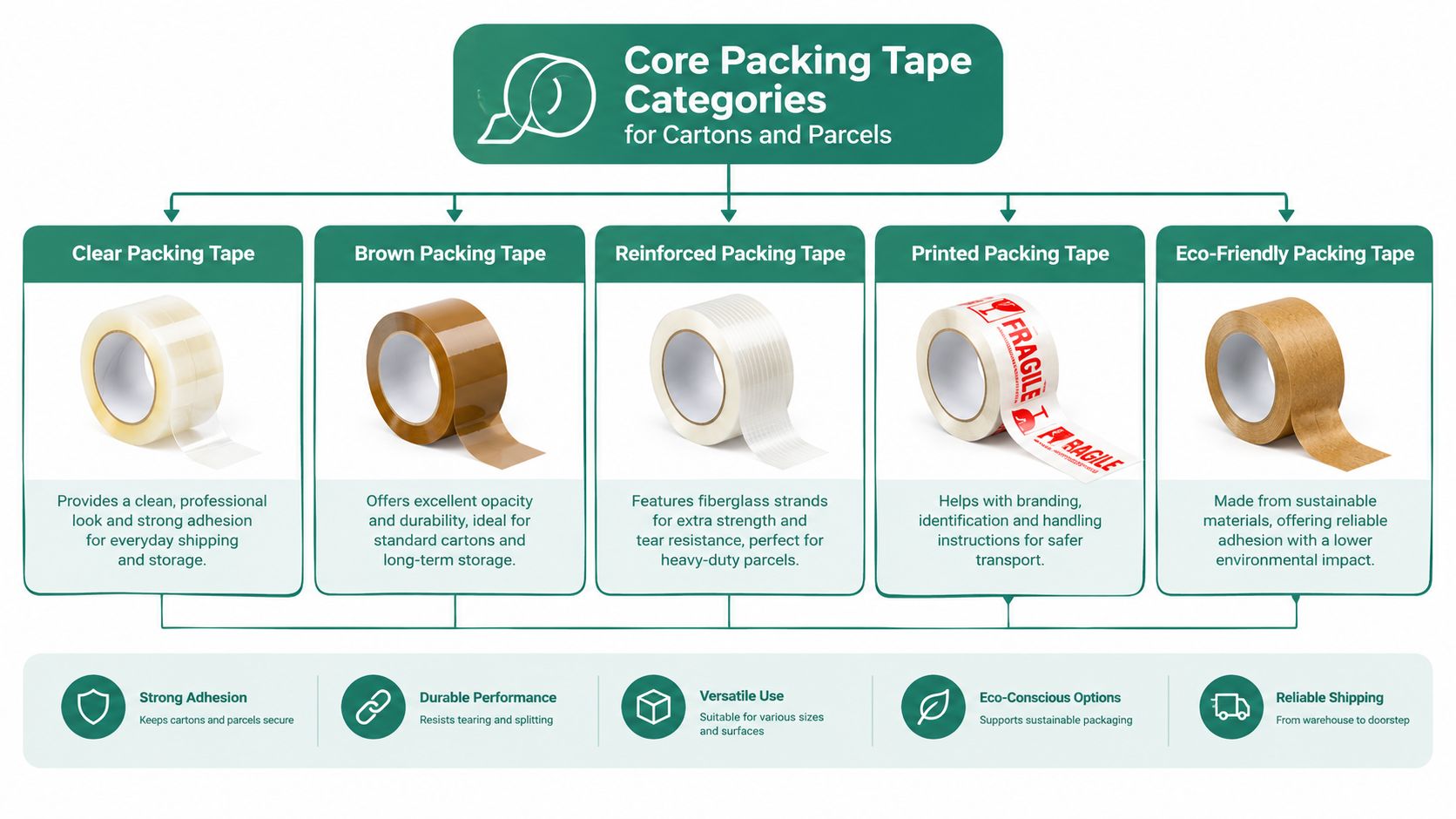
The useful mental map is simple: film for speed, gummed paper for carton integration, reinforced tape for additional load support, and specialist tape for a defined secondary task. Problems start when a category is selected for its appearance alone.
BOPP Packing Tape and Gummed Water Activated Tape Explained
BOPP for routine carton sealing
Standard BOPP is the baseline for many UK warehouse benches. A common construction uses 48 mm width and 40-micron polypropylene film, with a handheld dispenser suited to repetitive carton work. Independent UK supplier guidance describes common adhesive families as acrylic, hotmelt and solvent, with example performance benchmarks including tensile strength of at least 24 N/cm, adhesive-to-steel of at least 1.6 N/cm, and an acrylic temperature window around 0°C to +60°C. These figures should be treated as specification benchmarks, not a substitute for testing the actual carton and route. See the UK packaging tape buyers guide for the stated construction and performance context.
Acrylic is generally chosen where UV resistance and cooler handling matter. Hotmelt gives fast tack, which helps on a quick-moving packing line. Solvent adhesive is considered where a more durable bond is needed. A routine clothing order packed on clean corrugated board normally needs none of the specialist strength associated with pallet bundling, so BOPP keeps application quick and familiar.
Buff solvent tape is a useful example of how the adhesive specification changes the choice. A buyer comparing everyday options can review buff tape for sealing boxes when a brown appearance and durable solvent bond are relevant. The roll colour is visible to the customer, but the adhesive and carton conditions remain the operational decision.
Gummed tape for integrated paper closures
Gummed tape uses a paper backing and an adhesive activated with water. The packer wets the underside, centres it over the carton seam and applies firm pressure. On a regular dispatch bench, that adds a process step, so it works best where the team has a suitable dispenser and the environmental or security rationale justifies the change. Practical handling notes are also covered in this guide to paper gum tape.
The paper closure can bond closely with the carton surface and make removal or interference more apparent. It can also support a packaging policy that prefers paper-based constructions, although recyclability depends on the complete packaging system and local recovery route, not just the word “paper”.
For a business comparing gummed, self-adhesive and printed paper options, Paper Packing Tape is described as eco-friendly, strong, recyclable and plastic-free in the supplied catalogue snapshot. That description still needs to be checked against the specific product construction and the operation's recycling requirements.
A small homeware carton on a controlled packing line is a reasonable gummed-tape use case. A fast, mixed-SKU bench with no water-activated dispenser is not. In that environment, operators may under-wet the tape, delay application or create inconsistent seals. The decision is therefore operational as well as environmental.

Paper Tape Twine Reinforced and Filament Tape Profiles
Paper-based tapes cover a wide range of jobs. A light self-adhesive paper tape can suit a bakery box, presentation carton or small parcel where the operator wants an easy-to-handle alternative to film. A stronger paper construction can add reinforcement without changing the visible paper-facing appearance.
UK specialist guidance identifies 57 gsm paper tape for cartons up to 20 kg, and 70 gsm paper tape for cartons from 20 to 30 kg, while recommending filament tape above 30 kg. The same guidance keeps 48 mm as the default size for UK parcel operations. Those bands are selection guidance, not permission to ignore board quality, seam design or the effects of stacking. They provide a starting point for procurement, particularly when a team is replacing standard polypropylene with paper. The figures and material guidance appear in UK tape selection advice for weight and temperature.
Self-adhesive and twine-reinforced paper
Self-adhesive paper applies in a familiar way, often with a dispenser and direct pressure. Its hand-tear convenience can help on short runs or stations where operators need to close small cartons without repeatedly cutting tape. It can suit bakery packaging and retail presentation, but the adhesive must still contact a clean, dry carton surface.
Twine-reinforced paper adds internal strands to support a heavier closure. It offers a practical middle ground where ordinary paper tape lacks enough resistance, but a full plastic film or filament solution would be excessive. A multi-item carton containing dense products is a better candidate than a light box filled with soft goods.
Paper construction doesn't automatically make the tape harmless in recycling. Reinforcement, adhesive and the recycling facility's process all matter. Procurement teams should ask suppliers for construction details rather than relying only on colour or a broad eco label.
Filament tape for force and bundling
Filament tape contains glass-fibre reinforcement running through the tape. The fibres resist tearing, making the format useful for bundling cartons, securing pallet loads and supporting closures exposed to movement. It's not usually the first choice for every small e-commerce order because it can be more tape than the carton requires and may be less convenient to remove.
A group of cartons being held together for a consolidated dispatch illustrates the distinction. The tape isn't sealing one flap; it's restraining several units against shifting, so resistance to tension matters more than a clean clear finish. For a single light carton, standard BOPP or a suitable paper tape is usually the more proportionate choice.
The profiles can be separated by failure mode:
- Paper tape: Chosen for handling, appearance and a paper-based packaging policy.
- Twine-reinforced paper: Chosen when paper tape needs more support around a heavier carton.
- Filament tape: Chosen when tearing, bundling or pallet movement is the main concern.
Over-specification wastes material and slows the bench. Under-specification creates split seams and rework. A short trial on the actual carton remains more useful than choosing by name alone.
Double Sided and Tamper Evident Security Tape Uses
Double-sided tape doesn't belong in the same category as a carton sealer. Its adhesive faces point in opposite directions, allowing an operator to mount a promotional card, fix an internal liner, attach a presentation element or hold a component in place. The tape is selected for the surfaces being joined and the required permanence, not for closing the carton flaps.
A retailer may use double-sided tape to secure an insert inside a rigid presentation box. That keeps the card from moving without placing visible tape across the outer carton. It shouldn't be used as the primary closure on a shipping case because the application area, peel forces and carton movement are different from those involved in mounting.
Tamper-evident tape has another purpose. It can leave a visible message, void pattern or broken seal when someone attempts removal. That helps staff inspect a parcel at handover points and gives the recipient a clear indication that the closure has been disturbed. It supports chain-of-custody processes, but it doesn't replace a sound carton-sealing method.
Match the security tape to the risk
A high-value electronics parcel may need a sturdy outer closure plus tamper-evident tape across a defined seam. The outer tape holds the carton together, while the security tape makes interference easier to identify. Applying security tape to a dusty or cold surface can still produce a poor result, so surface preparation remains essential.
Double-sided tape is more appropriate for:
- Internal presentation: Fixing cards, labels or decorative elements.
- Liners and inserts: Preventing movement during courier handling.
- Assembly work: Holding packaging components in their intended position.
Tamper-evident tape is more appropriate for:
- High-value shipments: Giving the recipient a visible inspection point.
- Controlled handovers: Supporting checks between warehouse, carrier and recipient.
- Sensitive contents: Showing whether the original closure has been disturbed.
Guidance on combining security features with packaging formats is available in tamper-evident packaging advice. Neither option should be chosen because it sounds more secure. The tape must correspond to the actual risk, and the carton still needs a closure that can withstand its weight and route.
Choosing Tape by Carton Weight Temperature and Environment
A reliable selection starts with three questions: How heavy is the carton? Where will the carton sit? What will happen to it in transit? These questions expose why a standard roll sometimes performs well on one order and fails on another.
For weight, UK specialist guidance provides a useful working pattern:
- Up to 20 kg: Standard polypropylene or 57 gsm paper tape is commonly recommended.
- 20 to 30 kg: Heavy-duty polypropylene or 70 gsm paper tape is commonly recommended.
- Above 30 kg: Filament tape is the suggested step-up format.
These bands don't remove the need to check board grade, flap overlap, filling and stacking. A poorly packed carton can defeat a stronger tape, while a well-formed seam may perform with a simpler construction.
Temperature changes the adhesive decision. Natural-rubber paper tapes need a carton-surface minimum around 10°C, while acrylic polypropylene can perform from about -5°C, according to the cited UK specialist guidance. Acrylic therefore suits colder dispatch bays, unheated storage and winter last-mile conditions more readily than a natural-rubber paper tape applied to a chilled carton. The recommendation is about the surface at application, not merely the air temperature.
Warehouse check: Measure the carton condition at the point of sealing. A warm packing room doesn't guarantee that cartons stored in an unheated area are warm enough for the selected adhesive.
Application technique creates the final part of the result. The carton flaps should meet cleanly, the tape should centre over the seam and the dispenser should apply steady tension without stretching the backing excessively. Operators should press the tape down across the full contact area, especially at the leading and trailing edges.
Common causes of failure include:
- Dust, loose fibres or moisture on the board.
- A seam with insufficient flap contact.
- Tape applied too lightly or pulled away before pressure is made.
- A roll left in unsuitable storage conditions.
- A heavy carton closed with a tape designed for general parcels.
A short trial should include the actual carton, fill level, storage location and handling route. Procurement can then compare seal consistency rather than relying on a laboratory description detached from the warehouse.
Application Tips Storage and Sustainability Considerations
Good tape starts with a good surface. Carton flaps should be free from dust, loose board fibres and moisture, and the operator should avoid sealing over a distorted seam. A dispenser helps maintain a consistent application angle and length, but it won't compensate for a gap between flaps or a carton that is overfilled.
Pressure-sensitive tape needs firm contact across the seam. The operator should run the tape along the joint without leaving bubbles, then press the ends down so they don't lift during handling. Gummed tape needs controlled wetting and immediate placement. Excess water can make the process messy, while insufficient activation can leave the adhesive weak.
Storage also deserves a written rule. Rolls should remain protected from contamination and extreme conditions, with stock rotated so damaged or poorly stored material doesn't reach the bench. A tape that has picked up dust or suffered backing damage may look usable but deliver inconsistent tack.
Sustainability decisions need more care than a simple film-versus-paper label. UK rules require large producers to assess the recyclability of household packaging from 1 January 2025, while the public guidance focuses on packaging categories and assessment workflows rather than giving consumers a simple answer for every tape construction. The Environment Agency packaging waste data reports UK packaging waste recycling at 64.1% under one methodology and 75.2% under another for 2024. Those headline rates don't identify which tape constructions suit a particular recovery process.
Paper-based tape can help a packaging strategy that aims to keep the closure aligned with a paper carton stream, particularly where the product and adhesive have been assessed together. Plastic film tape may complicate separation or recovery in some systems, while reinforced tape introduces additional materials that need specific consideration. None of these outcomes should be assumed without supplier information and route-specific guidance.
The practical procurement file should record the tape backing, adhesive chemistry, reinforcement, intended carton type and recycling assessment. That evidence is more useful than an unqualified “eco” description. A controlled trial should also check whether operators use enough pressure and whether the alternative slows the packing line or creates new rework.
Quick Reference Table and Cross References for Tape Selection
The matrix below is designed for a packing bench rather than a product catalogue. It gives a starting point, then directs the buyer back to the relevant profile for adhesive, application and recycling checks.
Tape Type Quick Selection Matrix
| Tape Type | Best For | Weight Guidance | Temperature Notes |
|---|---|---|---|
| Standard BOPP polypropylene | General carton sealing and routine parcel dispatch | Commonly used for cartons up to 20 kg | Acrylic is suited to cooler handling; adhesive choice should match the route |
| Heavy-duty BOPP | Heavier general cartons where film tape remains operationally convenient | Commonly used for 20 to 30 kg | Check the adhesive specification for cold bays and storage conditions |
| Gummed water-activated paper | Paper-based carton closure and integrated sealing | Commonly recommended for cartons up to 20 kg when correctly specified | Natural-rubber paper tape needs a carton surface around 10°C or warmer |
| Self-adhesive paper | Light cartons, presentation work and paper-focused workflows | Commonly used within the lighter carton range | Confirm the adhesive's application temperature before cold dispatch |
| Twine-reinforced paper | Heavier cartons needing additional paper-based support | A practical step-up within heavier carton work | Check surface temperature and board compatibility |
| Filament tape | Bundling, palletising and demanding load restraint | Recommended above 30 kg in the cited UK guidance | Select for the full storage and transit environment |
| Double-sided tape | Inserts, liners, mounting and presentation components | Not an outer-carton weight solution | Select for the joined surfaces and intended duration |
| Tamper-evident tape | Visible interference detection on sensitive parcels | Use alongside, not instead of, a suitable carton sealer | Confirm adhesion on the actual carton at application temperature |
For general sourcing, the Packaging Tapes category covers clear, brown, printed, paper and PVC options. Paper can be compared with BOPP when a business is considering a lower-plastic or paper-focused workflow, while filament should be compared with heavy-duty polypropylene when carton mass or bundling creates a genuine strength requirement.
The selection process can be reduced to three checks: match the weight band, confirm the carton surface temperature and record the complete construction for sustainability review. If any one of those checks is missing, the roll may be convenient but still unsuitable for the job.
Packaging Panda supplies UK packaging tapes alongside cartons, mailing products and protective packaging, including paper-focused options for businesses reviewing their sealing materials. Visit Packaging Panda to compare tape formats for routine dispatch, heavier cartons and sustainability-led fulfilment, then match the chosen construction to the warehouse's actual weight and temperature conditions.