Paper Gum Tape: A UK Guide to Grades & Use

The packing bench is moving fast, the cartons are lined up, and someone's just reached for the nearest roll of tape without thinking twice. That's usually the moment when seal failures, messy returns, and awkward recycling questions start creeping into the day's workload. For UK fulfilment teams, paper gum tape is back in the conversation because it solves a different set of problems from standard plastic tape, especially where box security, carton presentation, and disposal messaging all matter at once.
That shift matters in e-commerce, 3PL, and marketplace dispatch because the tape isn't just closing a box, it's part of the seal design, the customer's first impression, and the recycling story on the back end. Water-activated paper gum tape has a long packaging history, but its modern value is operational, not nostalgic. It's now being chosen by teams that need a more secure carton closure on corrugated board, not just a cheaper strip of adhesive on the seam.
Table of Contents
- Why Paper Gum Tape Is Back on the UK Dispatch Bench
- How Water-Activated Paper Gum Tape Works
- Plain, Reinforced and Printed Paper Gum Tape Grades
- Hand Dispensers Versus Automatic Tape Machines
- Seal Strength and Performance in Real UK Parcels
- Recycling, Compliance and Sustainability Claims
- How to Specify Paper Gum Tape for Your Operation
- UK Buyer Questions About Paper Gum Tape
Why Paper Gum Tape Is Back on the UK Dispatch Bench
A busy UK dispatch floor exposes tape weaknesses quickly. A carton leaves the bench looking neat, then comes back with lifted corners after a courier sort, split seams from box movement, or awkward tape residue that makes the returns team work harder than it should. In that setting, paper gum tape earns attention because it behaves more like part of the carton than a removable sticker.
What changed for fulfilment teams
Water-activated tape moved from a hand-applied sealing method into a warehouse standard once mechanical dispensers appeared in the early twentieth century Holland Manufacturing. That history still matters in the UK because the same sealing principle fits modern parcel flows, where speed, edge protection, and carton integrity matter more than simple convenience. The adhesive bonds to the fibres of corrugated board rather than sitting on the surface, which is why it is favoured for carton sealing and tamper resistance.
Where it fits best
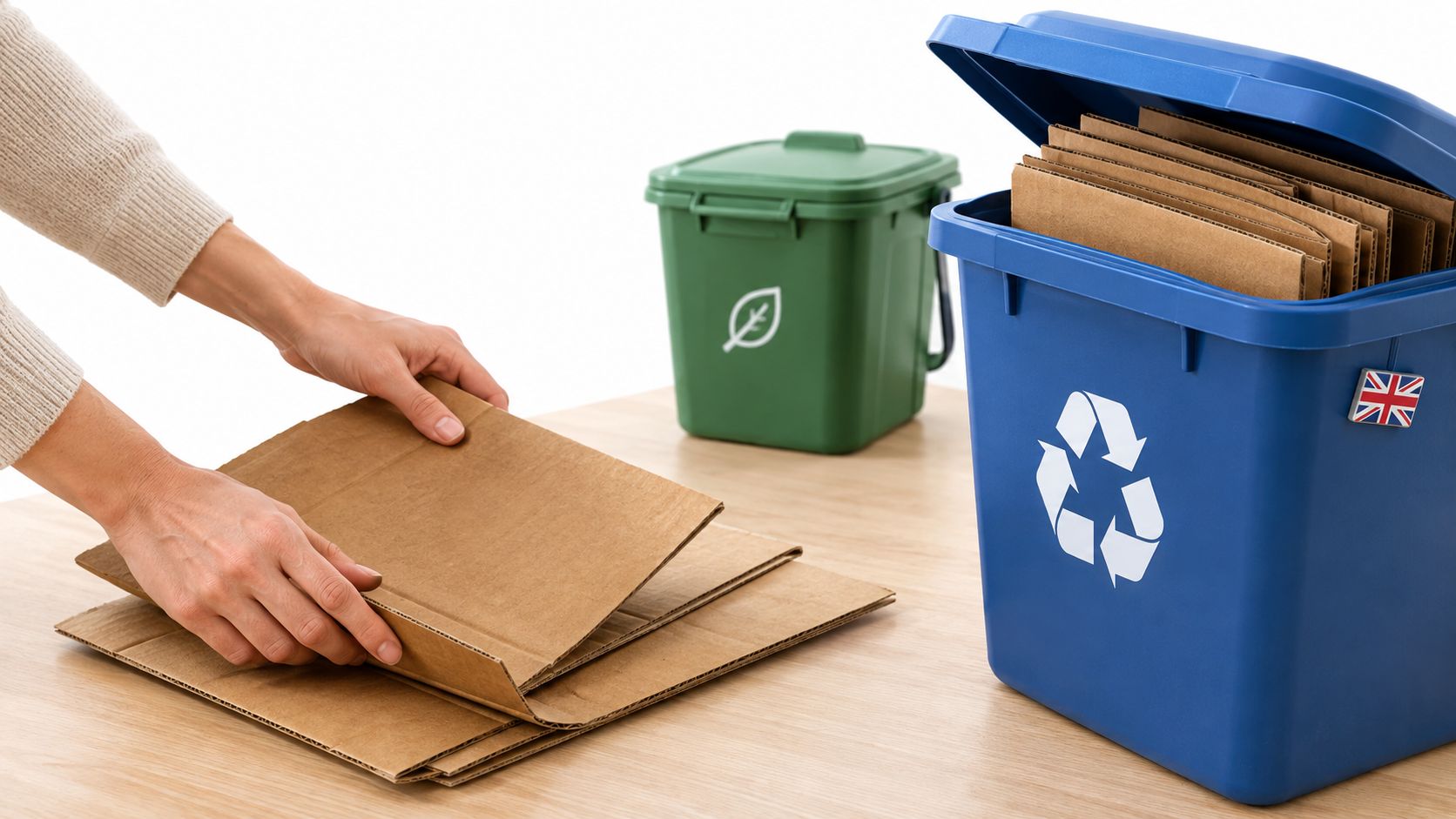
Paper gum tape suits operations that want clearer recycling messaging, firmer carton closure, and fewer visible seal failures on arrival. It works well for UK e-commerce, 3PL packing benches, and fulfilment lines that dispatch on recycled corrugated board and need seals to stay intact through handling. It is less about replacing every roll of plastic tape in every process, more about matching the closure method to the parcel risk, the box quality, and the pace of the line.
Practical rule: if the carton is doing real work in transit, the tape should be part of the box structure, not just decoration on top of it.
That is why the product has moved from niche to practical. The decision is no longer whether paper tape is “eco”, it is whether the sealing method suits the parcel mix, the line layout, and the customer promise.
How Water-Activated Paper Gum Tape Works
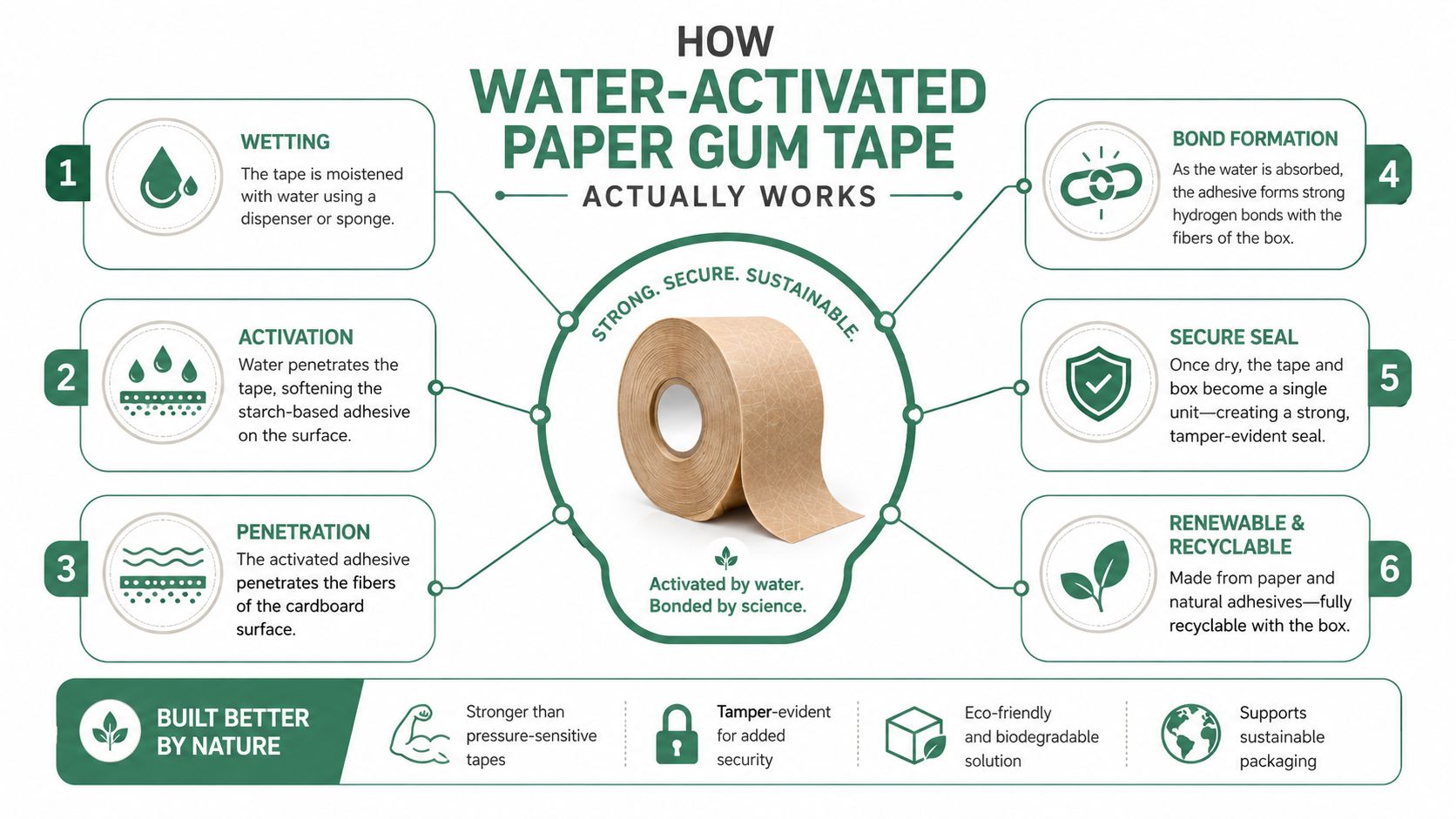
Paper gum tape begins as a paper face with a dry adhesive layer, usually starch-based. Once water reaches that adhesive, the surface turns tacky and is ready to bond to the carton. The key point is what follows. The adhesive does not just sit on the top surface, it keys into the corrugated fibres and forms a firmer bond than surface tape usually achieves.
Why the bond feels different
Weld versus sticker is the most useful comparison. Pressure-sensitive plastic tape behaves like a sticker, it sits on top of the board and depends on surface tack. Water-activated paper gum tape behaves more like a weld across the seam, because the adhesive is activated before contact and then integrates with the board surface as it dries.
That difference matters on corrugated cartons. When the box flexes, the tape is helping hold the seam together rather than merely covering it. It also gives clearer tamper evidence, because a disturbed seal usually looks disturbed, not just slightly lifted.
A common UK product example is Paper Packing Tape, which is described as gummed, self-adhesive, and available in printed options. That kind of product fits carton sealing, not light wrapping, because the whole purpose is to create a strong closure on board.
What the packer does
The workflow is simple:
- The tape is fed or cut.
- The adhesive face is moistened.
- The strip is applied over the seam.
- The bond sets as it grips the carton fibres.
That sequence is why dispenser setup matters so much. Too little water and the adhesive will not activate properly, too much and the strip can become messy or weak. The process is straightforward, but it rewards consistency.
The carton closure is only as reliable as the wetting step.
For fulfilment managers, that is the operational point. This is not a cosmetic tape. It is a sealing system, and it needs the right moisture, pressure, and board contact to do its job properly.
Plain, Reinforced and Printed Paper Gum Tape Grades
UK buyers usually meet three working constructions, plain kraft, reinforced kraft, and printed or branded variants. The right choice depends on the carton, the transit stress, and whether the seal needs to carry brand information as well as closure strength.
Matching the grade to the job
Plain kraft is the everyday option for carton sealing where tamper evidence and recyclability matter. It suits standard dispatch benches, especially on cartons that are not facing heavy compression or rough handling. For buyers who want a typical benchmark, RAJA Pack shows formats around 48 mm wide on 200 m rolls with a 70 gsm kraft paper face and plant-based starch adhesive.
Reinforced kraft is built for harder use. The heavier versions use 125 gsm kraft with glass-fibre strands, which gives the strip more tear resistance and helps it stay intact on export cartons, abrasion-prone routes, and parcels that are likely to be handled more than once. That extra scrim is useful when the box itself is strong enough to justify a stronger seal. On light mailers or small retail boxes, it can be more than you need.
Table Paper Gum Tape Grades at a Glance
| Grade | Typical Construction | Best Suited For |
|---|---|---|
| Plain kraft | Paper face with starch adhesive | Everyday carton sealing, recyclable board, tamper evidence |
| Reinforced kraft | Kraft paper with glass-fibre strands | Heavy parcels, export handling, abrasion, compression |
| Printed or branded | Paper gum tape with printed message or logo | Brand presentation, handling instructions, sealed cartons |
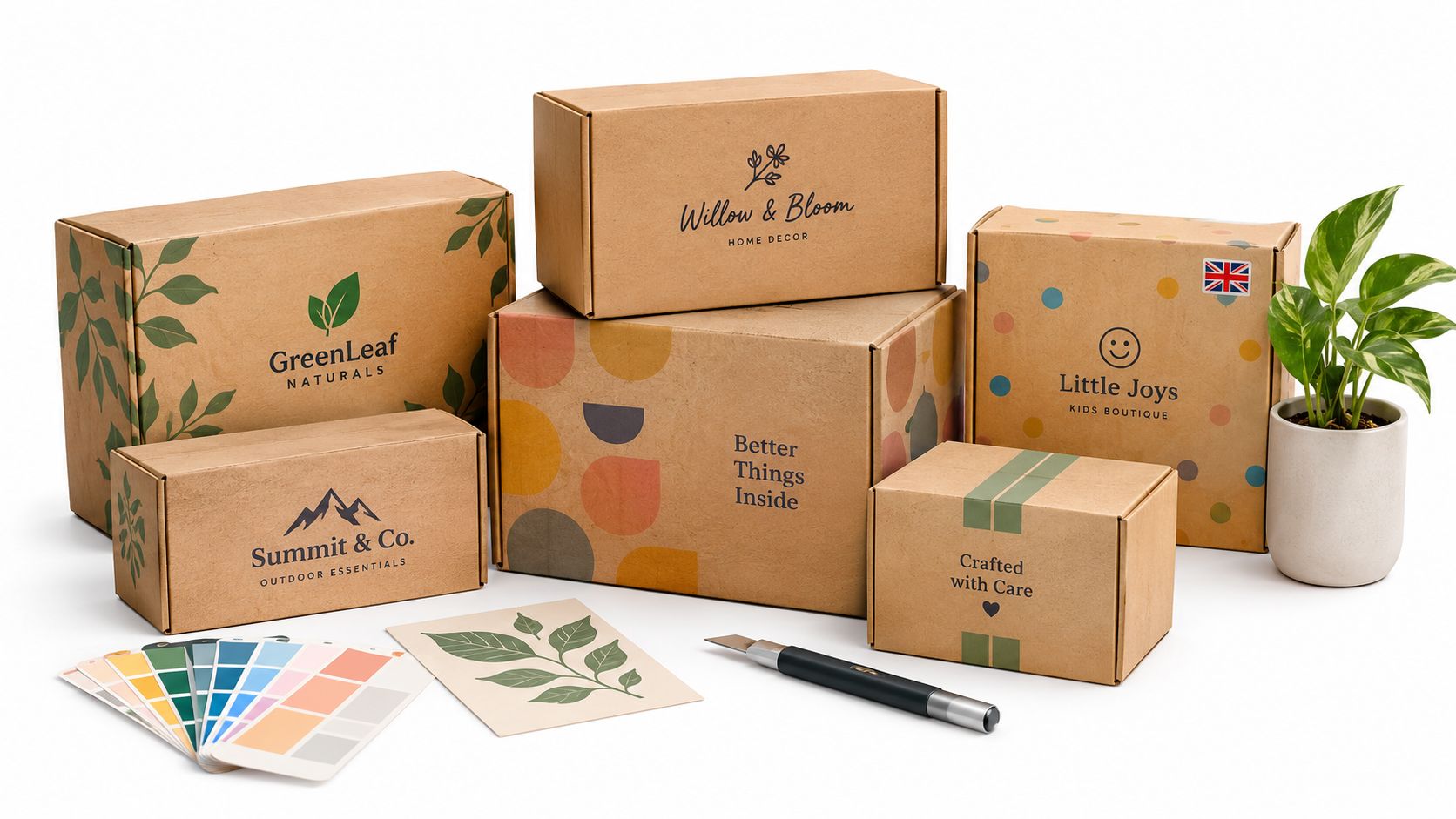
Printed tape is mainly about communication. It can carry branding, handling cues, or opening instructions while still acting as a seal. That makes sense when the carton is part of the customer experience, but the print should sit on top of the right construction underneath. A message on the face does not make a weak tape suitable for a heavy box.
Grade choice should follow the risk on the bench, not habit.
The technical figures back that up. A common medium-duty kraft grade measures about 0.14 mm thickness with tensile strength of 78.8 N/10 mm machine direction and 40.3 N/10 mm cross direction. Shurtape GP-100 is a useful reference point here, because it shows why the tape is for closure rather than simple wrapping, and why cross-direction performance is usually the first limit when corners, folds, or machine heads start loading the seam.
For a simple dispatch bench, plain kraft is usually enough. For heavier cartons, reinforced kraft is the safer specification. For branded presentation, printed tape can sit on either grade, but it should be chosen for the job first and the artwork second.
Hand Dispensers Versus Automatic Tape Machines
Manual application still works well in many UK warehouses. A hand dispenser lets an operative wet, cut, and apply the tape with very little bench disruption, which suits smaller dispatch areas, mixed-SKU orders, and seasonal peaks where volume rises but not forever. It also keeps entry cost low, which matters when a team is testing the format rather than committing to a full line change.
Where the manual route makes sense
For low to mid-volume dispatch, manual setups are often enough. They suit packing benches where carton sizes change often, staff need flexibility, and tape application is just one step in a broader pick-pack process. The trade-off is consistency, because the quality of the seal depends on the operator applying the right amount of water and the right pressure each time.
Where machines change the equation
Automatic or semi-automatic water-activated tape machines are better when repeatability matters more than bench simplicity. They cut the tape to length, wet it evenly, and help standardise the seal across different operators. That reduces the chance of failed seals, re-taping, or box edges that lift because one shift applied the strip too dry or too lightly.
A useful comparison for new users is the basic handling approach in how to load a tape gun, because the discipline is the same even if the dispenser is smarter. Feed path, tape tension, and operator rhythm all affect output quality.
Operational insight: the more your dispatch relies on repeatable seals across multiple shifts, the more a machine starts to justify itself.
For short runs, bespoke parcels, and variable carton mixes, hand application is still the sensible choice. For larger fulfilment operations, especially where failed seals create rework or customer complaints, a machine usually brings the process under control. The right answer depends less on the tape itself and more on how disciplined the packing bench already is.
Seal Strength and Performance in Real UK Parcels
A lot of tape advice stays at the level of “it's strong” or “it's recyclable”, which is not enough for a warehouse manager dealing with crushed corners, returns, and courier handling. Real performance depends on how the tape behaves with the carton, the board grade, and the route the parcel takes.
Where paper gum tape can outperform common plastic tape
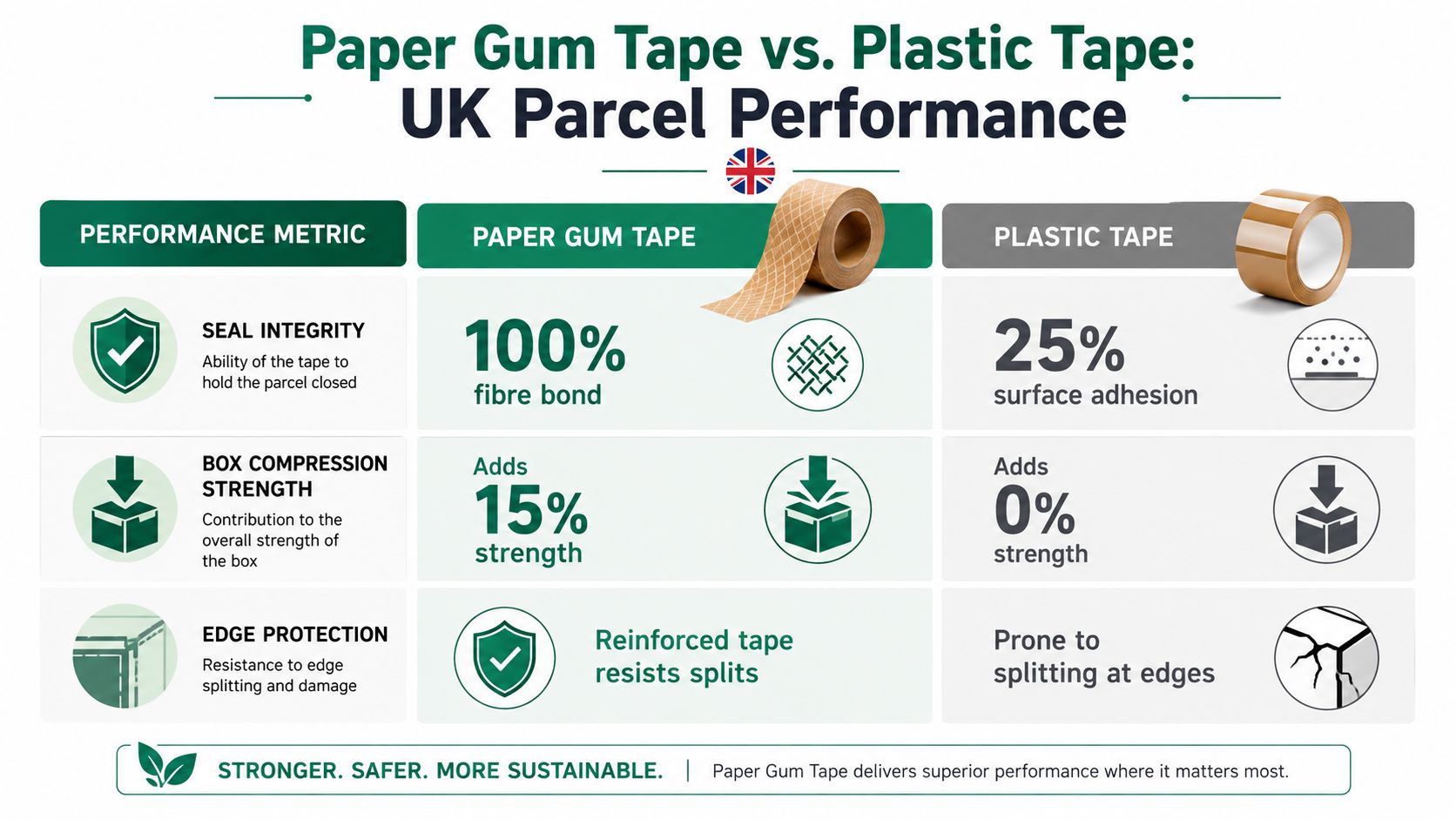
An independent test reported that paper gum tape was 21% more effective at sealing cartons than OPP tape Syspex. That matters because it speaks to closure performance, not just sustainability messaging. If a carton is under compression or the seam is being pulled, a stronger fibre bond has practical value.
Thickness and tensile behaviour also explain why it performs well on box seams. A lighter paper tape construction can sit near 0.11 mm thickness with tensile strength around 33.3 N/cm Shurtape GP-100, while a medium-duty kraft grade reaches the stronger values already noted. The practical effect is straightforward, higher machine-direction strength helps resist seam splitting as the box flexes.
Where the limits still matter
Cross-direction strength is still the weak point at corners and folds Shurtape GP-100. That means the tape can be excellent on straight seams but still struggle if the carton is badly overfilled, crushed, or forced through awkward automated heads. Reinforced grades reduce that risk because the fibreglass scrim helps resist tearing under abuse.
For UK operations, the conclusion is practical. Paper gum tape can beat surface tape on seal integrity and tamper resistance, but it is not a cure for poor packing. The box still needs the right board grade, the right tape width, and proper machine or hand application.
Returns, presentation and customer perception
On returns, a paper seal usually comes back looking cleaner than a torn plastic strip. That can improve the customer's sense that the parcel was closed properly from the start, even before they open the box. For 3PL teams handling premium goods or marketplace orders, that visual integrity is part of the service.
Recycling, Compliance and Sustainability Claims
Paper gum tape is often described too loosely. Some suppliers call it recyclable or biodegradable as if those words cover every version and every waste stream, but that's not accurate enough for compliance work. The material build matters, because plain paper tape and reinforced paper tape are not the same product.
What to say and what not to say
UK-facing packaging suppliers describe gummed paper tape as fully recyclable and suitable for cardboard recycling streams, because it uses natural paper and starch rather than plastic film and synthetic pressure-sensitive adhesive Kite Packaging. That is a fair description for plain tape constructions. It becomes less straightforward when glass-fibre scrim is involved, because the product is no longer just paper and starch.
A better compliance approach is to specify the construction accurately:
- Plain paper gum tape: suitable for cardboard recycling messaging.
- Reinforced paper gum tape: still a paper-based seal, but disposal language should avoid overclaiming single-material simplicity.
- Printed tape: still requires the same material check, because branding doesn't change the base construction.
Why UK buyers need better disposal language
UK packaging guidance has been pushing businesses away from problematic plastics and towards clearer disposal information. That makes paper gum tape a good fit for brands trying to reduce the visibility of plastic in their shipment, but the message needs to stay precise. Saying “paper-based seal” is safer than saying every version is universally recyclable in every stream.
The practical way to handle this is to align the product spec with the customer message. If the tape is plain kraft, the sustainability copy can stay simple. If the tape is reinforced, the copy needs to explain that the product is paper-based but includes reinforcement, which affects procurement and disposal wording.
The linked guide on what sustainable packaging means is useful background for teams writing their own policy language. The key point is that sustainability claims should describe the actual material build, not the marketing intent.
Accurate disposal language reduces complaints faster than broad eco claims ever will.
How to Specify Paper Gum Tape for Your Operation
Buying paper gum tape starts with the spec sheet, not the product photo. A fulfilment team needs to know the carton type, transit risk, storage environment, and whether the tape will be applied by hand or machine. Without that detail, price comparisons can be misleading, because two rolls that look similar can perform very differently on the bench.
The spec points that matter
A useful procurement checklist includes:
- Width: commonly 48 mm for carton closure in UK dispatch settings.
- Roll length: for example 200 m in standard grades.
- Paper face weight: such as 70 gsm for plain kraft or 125 gsm for reinforced kraft.
- Adhesive type: starch-based or equivalent water-activated adhesive.
- Reinforcement: plain or glass-fibre scrim, depending on parcel abuse.
- Temperature range: one UK supplier lists -16°C to +40°C for a 48 mm grade and -20°C to +60°C for a 70 mm grade.
Those points shape how the tape behaves on the line and in the parcel. A lighter paper face can be fine for cleaner cartons and lower abuse routes, while heavier reinforced grades make more sense where returns, rough handling, or longer transit chains put the seal under more strain. The wrong choice usually shows up in the same place, weak corners, lifted ends, or a lane that has to be reworked because the tape does not wet or bond consistently.
How to choose between tape and standard plastic
Paper gum tape is usually the better fit when carton security, tamper evidence, and recycling messaging carry more weight than hand-tear convenience. Standard plastic tape still wins in some fast-moving, low-risk environments where the team prioritises speed over seal structure. That is especially true if the bench lacks wetting consistency or the operation does not want to add a dispenser step yet.
The trade-off is operational, not just material-based. Paper gum tape can improve carton closure and reduce complaints about mixed-material packaging, but it asks more of the process at point of use. If a team is already running tight line speed, the change needs a cleaner wetting routine, the right dispenser, and a carton family that has been tested under real dispatch conditions.
A sensible buying process is to trial the tape on the actual board grade, not a sample box from a different supplier. Test it on recycled corrugated cartons, run a few returns through the same packaging, and check whether the seal survives handling without rework. If the route includes cold storage interfaces or unheated depots, temperature tolerance needs to be part of the decision, not an afterthought.
For brands that want to test a paper-based closure without rebuilding the whole dispatch setup, Paper Packing Tape gives a straightforward reference point for a recyclable, plastic-free tape option within a broader paper packaging range. The important thing is to match the construction to the parcel, then lock the spec before scaling.
UK Buyer Questions About Paper Gum Tape
Can it work on branded cartons? Yes, and it often looks better than plastic tape on printed boxes because the seal sits more naturally on kraft board. Is it suitable for cold storage interfaces? It can be, but the temperature rating should be checked before use in unheated or chilled handover points. Will it run on automated sealers? Some grades will, but the machine setting and tape construction both need testing first.
If a team is moving off plastic tape, the cleanest transition is a short pilot on one dispatch lane, one carton family, and one shift pattern. That keeps rework contained and shows whether the wetting step, seal quality, and returns handling fit the operation.
Packaging Panda supplies paper tape alongside a wider UK packaging range for fulfilment teams that want recyclable dispatch materials without guessing on the spec. Visit Packaging Panda to review paper packing tape and match the right closure format to your cartons, transit conditions, and dispatch workflow.