Standard Letterbox Sizes in the UK: A Practical Guide

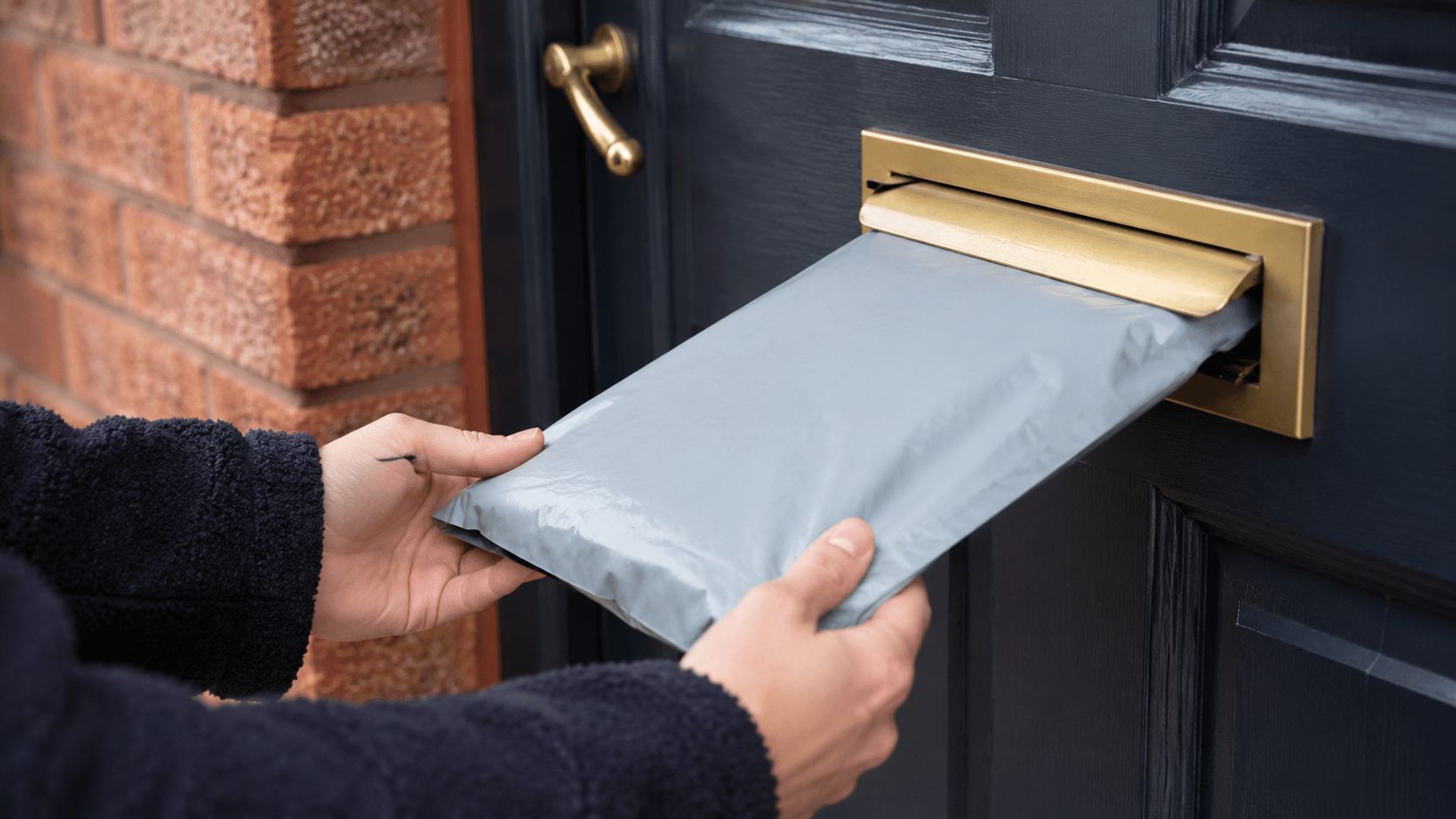
A delivery driver presses a parcel against a front door, lifts the spring-loaded flap and tries to guide the package through. A flat mailer slides onto the mat. A slightly thicker postal box catches on the flap, wedges halfway and comes back out. The customer receives a card or a failed-delivery notification, while the seller faces another handling decision, a possible return and an unhappy buyer.
That narrow strip of aluminium, plastic or timber hardware makes a commercial decision before the customer opens the packaging. Standard letterbox sizes aren't one universal measurement in the UK, and the gap between postal categories and real residential apertures is where many packaging designs fail. Sellers who measure the actual slot, account for the flap and select packaging around the smallest realistic clearance can avoid a great deal of doorstep friction.
Table of Contents
- Why Letterbox Size Shapes Every UK Delivery
- UK Letterbox Apertures and the Standards Behind Them
- Royal Mail Sizes vs Real Letterbox Openings
- Common Mailer and Postal Box Dimensions That Fit
- How to Measure a Letterbox Slot Before You Pack
- Designing Letterbox-Friendly Packaging for E-Commerce
- Right-Sizing, Sustainability, and Bespoke Options
- Quick Answers on Standard Letterbox Sizes
Why Letterbox Size Shapes Every UK Delivery
A letterbox-friendly order can pass every warehouse check and still fail at the front door. The product enters a mailer or postal box, the label is applied and the parcel joins the dispatch stream. At delivery, it must clear a spring flap, internal brushes, weather seals and the angle of the customer's letterplate.
Royal Mail pricing tiers make this distinction easy to miss. A parcel may fit a carrier's maximum dimensions for a letter-sized or large-letter service, yet encounter a narrower usable passage in a residential door. Carrier measurements describe the package. Door hardware determines whether that package can enter.
A thin book wrap may flex enough to pass through. A rigid box with the same nominal footprint can behave differently because its lid, folded edges and contents hold the package open against the flap. The driver may be unable to push it safely into the hallway, turning an apparently compliant item into a failed delivery.
The commercial cost of a tight fit
The package must clear the opening without forcing the letterplate, crushing the contents or catching on the internal sleeve. A design that passes through an open test rig can fail at a uPVC or composite door when a brush seal reduces the usable height.
That creates practical trade-offs:
- Courier tolerance: A driver may push a flexible mailer through a flap that will not accept a rigid package of similar dimensions.
- Customer experience: A parcel left outside, redirected or delayed creates friction even when the product arrives undamaged.
- Returns handling: A failed first delivery adds work for the seller and fulfilment team.
- Packaging choice: A few millimetres can decide whether an item uses a letterbox format or requires a larger parcel solution.
Practical rule: Packaging should be tested against actual door hardware, not just against the carrier's maximum dimensions.
The UK has no single legally mandated domestic letterbox opening size. “Standard” therefore describes a practical range shaped by door construction, hardware and relevant standards. Royal Mail categories remain useful for pricing and service selection, but they cannot confirm compatibility with every door.
Measure the aperture, account for the flap and internal fittings, then test a filled prototype. That process gives sellers a safer packaging benchmark than copying one carrier dimension into a product specification.
UK Letterbox Apertures and the Standards Behind Them
BS EN 13724 gives the subject an official standards-based foundation. The UK government references the standard in its guidance on security in dwellings, and it relates to postal apertures for private letter boxes and letter plates. It's better understood as a performance and compatibility standard than as a rule declaring one opening size for every domestic door. Government guidance on security in dwellings confirms why sellers should avoid treating one aperture as universal.
Industry guidance commonly places practical domestic openings within a broad range. Summaries describe openings around 250 mm wide by 38 mm high, while typical domestic ranges are often given as approximately 230 to 280 mm wide and 38 to 50 mm high. UK letterbox sizing guidance links those dimensions to compatibility with flat correspondence, privacy and weather protection.
Common UK door-slot ranges
The following comparison is a working packaging reference, not a legal specification. The visible slot is only part of the route. Internal sleeves, brushes, hoods and the flap angle can reduce the clear passage.
| Door type | Width (mm) | Height (mm) | Notes |
|---|---|---|---|
| uPVC | 230–250 | 40–50 | Internal brushes and sleeves can reduce usable clearance |
| Composite | 230–280 | 38–50 | Hardware varies considerably between door systems |
| Timber | 230–280 | 38–50 | Frame construction and vertical hardware can affect access |
There's no single legally mandated domestic opening, so a seller can't safely label every package “fits a standard letterbox” without defining the test conditions. A product designed around 254 mm by 38 mm may pass a common benchmark, but another door can have a narrower sleeve or a more restrictive flap mechanism. UK letterbox guide explains this difference between a practical benchmark and a universal legal dimension.
Why the internal route matters
The external aperture may look generous while the internal path is not. A brush seal can press against soft packaging and stop a rigid edge. A hood can alter the insertion angle. A spring flap can return before a thick box has fully cleared the opening.
Even compliant letterplates can produce a different usable passage once seals and flap movement are considered. For packaging development, the relevant measurement is the clear opening under normal operating conditions, not the metal-to-metal width measured with every component removed.
Royal Mail Sizes vs Real Letterbox Openings
Royal Mail categories provide a useful commercial framework, but they don't guarantee door access. The historical Letter limit is 240 mm by 165 mm by 5 mm, with a 100 g maximum, while Large Letter extends to 353 mm by 250 mm by 25 mm, with a 750 g maximum. These limits are detailed in UK letterbox size guidance based on Royal Mail formats.
The tension is clearest at the depth limit. A package can meet the Large Letter maximum of 25 mm and still struggle through a domestic opening that has a much tighter vertical passage. A draught-excluding brush or internal sleeve can make the final insertion harder, especially when the box is rigid and full.
The carrier category is not the doorway
| Format | Max width | Max height | Max depth | Clears typical slot? |
|---|---|---|---|---|
| Letter | 240 mm | 165 mm | 5 mm | Usually, if the contents remain flat and flexible |
| Large Letter | 353 mm | 250 mm | 25 mm | Not automatically, especially at full depth |
| Small parcel | Carrier-dependent | Carrier-dependent | Begins at 25 mm in the relevant comparison | Often requires delivery beyond the slot |
The table shows why Large Letter pricing and physical access aren't interchangeable concepts. The category permits a generous footprint, but a residential letterplate may offer only a much smaller clear height. A broad, thin item can work well. A compact but rigid item at the depth limit can fail.
Packaging sellers often need a choice between a flexible solution and a protective box. Mailers include poly mailers, padded bags, paper mailers and book wraps, so the format can be selected around the product rather than around a category label alone. For more rigid designs, Royal Mail postage boxes can be assessed against the actual slot before the seller commits to a dispatch specification.
Common Mailer and Postal Box Dimensions That Fit
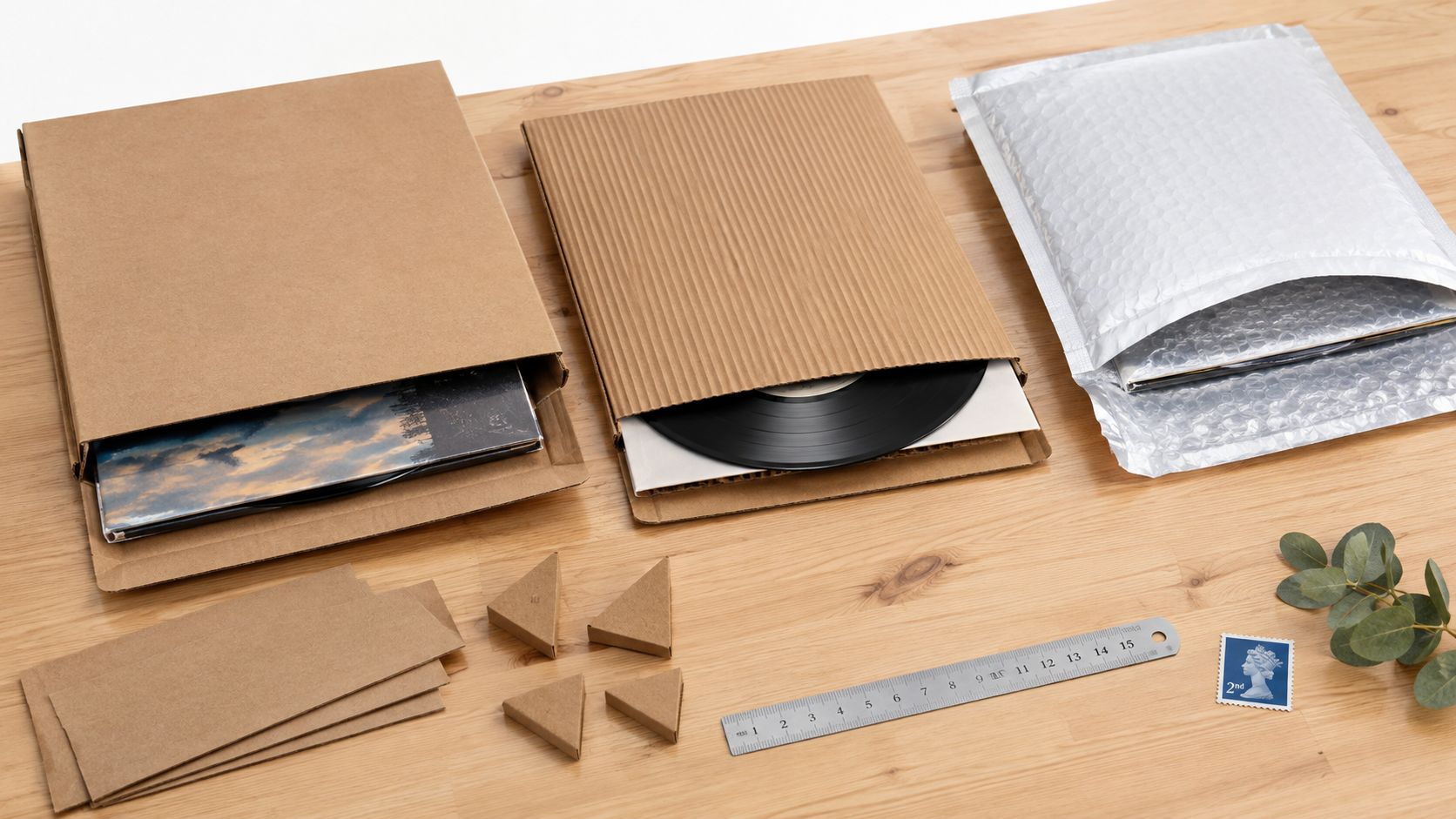
The most reliable letterbox formats tend to be flat, flexible or deliberately kept below the practical slot height. A C4 poly mailer can accommodate flat documents or clothing without presenting a rigid edge. An A4+ book wrap offers more structure, but its folded board, closure flap and contents can make the finished package thicker than the product itself.
Nominal dimensions aren't the whole specification. Tuck flaps, rigid lids, folded corners and self-seal strips can add real bulk at the point where the parcel enters the door. Standard box dimension guidance is useful when comparing the stated size of a postal box with its finished external profile.
Practical format comparison
| Format | Typical external size (mm) | Thickness | Clears slot? |
|---|---|---|---|
| C4 poly mailer | Around 230–280 wide, depending on format | Flexible, contents-dependent | Usually suitable for flat contents |
| A4+ book wrap | Around 230–280 wide | Often close to the Large Letter depth when filled | Test the filled pack, not the empty wrap |
| Slim kraft mailer | Designed around the 25 mm depth category | Up to the Large Letter depth | Can work, but flap and product rigidity matter |
| A5 corrugated postal box | Smaller footprint than A4 formats | May exceed the practical slot height when filled | Suitable only when the finished depth is verified |
| A4 corrugated postal box | Broad flat footprint | Must remain shallow to use the slot | Often works for flat products, not bulky contents |
| Chunkier postal box | 40–50 mm class | Above the common shallow-slot envelope | Frequently catches on the flap or requires non-letterbox delivery |
A 40 to 50 mm box can look close enough when held against a door, yet that extra depth is often what creates the “caught on the flap” failure. A 25 mm design gives a stronger starting point for letterbox dispatch, although the final loaded thickness still needs checking.
Some sellers also use Colour Kraft Honeycomb Eco Bags, which are wholesale colour kraft honeycomb padded mailers in dark green, orange, red and black. They are described as 100% recyclable and plastic-free, but the product's actual fit still depends on the packed contents and the finished thickness at the closure.
The workable rule is straightforward. A flexible mailer can conform to a small irregularity, while a rigid postal box exposes every millimetre of the aperture. That makes boxes valuable for crush protection, but less forgiving when the product sits near the slot limit.
How to Measure a Letterbox Slot Before You Pack
A seller can test a new format without relying on catalogue assumptions. The measurement should reproduce the actual delivery action, including the flap's resistance and the loaded shape of the package.
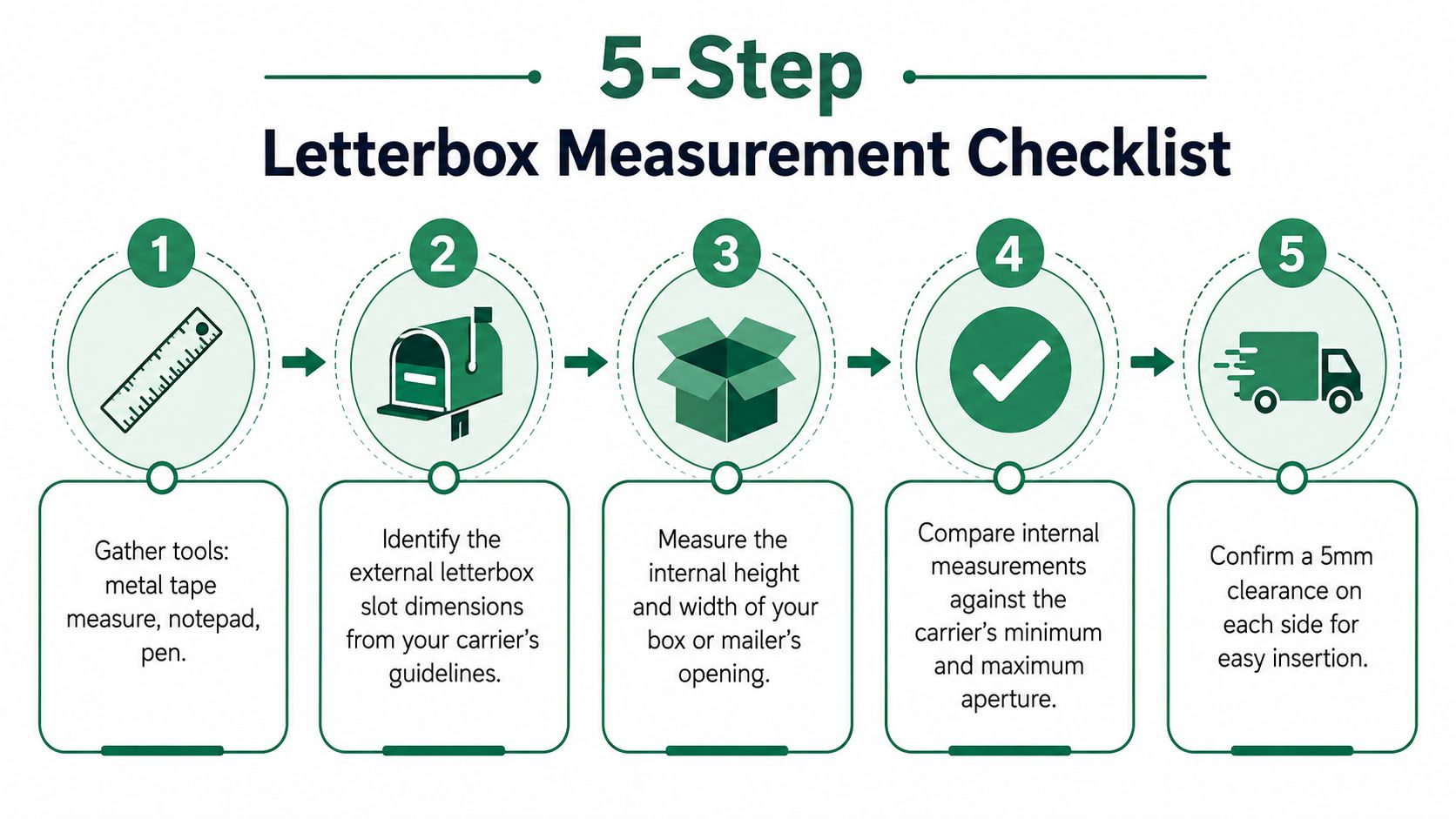
A five-point test
- Measure the visible opening. Use a metal tape measure and record the width and height with the flap open. Note whether the opening is horizontal or vertical.
- Check the internal route. Look behind the letterplate for sleeves, brushes, hoods or draught excluders. Measure the narrowest point, not just the external face.
- Operate the flap repeatedly. Spring-back tension matters. A package that enters under a fully held-open flap may catch when the flap is allowed to move naturally.
- Load a prototype. Use the product, or a dummy load that represents the packed shape and weight. A lightweight empty carton can give a false result because it flexes differently.
- Record the failure point. Check whether the closure strip, lid edge or corner catches first. The design needs clearance at that exact point.
A prototype should be tested with a 50 g dummy load where that load represents the intended test routine. The measurement process should also account for weather seals and brushes that can reduce clearance by 3 to 5 mm, as described in guidance on measuring box dimensions.
Measure the narrowest practical passage, then test the filled package through the flap. The visible slot is only the starting point.
Horizontal slots in uPVC doors usually present height as the limiting dimension for a flat parcel. Vertical slots in timber frames can change the handling problem, because the package may need to be rotated or supported differently as it passes through. The test should reflect how a driver approaches the door, rather than treating the letterplate as a rectangular hole in a sample board.
Designing Letterbox-Friendly Packaging for E-Commerce
Packaging design starts with the product, but postage economics often determine the final profile. A seller may want a strong box, a branded finish and room for protective material. The carrier category may reward a shallow package, while the door hardware rejects the maximum permitted thickness.
The most commercially useful designs usually begin by separating product protection from unnecessary external volume. A flat item may need a board stiffener and a flexible outer mailer. A fragile product may need corrugated protection, but its box should be engineered around the smallest realistic aperture rather than selected from a parcel range.
Protection without a bulky profile
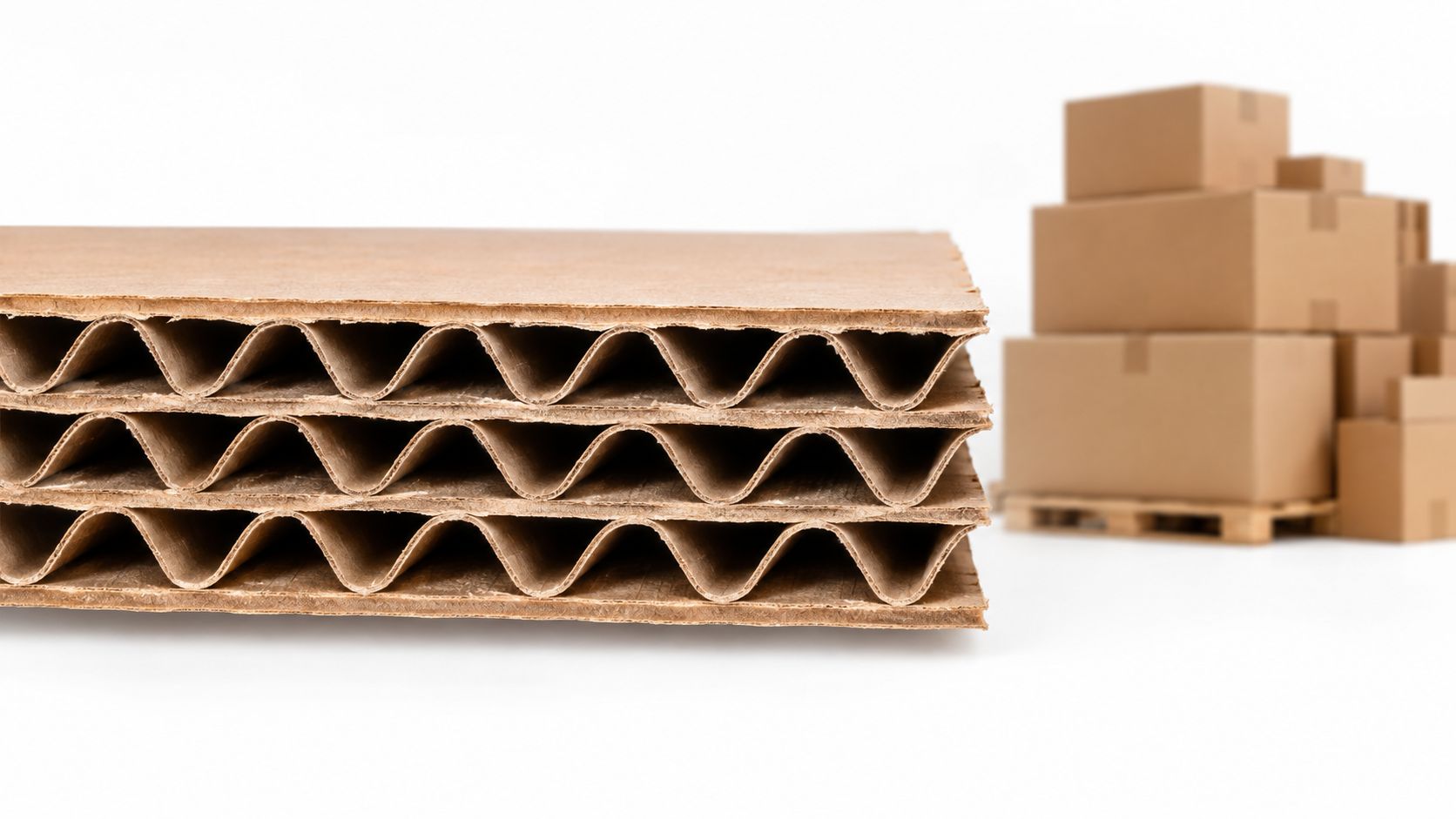
A reinforced tear strip can improve opening convenience without adding the same volume as a separate closure component. Double-walled corrugate can earn its place for fragile goods when crush resistance matters, but it shouldn't be used automatically for every order. The material choice needs to reflect the product's breakage risk and the delivery route.
Branding presents a similar compromise. Large artwork areas can appear on a flat mailer or sleeve without increasing the external dimensions. Raised features, oversized folds or decorative inserts can turn a compliant flat package into a rigid obstruction.
The main choices are:
- Shallow mailer: Best for flexible, flat or soft goods, but offers less crush protection.
- Structured book wrap: Better edge protection for books and retail goods, though the closure and contents can increase thickness.
- Corrugated postal box: Stronger for fragile products, but only letterbox-compatible when the loaded depth is proven.
- Larger parcel format: Appropriate when the product cannot be protected within the slot, even if it creates a different delivery experience.
The reliable fit versus the tight fit
A snug internal fit protects the product and reduces movement. An excessively tight external fit can make insertion unreliable. The most dependable design leaves enough room for the package to slide through the flap without compressing the contents or forcing the door hardware.
Royal Mail, Evri and DPD each apply their own operational rules, so a seller shouldn't assume that a package accepted in one workflow will receive identical handling in another. The practical decision is to compare the finished dimensions, weight and required delivery method, then test the package at a real aperture before ordering a large production run.
A letterbox format can reduce the occasions when a customer must receive a parcel in person, but the benefit disappears if the packaging regularly catches on the door. The first-attempt fit matters more than the label applied to the format.
Right-Sizing, Sustainability, and Bespoke Options
Right-sizing combines environmental and commercial discipline. The smallest package that protects the product and passes the aperture usually needs less void fill and creates less unnecessary external volume. It can also make better use of a postage category, provided the final packed dimensions remain within the relevant limits.
Material selection introduces genuine trade-offs. Recycled kraft corrugated board provides structure and can suit flat postal boxes. FSC-certified card can support a branded paper-based presentation. Mono-material polythene mailers offer flexibility and moisture resistance, while compostable films may suit a seller's material policy but still need checking for strength, sealing and real-world storage.
Choose the material around the delivery risk
A paper mailer may provide strong print quality and a natural presentation, but a product exposed to moisture may need a different barrier. A padded format can protect a delicate item, although the padding changes the finished thickness. A branded sleeve can add shelf appeal without expanding the main mailer, but only if its folds and seams don't create a catch point.
Bespoke production also needs planning. Minimum order quantities, lead times and die-line costs can make a custom mailer unsuitable for a small run. Stock-size postal boxes with custom sleeves can offer a more controlled route for limited volumes, because the structure is already established while the visible branding remains adaptable.
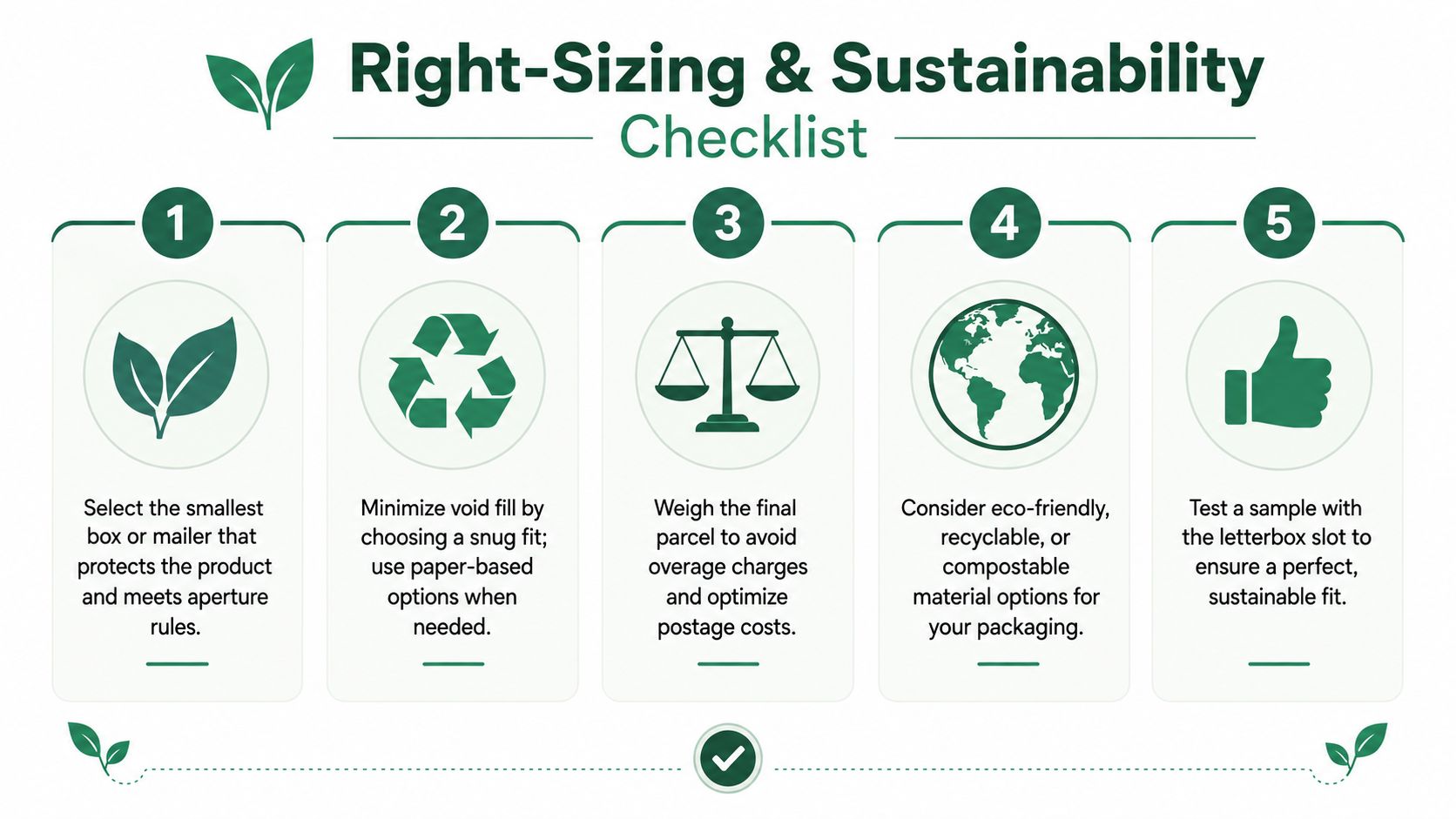
A practical design routine has five linked decisions:
- Define the product profile: Record the product's rigidity, protection needs and likely packed orientation.
- Set the external envelope: Choose a target width, height and depth that suit the measured aperture.
- Select the material: Balance moisture resistance, print quality, recyclability and protection.
- Prototype at the door: Test the filled package through the actual letterplate, including seals and flap movement.
- Trial the postal category: Confirm the final packed item against the applicable Royal Mail Large Letter or parcel limits before committing to production.
This process prevents a common waste pattern, where a seller orders packaging that is theoretically efficient but fails at the doorstep. It also keeps sustainability connected to performance. A recyclable package that requires repeated delivery attempts isn't a complete design success.
Quick Answers on Standard Letterbox Sizes
A practical UK benchmark sits around 230 to 260 mm wide and 35 to 40 mm high, but domestic doors vary and internal hardware can reduce the usable route. The absence of one legally mandated opening means a seller should treat standard letterbox sizes as a working range, then verify a real door before approving a packaging specification.
| Format | Royal Mail limits (L x W x D) | Letterbox fit |
|---|---|---|
| Letter | 240 x 165 x 5 mm, 100 g | Normally suitable for flat contents |
| Large Letter | 353 x 250 x 25 mm, 750 g | Depends on the actual aperture and loaded rigidity |
| Small parcel | Starts at 25 mm depth in the relevant comparison | Often needs a delivery method beyond the letterbox |
Buyer questions answered
Does BS EN 13724 specify one exact slot size?
No. It provides a standards-based framework for letterplate performance and compatibility. It doesn't create one universal domestic opening.
Will every Large Letter fit through a letterbox?
No. The carrier limit is broader than many real door apertures. A package at the maximum depth can catch on the flap, brush or internal sleeve.
Which format suits a CD, DVD or small book?
A flat Letter or Large Letter solution is usually the starting point, depending on the item's packed dimensions, thickness and weight. The loaded package must be tested rather than judged from the product alone.
How can a seller confirm the fit?
Measure the narrowest clear passage, operate the flap and push a loaded prototype through. Check closure strips, corners and rigid edges for catching.
Do internal and external letterboxes follow the same rules?
They shouldn't be treated as identical. Their openings, sleeves, access angles and weather protection can differ, so each installation needs its own measurement.
A prototype test at the intended door can save more than it costs by exposing a failure before stock arrives. Sellers should use the measurement routine and design checks above, then record the approved packed dimensions for fulfilment teams.
Packaging Panda supplies UK businesses with mailers, padded bags, paper packaging, postal boxes and made-to-order packaging options, including bespoke sizes and printed formats. Visit Packaging Panda to compare letterbox-friendly packaging choices and discuss a specification based on the product, the carrier category and the residential aperture.