Paper Carrier Bag Guide: A UK Business Buyer's Handbook
A new business often reaches the same point. The products are ready, the shop fit-out looks right, the logo is final, and then the bag gets treated as a last-minute commodity. A plain, thin paper carrier bag goes on the order because it looks cheap enough and seems harmless.
That choice usually shows its weaknesses in the customer's hand, not on the invoice. A bag that creases badly, cuts into the hand, or tears near the door turns packaging into a small brand failure. A bag with the right paper, handle, and print does the opposite. It carries the product properly, supports the price point, and keeps the brand visible for the rest of the journey home.
In the UK, that decision also sits inside a very specific context. Customers now notice bag choices in a way they didn't before the carrier bag charge changed retail habits, and many expect paper to signal a more responsible option. That expectation is useful, but it can also mislead. The right paper carrier bag isn't the cheapest paper option or the one with the loudest sustainability claim. It's the bag that gives the business the strongest total value over time.
Table of Contents
- Your Paper Bag is More Than Just Packaging
- Choosing Your Bag's Foundation Material and Grade
- Navigating Sustainability and UK Regulations
- Function Meets Form Handle Styles and Construction
- Putting Your Brand in Their Hands Custom Print Options
- Matching the Bag to Your Business Common Use Cases
- Your Final Paper Carrier Bag Decision Checklist
Your Paper Bag is More Than Just Packaging
A customer leaving a bakery with two pastry boxes and a coffee doesn't think about substrate specification. They do notice whether the bag sits upright, whether the handles feel secure, and whether the whole purchase looks worth what they've paid. That's where a paper carrier bag stops being a line item and starts acting like part of the product.
The same thing happens in fashion retail. A clean white bag with crisp print and comfortable handles tells a different story from a soft, low-grade bag that buckles under the weight of folded garments. One says organised brand. The other says corners were cut.
A good bag keeps selling the business after the transaction has finished.
That matters because the bag often travels further than any other piece of physical branding. It goes onto public transport, into offices, across car parks, and into homes. For an independent retailer, that visibility has value even when it isn't easy to measure neatly.
The hidden cost of a cheap bag
Per-unit cost is where many owners start. It shouldn't be where the decision ends.
A cheap bag can create extra cost in less obvious places:
- Product risk: weak bases and poor handle attachment increase the chance of damage before the customer gets home.
- Brand dilution: generic stock bags make even well-presented products feel less considered.
- Operational friction: staff lose time double-bagging, checking weight limits, or apologising when bags fail.
- Waste: bags that tear on first use are disposed of immediately, which weakens any sustainability message.
Total value beats unit price
The right paper carrier bag earns its place in three ways at once. It protects the sale, carries the brand well, and supports a sustainability claim that can be defended. That's the practical way to assess value.
For most UK businesses, the bag decision works best when it's treated like choosing fixtures, labels, or shipping cartons. It needs to fit the product, the price point, and the customer journey. Once that thinking is in place, material, handles, printing, and volume become much easier to specify.
Choosing Your Bag's Foundation Material and Grade
The paper itself does most of the work. It determines the first impression, the print surface, the feel in the hand, and a large part of the bag's real-world strength. A bag with the wrong paper grade can still look acceptable on a sample table and fail once it's loaded in store.
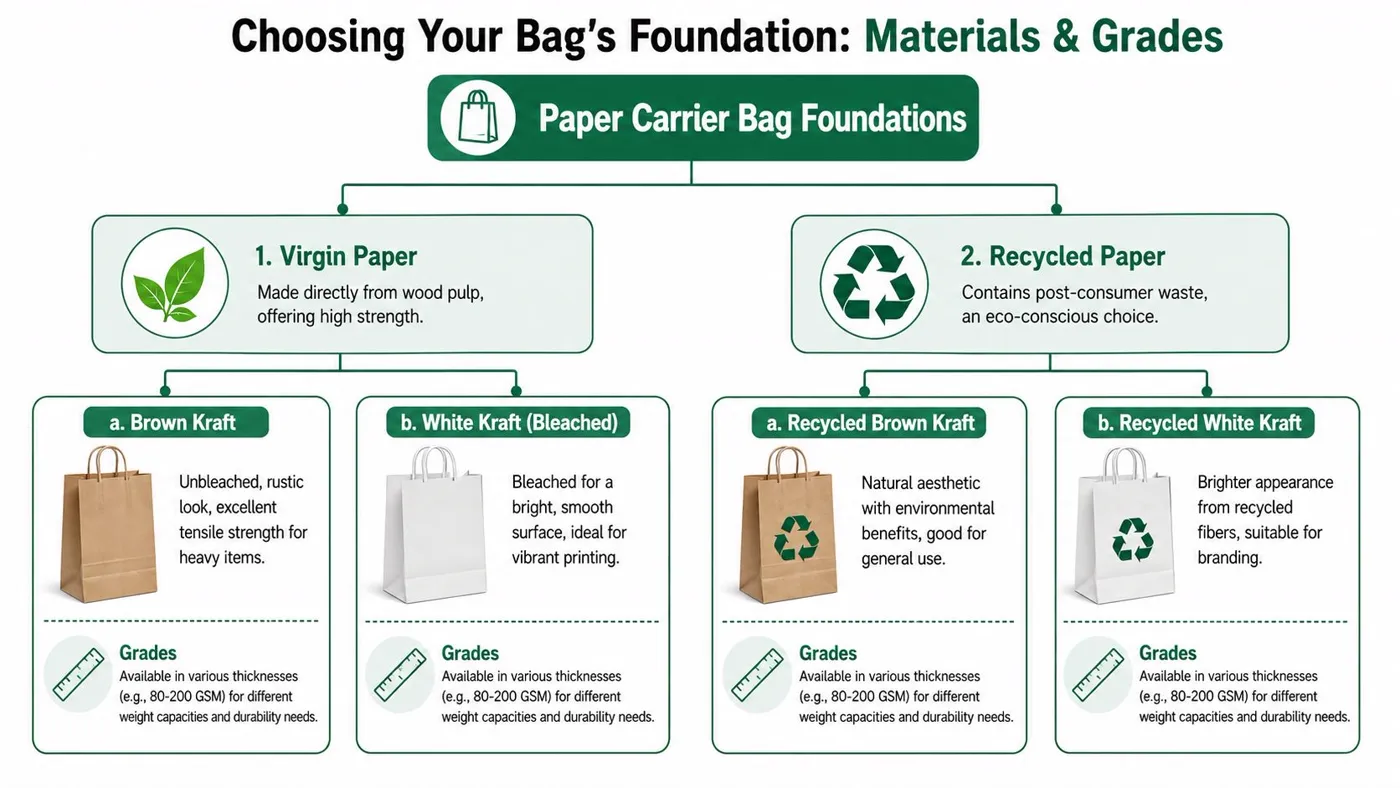
Start with the paper look and fibre type
Brown Kraft is the standard starting point for many small businesses. It has a natural look, hides scuffs reasonably well, and suits brands that want an understated or eco-led appearance. It's often the safest option for takeaway, food retail, markets, and day-to-day shop use.
White Kraft gives a cleaner, brighter face for branding. Logos usually appear sharper, and coloured print tends to stand out more clearly than on brown stock. That makes it useful for boutiques, gifts, cosmetics, and any business where presentation is closely tied to price perception.
Coated papers move further towards a premium finish. They're useful when the bag needs strong colour reproduction, a smoother feel, or a more polished retail presence. They also tend to be less forgiving on cost and lead time, so they make more sense when the bag has a clear brand role rather than a purely functional one.
For owners comparing fibre choices more broadly, this guide to choosing packaging paper for SMBs is a useful primer on how paper type affects performance and finish across different packaging formats.
Practical rule: choose the paper look to match the brand first, then choose the grade to match the load.
Use GSM to match strength to the job
GSM means grams per square metre. In simple terms, it helps indicate how substantial the paper feels and how much work it can do. It's a bit like choosing fabric. A light summer shirt and a heavy work jacket are both cloth, but they aren't built for the same use.
Lower GSM paper can be fine for leaflets, lighter boxed products, or short takeaway journeys. Higher GSM paper feels firmer, stands more cleanly, and usually supports better handle performance. It also adds cost and weight, so over-specifying is common and unnecessary.
A sensible buying process looks like this:
- Check the actual product weight, not the estimated one.
- Add the awkwardness factor. Flat clothing is easy. Rigid boxes, jars, and wide bakery packs put more stress on the bag.
- Think about the journey. A customer walking a few steps to the car places different demands on the bag than someone carrying it through town.
- Test loaded samples, not empty ones.
A durable paper carrier bag can withstand up to 43 reuse cycles and 860 total lifts, according to Billerud's reusable paper bag testing. That result matters because genuine sustainability depends heavily on the bag surviving repeat use, not merely looking recyclable on the day it's bought.
For businesses reviewing stock and bespoke options, paper packaging products can help frame what's available across different paper formats. A broader retail view can also come from wholesale Carrier Bags, which include paper, plastic and compostable options with twist or string handles.
Navigating Sustainability and UK Regulations
A retailer can save a few pence per bag and still make the wrong buying decision. If the bag splits on the walk to the car, looks cheap at the till, or makes vague environmental claims the business cannot support, the cost is higher than the unit price suggests.
Why paper use changed in the UK
The shift towards paper was driven by policy as much as customer preference. Following the introduction of the UK single-use plastic carrier bag charge in 2015, plastic bag usage fell sharply, and the charge in England later rose from 5p to 10p while extending to all businesses. This UK bag charge summary outlines how the rules changed and why paper became the default alternative for many retailers.
The practical point for UK businesses is simple. Customers now read bag choice as part of your environmental position, whether you actively market it or not.
England also treats paper differently from the other UK nations. In England, paper carrier bags are outside the single-use carrier bag charge. In Wales, Scotland, and Northern Ireland, paper bags are included. That matters if you trade across multiple locations or run the same packaging specification UK-wide, because a bag that is straightforward in one nation can create a compliance issue in another.
Where sustainability claims often fall apart
Paper is not automatically the lower-impact choice in every situation. According to the Smith Bateson carrier bag LCA review, single-use paper carrier bags perform worse across several environmental indicators than conventional HDPE bags unless they are reused at least three times.
That is the key commercial trade-off. A cheap paper bag that is only good for one trip can weaken both your environmental message and your customer experience. A slightly better-built bag costs more upfront, but it has a stronger case if customers reuse it, keep it for lunch runs, or pass it on.
Reuse is where the total value of a paper bag starts to make sense.
Compostability causes problems too. Businesses often assume a paper bag will break down harmlessly in any compost heap, but coatings, inks, adhesives, and handle materials all affect disposal outcomes. If compostability is part of the brief, get the specification in writing from your supplier and make sure the customer-facing wording matches the actual bag construction.
For businesses trying to align packaging choices with compliance duties, reporting, and disposal responsibilities, this guide to UK packaging waste regulations is a useful operational reference.
A sound standard for most SMEs is this. Choose a paper carrier bag you can justify on three fronts: it survives normal use, it supports a clear and accurate sustainability claim, and it fits the rules where you trade. That is usually better value than buying the cheapest option and dealing with complaints, reorders, or mixed environmental messaging later.
Function Meets Form Handle Styles and Construction
Handle choice gets dismissed too often. It shouldn't. The handle is where the customer physically judges the bag, and poor handle selection can undermine an otherwise decent specification.
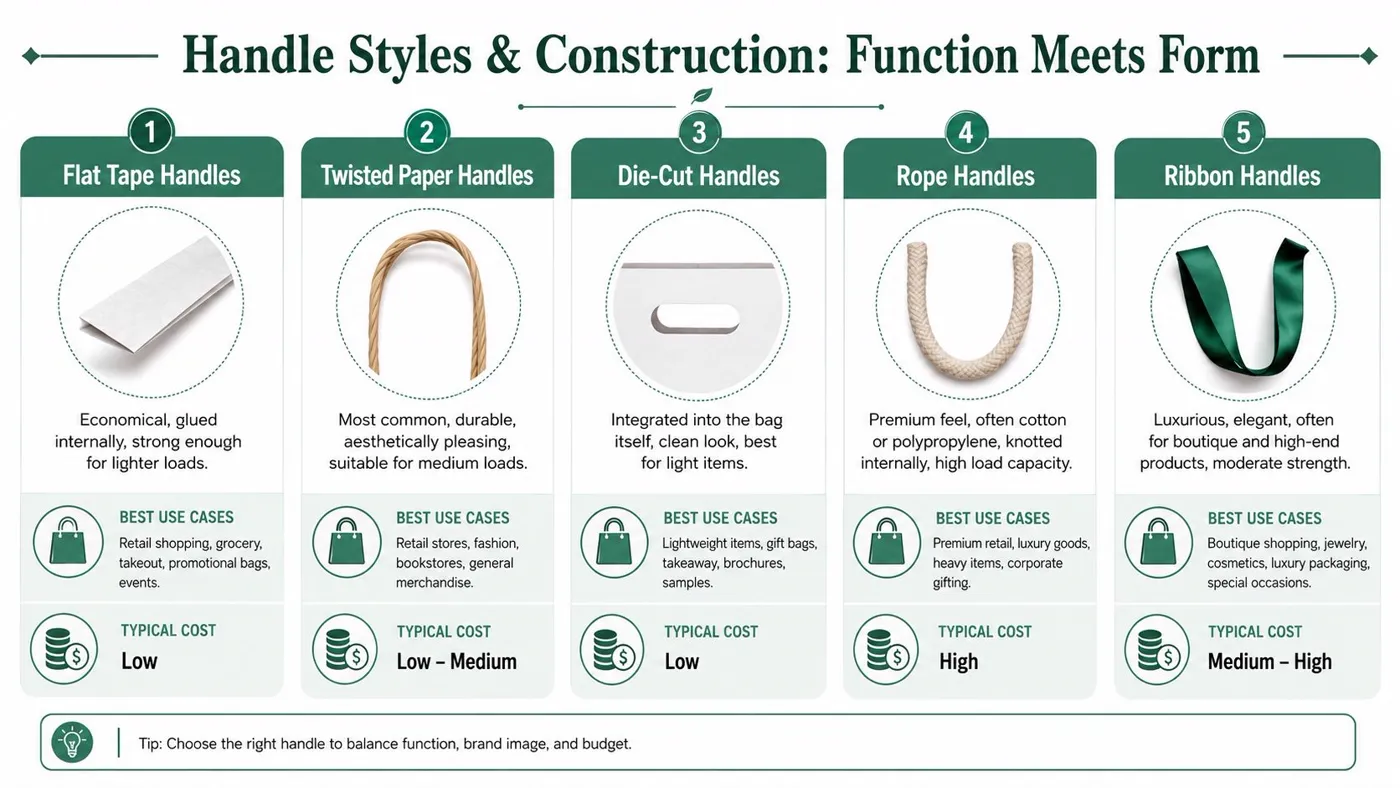
Handle style changes the customer experience
Flat tape handles are the practical budget option. They suit takeaway, lighter retail products, promotions, and events where volume matters more than luxury feel. They do the job, but they rarely impart a sense of luxury to the product.
Twisted paper handles are the all-round retail standard. They balance cost, strength, and appearance better than most alternatives, which is why they're common across fashion, gifts, food retail, and general high street use. For many SMEs, this is the safest default.
Die-cut handles create a neat, minimal look because the handle is cut into the bag itself. They work best for light items and short carrying distances. Once the contents get heavier or the edges sharper, comfort and strength become a concern.
Rope and ribbon handles move the bag into premium territory. Rope usually gives a stronger luxury impression and better carrying comfort than paper-based options, while ribbon adds softness and presentation value for boutiques, gifting, and occasion-led products.
| Handle type | Best fit | Main trade-off |
|---|---|---|
| Flat tape | Takeaway, events, lighter retail | Lower comfort and plainer appearance |
| Twisted paper | General retail, medium loads | Less premium than rope or ribbon |
| Die-cut | Light products, simple branding | Limited comfort and load suitability |
| Rope | Premium retail, heavier loads | Higher cost |
| Ribbon | Boutique and gift presentation | Style-led, less practical for rough use |
Construction matters as much as the handle
A strong handle on a weak bag still fails. Construction has to match the load and product shape.
Businesses should pay close attention to:
- Side gussets: these allow expansion and are useful for clothing, boxed items, and mixed retail purchases.
- Bottom gussets: these create capacity and help the bag sit better when loaded.
- Block bottoms: these are the right choice for cake boxes, takeaway trays, shoe boxes, and anything else that needs a level base.
- Turnover tops and reinforcement patches: these improve handle attachment and help the bag keep its shape.
A boutique carrying folded garments can get away with a different build from a bakery carrying a wide cake box. That sounds obvious, but a lot of buying mistakes happen because owners choose by appearance and handle style before they check the base structure.
For examples of premium paper bags built around stronger handle construction, string handle carrier bags are worth reviewing as a format reference.
Putting Your Brand in Their Hands Custom Print Options
A plain bag can carry a product. A printed bag can carry the brand into the street. The difference isn't just visual. Custom print changes how a customer remembers the purchase and whether the bag feels disposable or worth keeping.
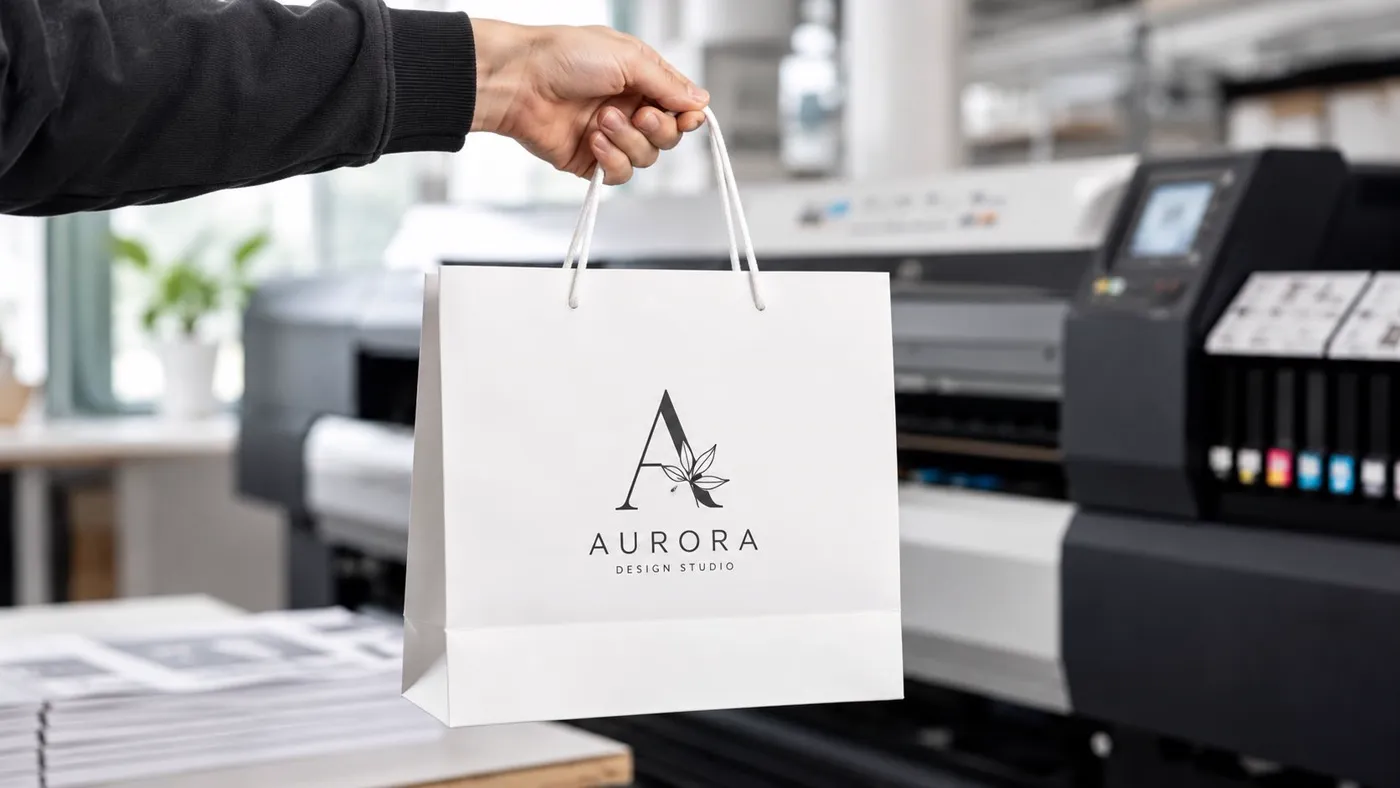
Choose print method by artwork and volume
Flexographic printing suits simpler artwork. It's usually the practical choice for logos, limited colour designs, and larger production runs where control of unit cost matters. If the goal is clean branding rather than photographic detail, flexo often does enough.
Lithographic printing is more appropriate when the bag itself is part of the premium presentation. It handles finer detail, richer graphics, and more complex visual work better than simpler print methods. The trade-off is that it tends to bring more setup complexity and can affect lead time.
The choice should follow the artwork, not ego. A one-colour logo printed well on the right stock often looks more expensive than a crowded full-colour design printed on the wrong bag.
Finishes that add value and finishes that just add cost
Hot foil, embossing, debossing, and spot gloss finishes can all work. They just don't all work for every business.
A good rule is to choose one finish that supports the brand position:
- Foil works well for gifting, jewellery, premium cosmetics, and occasion purchases.
- Embossing suits understated branding where texture matters more than colour.
- Spot gloss or similar effects fit brands with bold visual identity, but they can look excessive on a natural or eco-led bag.
- No special finish at all is often the right choice for food retail, takeaway, and practical everyday use.
If the finish doesn't strengthen the price perception of the product, it's probably just adding cost.
Order volume and lead time matter here. More colours, more coverage, and more complex finishing usually mean longer production windows and less flexibility. Small brands should be especially careful not to specify a bag that only works at a volume they can't realistically turn over.
Minimum order considerations also shape the decision. A startup often needs a bag that looks branded without forcing an oversized first run. That's where made-to-order supply becomes relevant. Packaging Panda offers bespoke packaging across bags and other formats with minimum runs from 500 units, which is useful factual context for businesses that need custom print without moving immediately to very large volumes.
Matching the Bag to Your Business Common Use Cases
The best bag specification depends on what's being carried, how it's sold, and what the customer expects the brand to feel like. Three common UK scenarios show how different the right answer can be.
Boutique clothing retail
A high-street boutique usually needs the bag to perform in two directions. It must hold folded garments securely, and it must look aligned with the product price.
A sensible specification is white Kraft or a refined brown Kraft, medium-to-heavy grade, with twisted paper handles for day-to-day use or rope handles where the brand sits further upmarket. Print should stay clean. A logo, strong spacing, and disciplined colour choice usually perform better than covering the entire bag.
The bag should feel worth carrying around town. That matters for perception and for reuse. If the boutique also wants to drive repeat visits after the purchase, tools like how BonusQR helps retail businesses can complement the physical bag by linking in-store traffic to digital follow-up.
Independent bakery and cake shop
Bakery bags fail when buyers focus on appearance before shape. Cake boxes, pastry cartons, and wider takeaway packs need room and a stable base more than they need luxury finishing.
The right answer is usually a brown Kraft bag with a wide gusset and block bottom. Flat tape handles may work for lighter loads and higher-volume service, while twisted paper handles are often a better fit if customers are carrying multiple items. Grease resistance, upright carrying, and enough depth for boxed products matter more than decorative extras.
A bakery owner should test the exact carton inside the exact bag before committing. Half the practical problems in bakery packaging come from awkward fit, not outright weight.
E-commerce pop-ups and click-and-collect
A digitally native brand selling at markets, pop-up shops, or click-and-collect counters needs a bag that acts like temporary retail signage. The bag may only carry the order for a short trip, but it still needs to present the brand clearly.
That usually points to a strong paper carrier bag with crisp print, a comfortable handle, and enough structure to avoid collapsing around boxed or wrapped orders. Twisted paper handles are often the commercial middle ground. Rope handles can make sense for premium launches, gift-led ranges, or influencer events.
The important part is consistency. If the website, labels, inserts, and bag all feel like they come from different businesses, the customer notices.
Your Final Paper Carrier Bag Decision Checklist
The last decision is rarely about the lowest quote. It is about whether the bag keeps doing its job after the sample stage, during busy service, and in the customer's hand on the walk home. A cheap bag that tears, scuffs easily, or looks off-brand costs more than it saves.
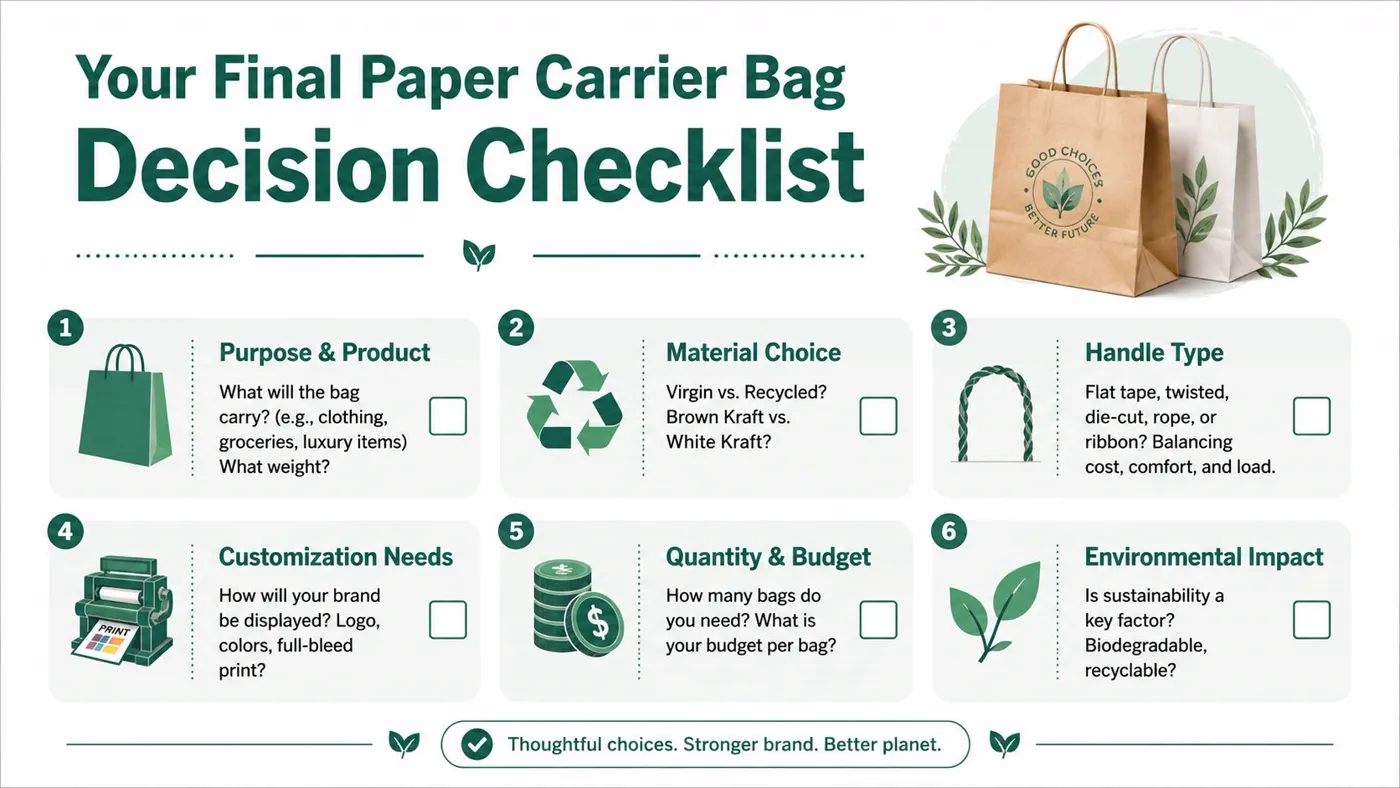
The questions that prevent expensive mistakes
Before asking for prices, pin down the job the bag has to do. That sounds basic, but it is where many SMEs go wrong. They buy on appearance or headline unit cost, then discover the bag fails on fit, comfort, stockholding, or repeat use.
Use this checklist:
- What exactly will the bag carry? Check the heaviest item, the widest pack, and the awkward shape that catches the side panel or strains the base.
- How will customers use it? A short trip from counter to car is different from a walk through town or a train journey home.
- What standard does the bag need to hit for your brand? A value-led takeaway shop, a premium gift retailer, and a sustainability-focused deli should not all buy the same specification.
- Does reuse matter? In the UK, customers notice waste more quickly now, especially where bag charges and sustainability claims shape expectations. If you want the bag to signal responsible packaging, it needs enough strength and print durability to be used again.
- Do you need custom print now, or later? Plain stock bags with labels or stamps can be the right commercial decision early on.
- How much cash and storage can you commit? Large runs often reduce unit cost, but they also lock you into one size, one design, and one forecast.
The right paper carrier bag is the one that protects the sale, supports the brand, and still looks like good value once reorders, waste, and customer experience are factored in.
How to compare suppliers properly
A useful supplier comparison goes beyond paper weight and price per thousand. It should show what happens if there is a print issue, a late delivery, a failed batch, or a sudden need to reorder before peak trade. Reliability has a value. So does clear communication.
Build your comparison sheet around these points:
- Paper type and grade
- Handle fixing and overall construction
- Base and gusset dimensions
- Print quality and method
- Lead time for first order and repeat order
- Delivery terms and storage implications
- Minimum order quantity
- Sampling process and approval sign-off
- How the supplier handles problems
For businesses reviewing a wider supply setup, it helps to compare established packaging suppliers with specialist bag makers. Some are stronger on custom print. Others are better on service range, repeat ordering, or coordinating bags with boxes and other packaging lines.
The best decision usually comes from total value, not unit cost alone. If one option is slightly dearer but arrives on time, prints cleanly, carries the product without failures, and supports the way your business trades, it is often the better buy.
Businesses that want a paper carrier bag aligned with UK retail, takeaway, or bespoke branding requirements can review the broader packaging range at Packaging Panda, including made-to-order options and sustainable packaging formats for SMEs and growing brands.