Edge Protector Foam: Your 2026 UK Guide
A mirror arrives with a perfect surface and a crushed corner. A framed print reaches the customer with the glass intact but the frame chipped. A worktop lands at site with one damaged edge, and the buyer refuses the delivery. In each case, the problem looks small. The commercial fallout isn't.
Shop foam edge protectors & protective packaging →
For UK e-commerce teams, edge damage is where packaging decisions become expensive. The return isn't just the product. It's the replacement shipment, the support time, the review risk, and the loss of confidence from a customer who expected a clean delivery. That's why edge protector foam keeps turning up in serious packaging operations. It deals directly with the most vulnerable part of many products.
Table of Contents
- The Cost of a Damaged Edge
- What Are Foam Edge Protectors and How Do They Work
- A Guide to Foam Protector Profiles and Materials
- Foam vs Cardboard Which Edge Protector Is Right for You
- Decoding the Specs Sizing Density and Performance Data
- Proper Installation and Fastening Techniques
- Sourcing in the UK Cost Sustainability and Ordering
- Making the Right Choice for Your Business
The Cost of a Damaged Edge
Most damaged shipments don't fail in the middle. They fail at the edge. Corners take the first hit during picking, loading, conveyor handling, van drops, and doorstep delivery. If the item has a decorative finish, glass face, lacquered frame, or machined corner, that hit often turns into a write-off.
That's why edge protector foam matters. It's not a nice extra for premium products. It's a control measure for damage risk. The right foam profile can stop a minor knock turning into a return, especially for furniture, mirrors, frames, worktops, appliances, and awkward industrial parts.
The wider cost sits outside the packaging line:
- Customer service time: teams spend time on claims, photos, refunds, and replacement dispatch.
- Reverse logistics: damaged goods often come back at the seller's cost or need disposal.
- Brand perception: buyers judge the seller by the delivered condition, not by how well the warehouse packed it.
- Stock disruption: a replacement order can consume saleable stock that was meant for another customer.
Practical rule: If the edge is the first point of impact and the product can't tolerate cosmetic damage, it needs dedicated edge protection rather than general void fill alone.
Good packaging decisions usually look boring on dispatch day. That's the point. If the edge arrives clean, nobody notices the protector. If it arrives damaged, everybody notices the lack of one.
What Are Foam Edge Protectors and How Do They Work
A framed mirror leaves your warehouse in clean condition, then reaches the customer with one chipped corner and a refund request attached. In many of those cases, the outer box has done part of the job, but the edge took a concentrated hit that the pack was never set up to absorb. Foam edge protectors are designed for that specific failure point.
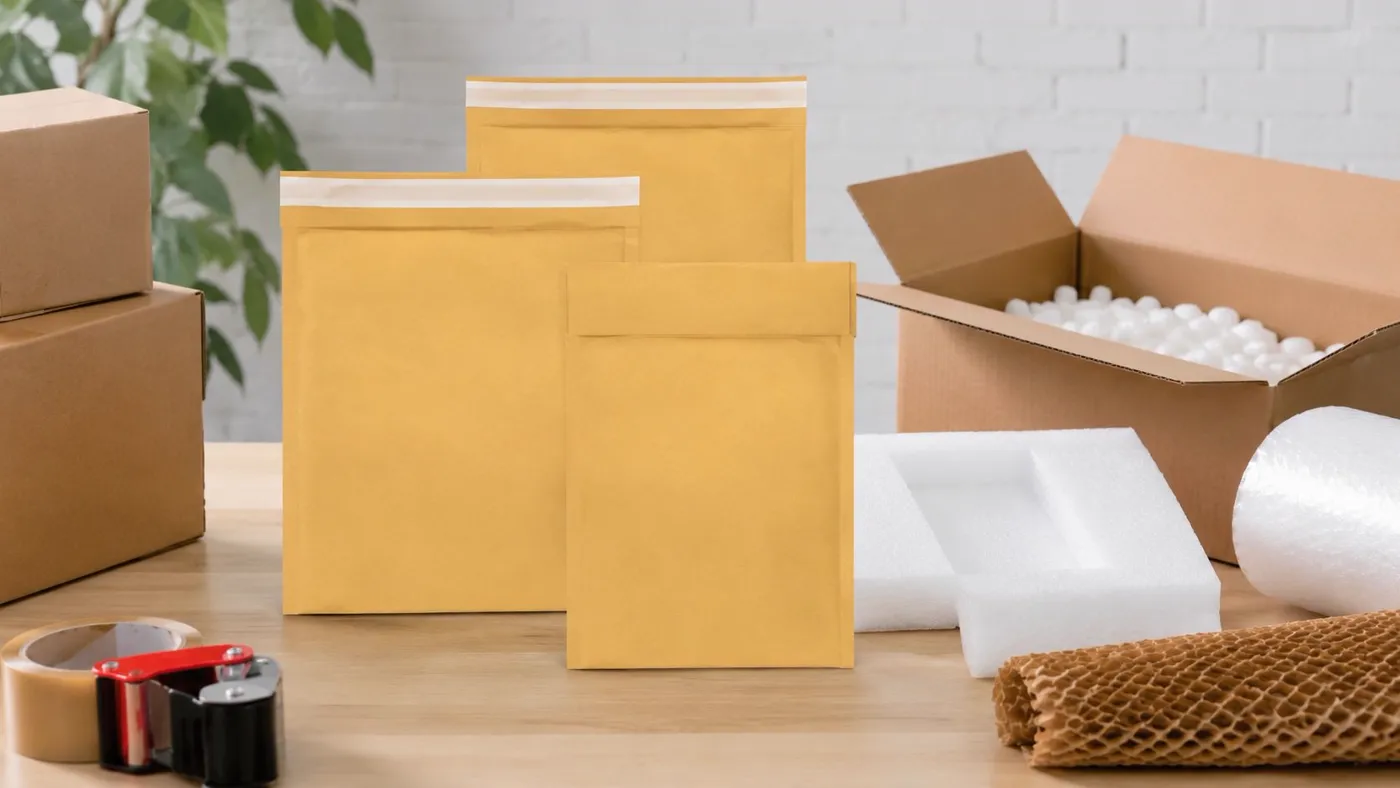
They work by creating a sacrificial cushion around the perimeter of the product. On impact, the foam compresses, spreads the load, and reduces direct contact between the struck surface and the product edge underneath. That matters on painted furniture, glazed frames, worktops, machined panels, and other goods where the edge is both exposed and expensive to put right.
The performance comes from the foam's cellular structure. Under normal knocks in storage, pick, pack, and courier handling, those cells deform and absorb part of the energy before it reaches the product. Better grades recover well enough to stay protective through more than one handling stage, which is useful for multi-leg delivery networks and returns processing.
Edges need different protection from flat faces because force is concentrated into a smaller line. A carton wall may flex and survive. A corner on MDF, glass, lacquered timber, or coated metal often will not. A fitted foam profile covers that line, holds a buffer in place, and helps stop abrasion as well as impact damage.
Foam also works best as one part of the pack, not the whole system. It should sit against the product first, then be supported by the outer packaging so the item cannot move freely in transit. If you are reviewing broader protective packaging materials for transit protection, the key point is fit. Loose edge foam inside an oversized box will not deliver the same result as a profile matched to the product and packed tightly.
There is a commercial trade-off here for UK businesses. Foam is quick to apply, light in weight, and very effective on delicate finishes, but it is not automatically the greener or cheaper choice once you factor in packaging waste costs, material recovery, and compliance pressure. Recycled-content foam can also be less predictable if it is stored badly or exposed to damp conditions for long periods. In practice, moisture does not ruin every foam protector, but it can affect consistency, grip, and appearance, which matters if packs are stored in unheated warehouse space.
Foam edge protection is also used away from parcel packing. In warehouses and dispatch areas, high-visibility foam strips are fitted to racking, low beams, and exposed corners to reduce knocks to people, equipment, and property. The principle is the same. The foam takes the first contact so the harder surface underneath does not.
A Guide to Foam Protector Profiles and Materials
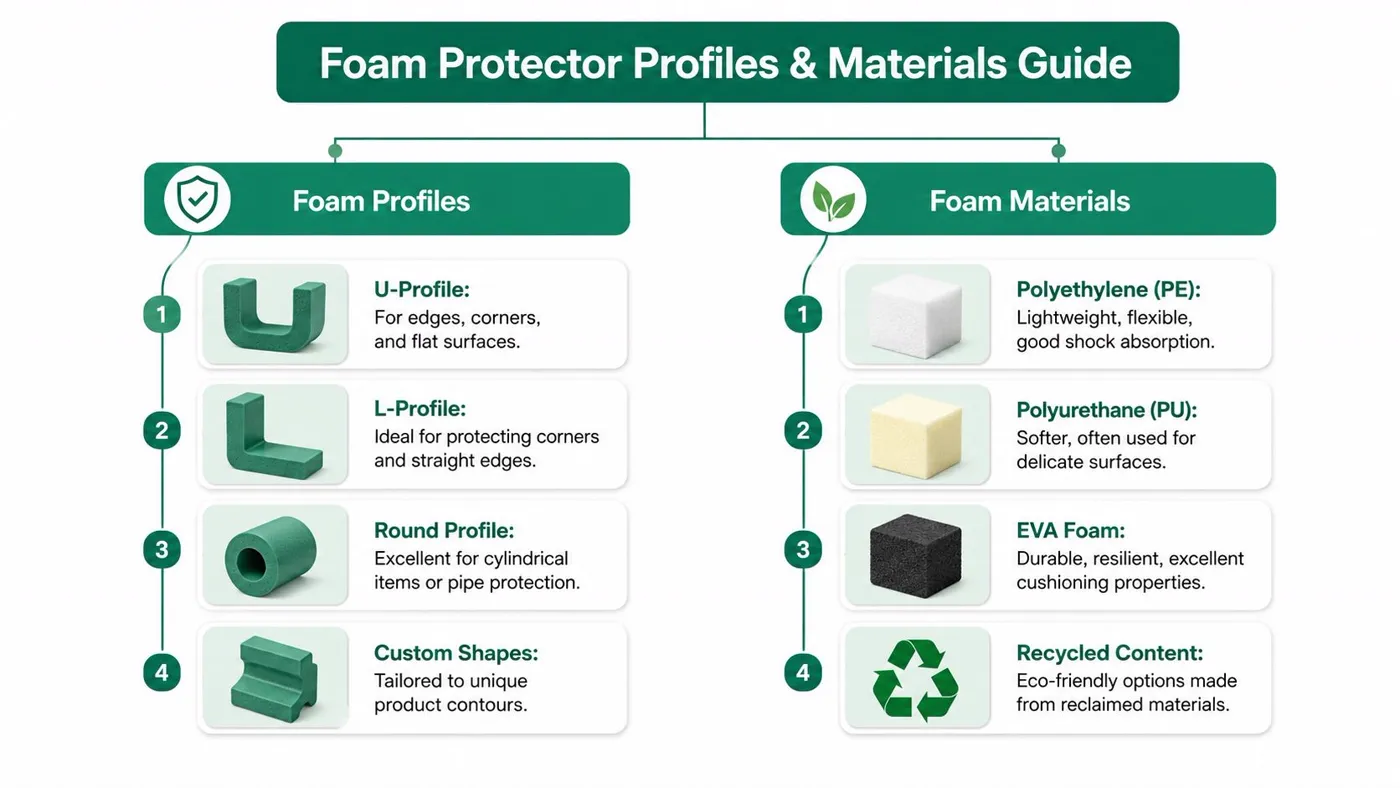
A lot of buying mistakes come from choosing foam by appearance rather than fit. Profile matters first. Material comes second. If either is wrong, the protector won't stay in place or won't absorb the kind of impact the product faces.
Choosing by profile
U-profile is the workhorse. It grips an edge and stays there better than flat foam strips because the channel wraps around the product. In the UK packaging trade, U-profile foam edge protectors are engineered to protect furniture edges, picture frames, and glass edges, with standard 2-metre lengths available for different applications, as described by Storage Removal Boxes U foam edging.
Use U-profile when the product has a defined edge and the goal is to protect it quickly without custom fabrication.
L-profile suits exposed corners and straight runs where the protector needs to cover two faces rather than grip a narrow edge. It's useful on boxed goods, pallet corners, and products where a U-channel won't seat properly because the edge is too broad or irregular.
Round or O-profile tends to fit cylindrical parts, tubing, poles, and rolled components. It's less common in standard parcel work but useful in industrial packing and construction supply.
Custom-cut profiles make sense when damage costs are high and the product shape is awkward. They take longer to source and usually need volume to justify the setup, but they can reduce packing inconsistency.
Choosing by material
Material choice is where teams often get distracted by marketing language. The practical question is simpler. Does the foam protect the product type, survive the handling environment, and make sense for the order volume?
- PU foam: Softer and more cushioning-focused. It's often the better fit for delicate finishes and fragile products where impact absorption matters more than stiffness.
- PE or EPE foam: Typically chosen when the operation needs light weight, clean handling, and a balance between resilience and cost.
- Recycled foam options: Attractive on paper for sustainability reporting, but performance claims need checking.
- Higher-rigidity options: Better where shape retention and handling stability matter more than surface softness.
A second performance benchmark is worth noting for rolled goods and edge crush risk. U-profile foam protectors in 25–35 mm × 2 m dimensions with compressive strength of at least 1.2 MPa are described by Macfarlane Packaging's U-shape foam edge protection strip as reducing corner crush damage by over 45% in standardised drop tests for rolled goods such as art prints and posters.
Matching product type to profile
The quickest way to specify edge protector foam properly is to map it to product vulnerability:
| Product type | Usually the better profile | Main reason |
|---|---|---|
| Picture frames and mirrors | U-profile | Grips edge and cushions brittle corners |
| Furniture panels and boards | U-profile or L-profile | Protects finished edges during handling |
| Pallet corners | L-profile or cardboard | Supports corners under strap pressure |
| Rolled artwork and posters | U-profile or tube-based packing | Protects ends and crush-prone edges |
| Pipes and cylindrical parts | Round profile | Wraps curved surfaces more securely |
The mistake to avoid is using the same profile across every SKU because it's already on the shelf. That simplifies purchasing but often raises damage risk in dispatch.
Foam vs Cardboard Which Edge Protector Is Right for You
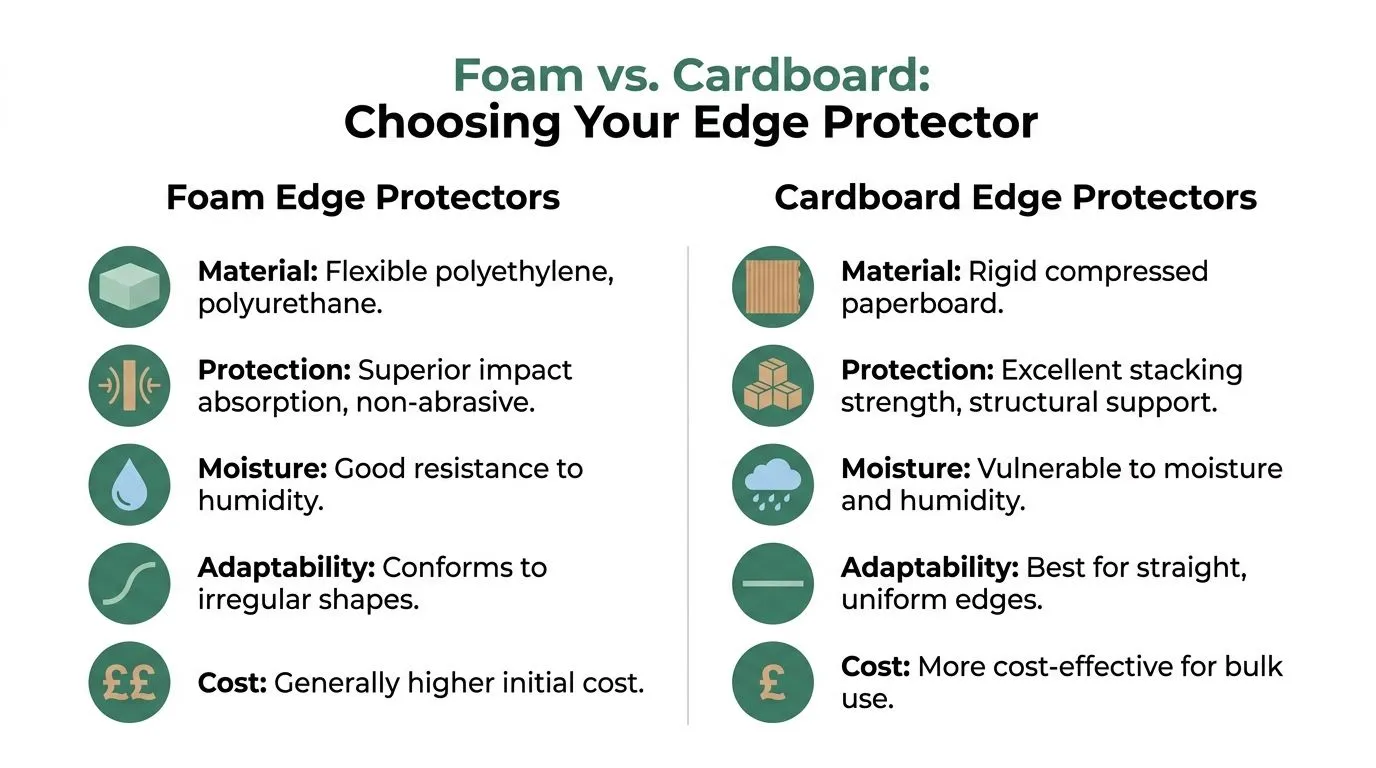
Foam and cardboard solve different problems. Treating them as direct substitutes usually leads to over-spend on one side or under-protection on the other. The better question is which failure mode needs controlling.
Where foam earns its keep
Foam is usually the stronger option when the item is fragile, finished, scratch-sensitive, or shaped in a way that needs a forgiving contact surface. It cushions impact rather than just resisting compression. That makes it suitable for mirrors, furniture edges, decorative mouldings, appliances, and coated metal parts.
It also adapts better to awkward products. If the edge isn't perfectly straight or the finish can mark under rigid pressure, foam tends to be safer.
For products that also need fitted internal support, black foam inserts are part of the wider packaging conversation, particularly where edge protection alone won't stop movement inside the outer pack.
Where cardboard makes more sense
Cardboard edge protectors usually win on pallet work, stacked loads, and strap protection. They're rigid, they spread load well, and they help keep strapping from cutting into cartons. They also align more naturally with paper-based packaging systems.
The UK cost and compliance angle matters here. According to Kite Packaging's corner and edge protection page, no neutral source calculates the 15–20% higher unit cost of foam versus cardboard when factoring in DEFRA's 2025 plastic packaging tax of £210 per tonne and the 5% reduction in pallet damage claims for cardboard due to superior strapping friction. That doesn't mean cardboard is always cheaper in practice for every SKU. It does mean the common “foam is better full stop” position is too simplistic.
Cardboard is often the smarter answer for pallet integrity. Foam is often the smarter answer for product finish and impact cushioning.
For posters, prints, artwork and documents, Cardboard Tubes are another practical paper-based option. They're supplied in standard, heavy and extra heavy duty wall thicknesses for rolled goods.
Foam vs. Cardboard Edge Protectors at a Glance
| Attribute | Foam Edge Protectors | Cardboard Edge Protectors |
|---|---|---|
| Impact cushioning | Better for knocks and surface-sensitive products | More limited cushioning |
| Rigidity | Lower | Higher |
| Best use case | Fragile items, finished goods, awkward shapes | Pallet loads, straight edges, strap protection |
| Moisture handling | Often more tolerant in use | Can be less suitable in damp conditions |
| Sustainability narrative | Depends on material and recovery route | Stronger paper-based story |
| Cost position | Often higher at unit level | Often more economical for bulk structural use |
The right answer for many businesses isn't foam or cardboard. It's both, used deliberately by SKU type.
Decoding the Specs Sizing Density and Performance Data
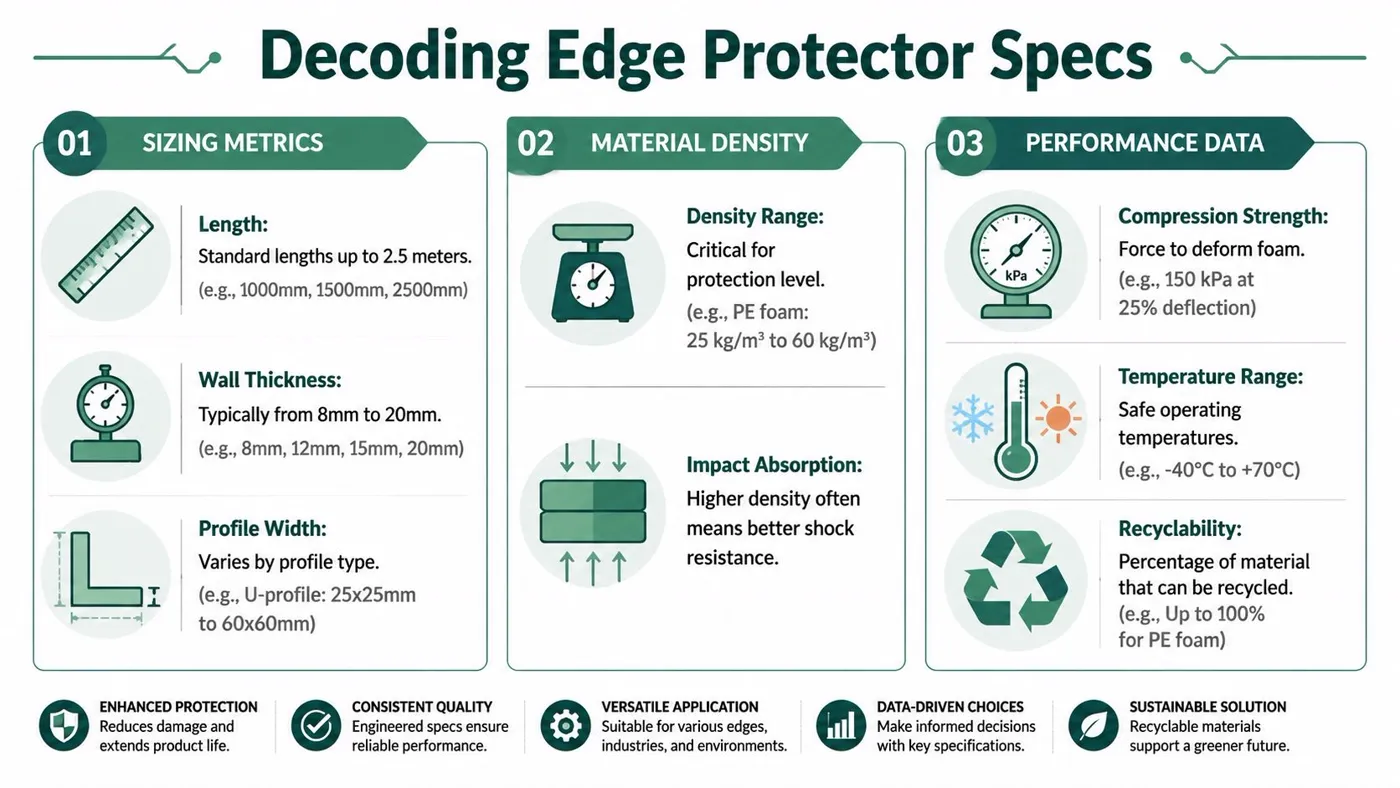
A spec sheet can save money or create expensive false confidence. I see UK teams buy foam by nominal size, then wonder why corners still chip, packers keep trimming pieces down, and damage claims stay stubbornly high. The problem is rarely the idea of foam itself. It is buying a profile and density that do not match the product, handling route, or packing line.
What the numbers mean in practice
Length affects labour, waste, and consistency. If pieces arrive too short, staff patch gaps or leave vulnerable points exposed. If they arrive too long, every pack requires an extra cut, which slows throughput and creates offcuts that rarely get used efficiently.
Thickness is your cushion depth. More thickness usually gives the foam more room to deform under impact, but extra material only helps if the profile stays in place and the carton still closes properly. Overspecifying thickness is common. It raises unit cost, can make packing awkward, and does little for products that fail from compression or strap pressure rather than knocks.
Density affects how the foam behaves under load. Higher-density foam often resists compression better and feels firmer in the hand. Lower-density foam can absorb light impacts well but may bottom out faster on heavier or sharper-edged items. Density is only part of the decision. A badly sized profile in the right density still performs badly.
For recycled-content foam, UK buyers should ask one more question. How stable is the material in damp storage or mixed-temperature delivery conditions? Sustainability claims can look strong on paper, but some recycled foams lose consistency when moisture and temperature variation are part of the actual transport environment. That matters if stock sits in an unheated warehouse, a delivery van overnight, or a container with condensation risk.
How to read performance data without overbuying
Use the spec sheet to answer a few practical questions.
- Measure the actual edge, not the catalogue size. Include coatings, frame lips, wrapped corners, and any protruding hardware.
- Identify the failure mode. Chipping, surface marking, crushed corners, and cracked substrates need different protection.
- Match foam firmness to product weight. A light decorative panel and a stone composite worktop do not need the same response under impact.
- Check compression behaviour with thickness. Density alone does not tell you how much protection remains after the first hit or after hours under load.
- Run a live packing trial. Good bench fit means little if the foam slips during wrapping, sheds on the line, or absorbs moisture in storage.
Commercial judgement matters.
If the product is surface-sensitive and claims are driven by cosmetic damage, a softer foam with enough thickness often makes sense. If the item is heavy, stacked, or exposed to repeated pressure, firmer material and closer attention to compression performance usually matter more than headline cushioning claims.
A final point for UK businesses. The cheapest foam spec is not always the lowest-cost choice, but neither is the greenest-sounding one. Under tighter packaging cost scrutiny and changing UK waste obligations, the right question is whether the foam reduces damage enough to justify its material cost, packing time, disposal route, and any sustainability trade-offs against cardboard. If a supplier cannot explain that clearly, the spec has not been worked through properly.
Proper Installation and Fastening Techniques
A returns team usually sees the same pattern. The foam was technically included, but one corner was left proud, the tape lifted in a cold van, or the protector slid during wrapping and the customer still received a chipped edge.
Installation decides whether foam reduces claims or just adds material and packing time.
Application that stays in place through transit
Start by cutting foam to the actual protection zone, not the nominal product size. Include wrapped corners, handles, frame lips, and any point where the item can shift inside the carton. If the cut is short by even a small amount, the corner tip becomes the impact point.
Fixing method should match the handling process and the surface.
- Self-adhesive foam suits permanent or semi-permanent use on warehouse fixtures, work areas, pallet racking, and repeat contact points. It is less reliable for dusty products, cold packing benches, or items with textured finishes.
- Tape fixing is usually the better choice for outbound parcels. It gives packers more flexibility, and it is easier to remove or reposition if the first placement is wrong.
- Stretch wrap over the protectors works well on larger goods such as furniture panels, mirrors, and flat-packed items because it secures several pieces at once and reduces the chance of individual sections peeling away.
The trade-off is speed versus consistency. Adhesive-backed profiles can be quicker in a controlled environment, but carton packing lines often get better real-world results from taped or wrapped foam because the hold is less dependent on surface condition.
Common fitting mistakes
The failures I see are usually process failures.
- Foam perched on the edge instead of seated properly. It looks fitted on the bench, then drops during handling.
- Protection on the straight run but not the corner point. That is where impact claims start.
- Too little fixing. One piece of tape in the middle leaves both ends free to open.
- The wrong tape for the environment. Low-tack tape struggles on dusty stock, cold surfaces, or recycled board with inconsistent top liners.
- Compressed foam pulled too tight under wrap. That reduces the cushioning you paid for.
Heavy items need closer fixing intervals than light decorative products. If the product is going into a parcel network, assume it will be turned, stacked, and pushed against hard surfaces more than once.
For UK businesses reviewing foam against cardboard, fitting method also affects the sustainability case. A foam profile that needs extra tape, rework, and replacement after damp storage is not automatically the lower-impact option just because the base material contains recycled content. Moisture can affect some recycled foams in storage and on open warehouse floors, which then changes fit and holding performance. Under UK packaging waste regulations guidance, that matters because material choice is only part of the cost. Waste handling, added components, and avoidable damage all feed into the packaging bill.
Set a packing standard that operators can follow without guesswork. Define cut length, where the protector starts and stops, how many fixing points are required, and what a correct fit looks like before outer boxing. That is what keeps damage rates stable across shifts and temporary labour.
Sourcing in the UK Cost Sustainability and Ordering
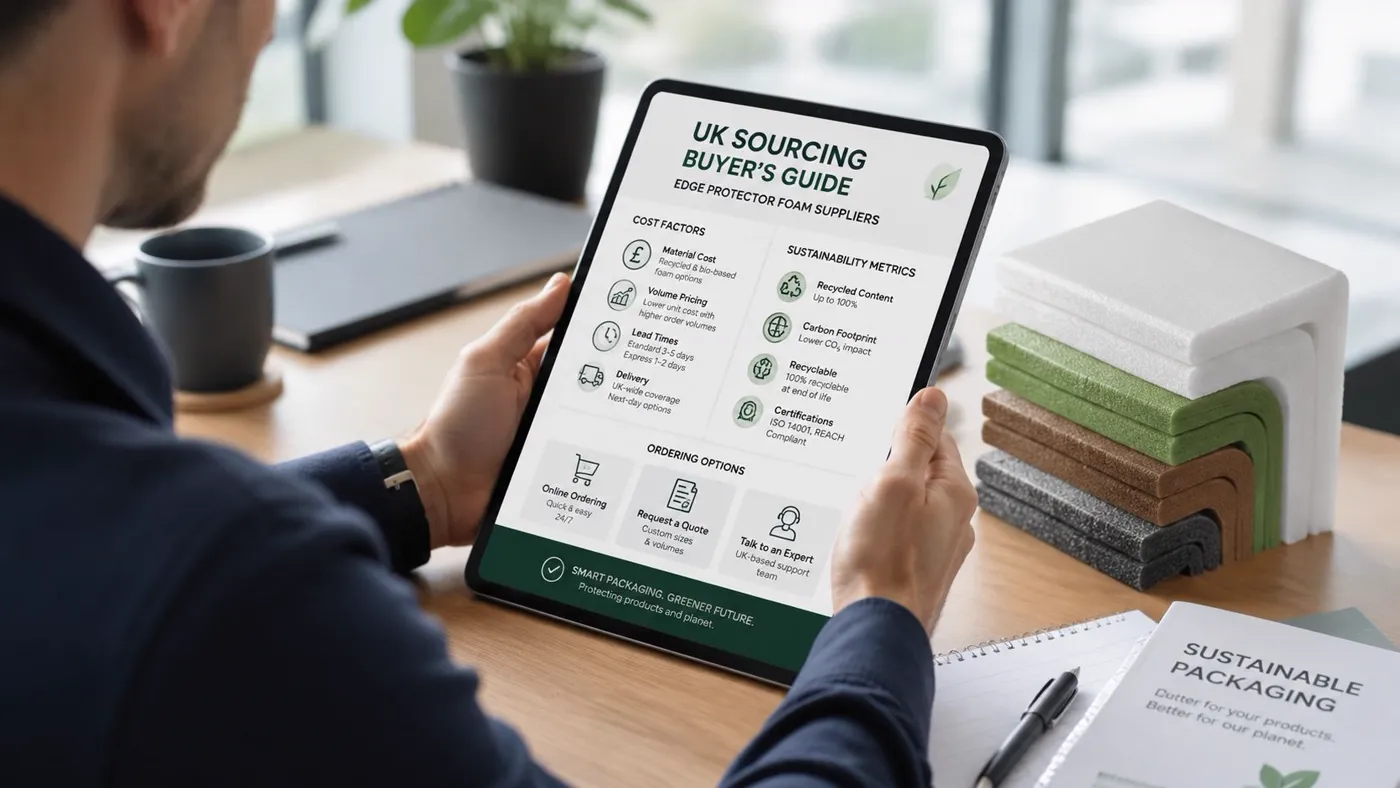
Buying edge protector foam well has less to do with finding the cheapest metre rate and more to do with controlling variance. If the protector arrives late, changes spec between batches, or takes too long to fit, the apparent saving disappears quickly.
Buy for consistency not just unit price
UK e-commerce operations usually need four things from a supplier: stable dimensions, predictable lead times, sensible pack quantities, and the ability to replenish quickly when a promotion or marketplace spike hits. If any of those fail, the warehouse substitutes materials, and damage risk goes up.
Ordering details matter:
- Minimum order quantity: too high and stock ties up cash.
- Pack format: awkward pack sizes create part-opened bundles and counting issues on the floor.
- Lead time: long waits force teams into emergency substitutions.
- Delivery terms: thresholds and next-day availability affect true landed cost.
One practical UK option in the wider packaging market is Packaging Panda's guide to packaging waste regulations, which is relevant when teams are reviewing material choices against compliance and reporting pressures.
A supplier relationship is stronger when the conversation covers the actual packing line. That includes whether staff are hand-applying protectors, whether products are boxed singly or in kits, and whether the same profile has to work across multiple SKUs.
The sustainability claim that needs scrutiny
This is the area where edge protector foam gets oversimplified. Recycled content and recyclability matter, but they don't cancel out performance risk. If a recycled foam protector breaks down faster in actual storage environments, the environmental story weakens once replacement shipments and damaged goods enter the picture.
The current gap in UK-specific evidence is important. As noted by Nice Package's Ocean Green edge protection page, there's a lack of independent UK data on long-term structural degradation of 100% recycled foam edge protectors under high-humidity conditions. The underserved angle highlights that no independent study quantifies the 20–30% loss in impact resistance after 6 months in UK warehouse environments with average 60–70% humidity.
That doesn't prove every recycled foam performs badly. It does mean buyers should be careful with confident sustainability messaging that isn't matched by use-condition evidence.
Sustainability claims should be tested against storage conditions, not just brochure language.
For fragile goods such as glass, mirrors, and polished furniture parts, moisture exposure during warehousing can matter more than many procurement teams assume. A material that looks fine on day one may not behave the same after months in a damp stock environment.
What to ask a supplier before ordering
A short supplier checklist prevents a lot of bad buys.
- Ask for profile tolerances. If the channel fit varies too much, application becomes inconsistent.
- Ask how the material behaves in storage. This matters for recycled-content lines in UK humidity.
- Ask about repeat availability. One successful trial is no use if the exact profile disappears later.
- Ask about custom runs only if volume supports them. Bespoke can help, but standard profiles are often easier to replenish.
- Ask how the product is packed and delivered. Crushed bundles create fitting problems before the foam reaches the line.
For businesses already buying broader transit materials, consolidating orders can help operationally. Packaging Panda, a UK wholesale supplier, offers made-to-order packaging alongside protective lines and service options such as free delivery over £150 and next-day delivery on orders placed before 2pm. That matters less as a marketing point and more as a planning factor for warehouses that can't afford stockouts.
The strongest buyers treat foam sourcing as part of damage prevention, not as a commodity purchase. That shift usually leads to better ordering discipline, tighter packing standards, and fewer unpleasant surprises after dispatch.
Making the Right Choice for Your Business
The right edge protector foam choice comes from matching the protector to the failure risk, not from defaulting to the cheapest option or the greenest-sounding label.
Start with the product. If the edge is brittle, visible, finished, or customer-facing, cushioning quality matters. Then check the profile. A perfect material in the wrong shape won't stay in place. After that, review the spec with discipline. Density, thickness, and fit should line up with the handling conditions the item will face.
The commercial decision sits wider than product protection alone. Cardboard may be the smarter answer for pallet stability and strapping. Foam may be the safer answer for glass, frames, furniture, and other finish-sensitive goods. Recycled options deserve scrutiny if stock sits for long periods in humid warehouse conditions.
The simplest buying checklist is this:
- Protect the actual weak point
- Specify by fit and performance
- Test sustainability claims against storage reality
- Order from suppliers who can replenish consistently
A business that gets those four calls right usually sees the result where it matters most. Fewer damaged deliveries, fewer avoidable returns, and fewer customers asking why the corner arrived broken.
Packaging teams that need a wider UK supply option for transit materials can review Packaging Panda for protective packaging, mailing products, bespoke formats, and wholesale ordering support.