
Mastering Next Day Delivery UK: Seller's Guide 2026

A new e-commerce manager usually meets next day delivery the hard way. A customer orders before lunch, the site promises arrival tomorrow, the warehouse misses collection by minutes, and support opens the next morning to an angry message asking why “next day” didn't mean next day at all.
Shop mailing bags & postal packaging →
That situation rarely starts with one bad courier run. It usually starts much earlier. The cut-off was too late, stock status wasn't clean, the parcel wasn't packed for fast transit, or the address should have been caught before the label printed. In the UK, parcel demand is now huge, with around 5 billion parcels handled annually in 2024 and 62% of online shoppers expecting next-day delivery, up from 44% in 2020, according to UK delivery and courier industry statistics from Shiply.
For sellers, next day delivery UK isn't a badge to add at checkout. It's an operating discipline. When it works, conversion improves and customers come back. When it doesn't, the costs spread across refunds, rework, replacements, returns, and avoidable support tickets.
Table of Contents
- The Promise and Peril of Next Day Delivery
- What Next Day Delivery Really Means in the UK
- The Seller's Playbook for Reliable Next Day Shipping
- Managing the Cost of Speed
- How to Get Next Day Delivery with Packaging Panda
- How to Reduce Failed Deliveries and Returns
The Promise and Peril of Next Day Delivery
Next day delivery sells certainty. Customers don't buy a van route or a hub sort. They buy the expectation that tomorrow's problem is already solved.
That's why the service creates pressure inside the business long before the parcel leaves site. A standard service can absorb a slow stock check or a label reprint. A next-day order can't. One small delay in the warehouse often turns into a missed collection, then a failed promise, then a preventable complaint.
Why sellers get caught out
Many teams treat next-day shipping as a carrier choice. It's closer to a chain of handoffs. Stock has to be right, pick faces need to be organised, the packaging station must keep up, labels have to print cleanly, and collections need to leave on schedule.
Practical rule: If the business can't despatch the order cleanly every day, it doesn't yet offer reliable next day delivery. It only offers the possibility of it.
The difficult part is that the offer looks simple on the front end. One tick box at checkout suggests a straightforward service. Behind the scenes, it demands discipline from operations, customer service, and commercial teams at the same time.
What works and what doesn't
A reliable operation usually does a few unglamorous things well:
- Publishes a realistic cut-off: The business gives itself enough time before carrier collection.
- Limits postcode promises where needed: Remote and hard-to-serve areas aren't treated the same as dense urban lanes.
- Uses packaging that fits the product and route: Fast transit increases handling pressure.
- Sets honest customer expectations: “Next working day” is explained clearly instead of buried in terms.
What doesn't work is overpromising and hoping the courier rescues the day. Carriers matter, but they can't fix poor internal timing, weak address data, or stock that wasn't where the system said it was.
What Next Day Delivery Really Means in the UK
For sellers, next day delivery in the UK usually means next working day delivery after despatch, not “the day after the customer clicked buy”. That distinction causes a large share of avoidable complaints.
The cleanest way to explain it internally is to think of a restaurant's last orders. A customer can walk in late, but if the kitchen has already closed the line for that service, the meal won't be served that night. Courier collections work the same way.
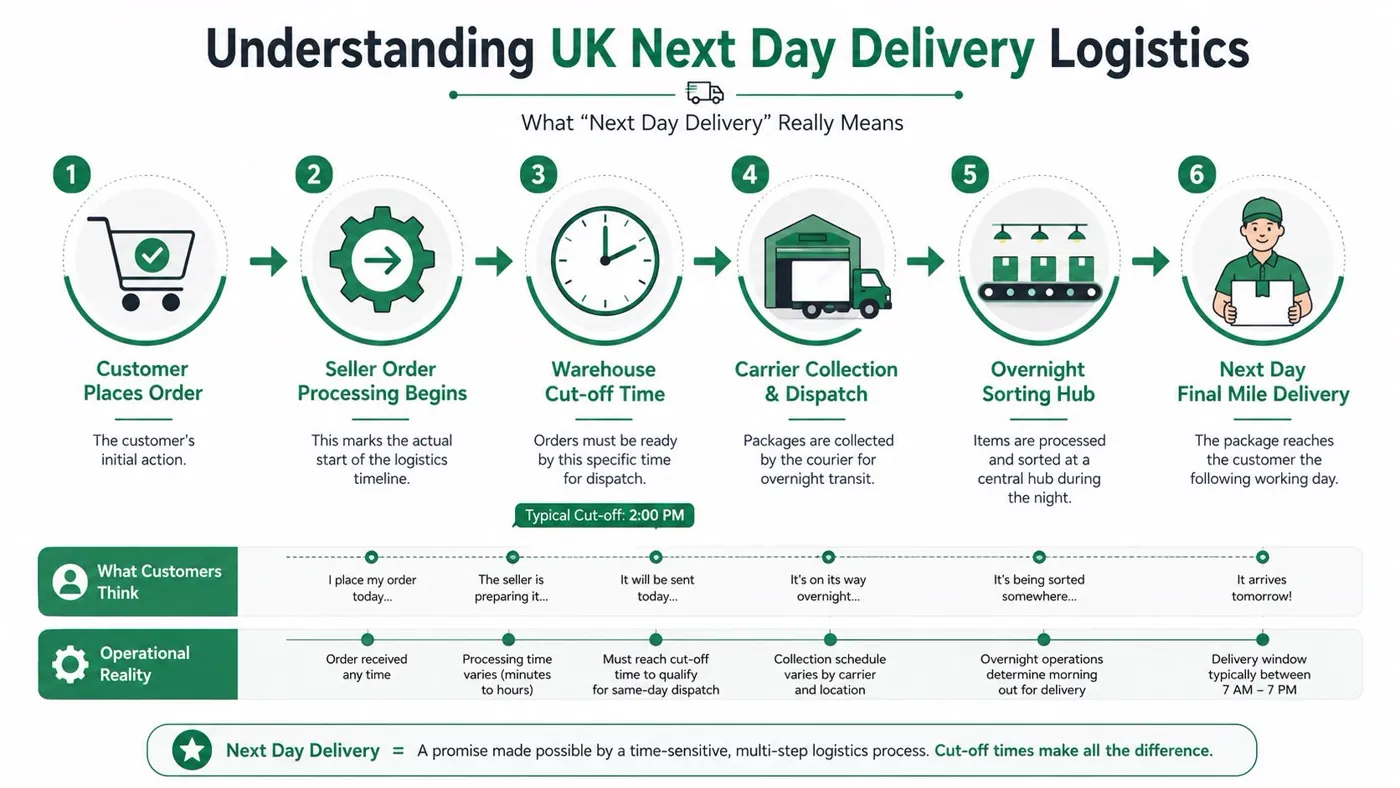
The delivery clock starts later than customers think
The customer's order time and the carrier's operational clock are not the same thing. The logistics timeline starts when the seller has processed, packed, labelled, and handed the parcel into the carrier network. If that handover misses the final collection, the parcel hasn't really entered a next-day lane yet.
That's why sellers need three separate timings on the site and in the warehouse:
- Customer order cut-off
- Internal warehouse cut-off
- Carrier collection deadline
These should never be identical. The business needs buffer between them, otherwise the promise depends on everything going perfectly every day.
A practical packaging example helps here. If a team ships mainly within Royal Mail parcel formats, Royal Mail Postage Boxes can simplify despatch because they're sized for Small and Medium Parcel formats and come in single and double wall constructions for e-commerce despatch. That doesn't guarantee service performance on its own, but it does reduce packing guesswork at the bench.
Sellers should define next-day service from the moment the parcel is accepted into the courier network, not from the moment the basket is paid.
Common exclusions that need stating clearly
Most delivery disputes come from wording that sounds broader than the network really is. “Next day” often excludes weekends, bank holidays, and some remote postcodes. Certain areas of Scotland, Northern Ireland, and other outlying routes may have longer lead times or limited service windows.
The safer approach is to state exclusions before checkout, not after payment. Customers will usually accept a clear rule. They react badly when the rule appears only after the order is already placed.
A clear policy should cover:
- Working days only: Explain whether Friday despatch means Monday delivery.
- Regional exceptions: Flag postcode areas with different service levels.
- Order timing: Tell customers what happens when they order after cut-off.
- Stock status: Make clear that in-stock items and made-to-order items won't move on the same clock.
The Seller's Playbook for Reliable Next Day Shipping
The warehouse decides whether next day delivery works. Marketing can advertise it and the carrier can execute the linehaul, but the seller's internal process is what makes the promise believable.
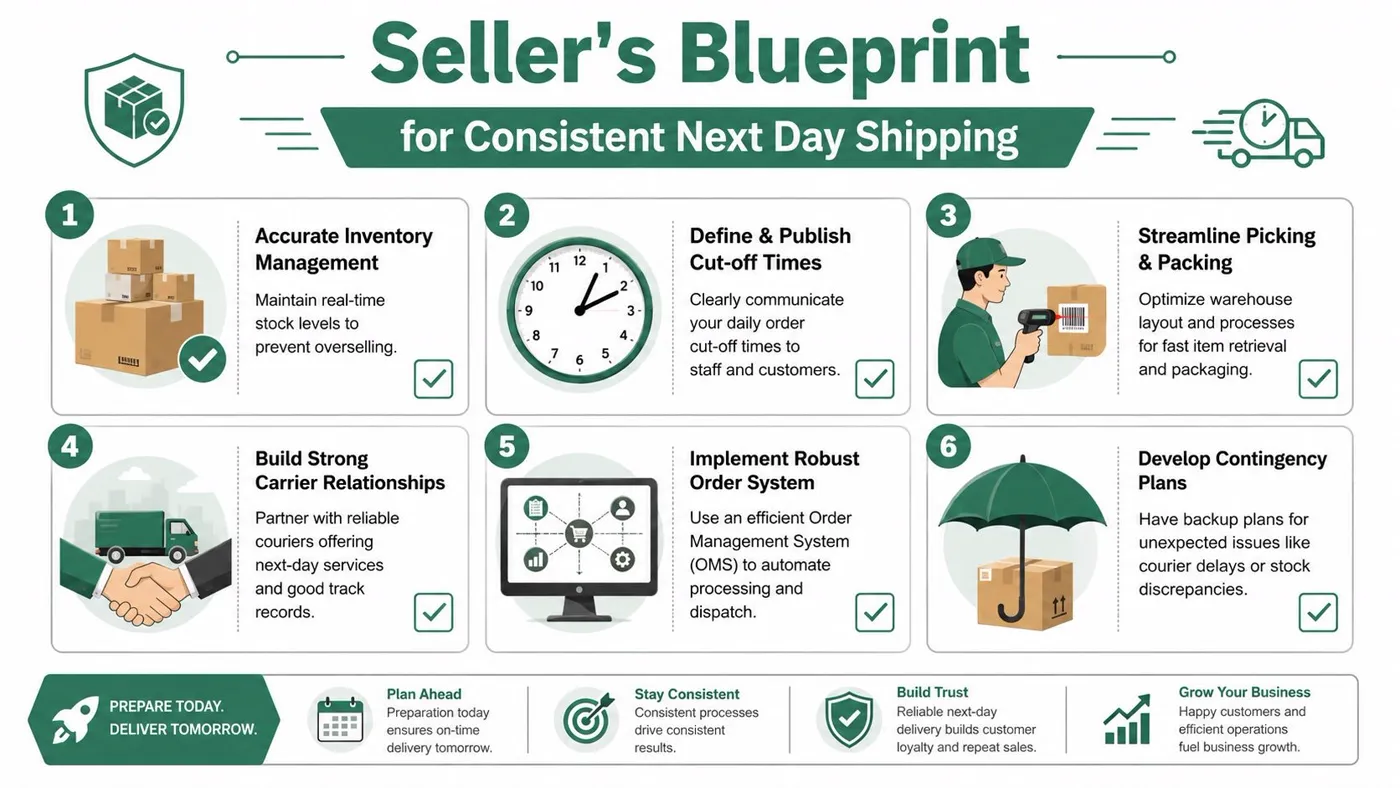
Build margin into the cut-off
The first fix is usually simple. Set an internal cut-off earlier than the public one. If the site promises next-day on orders placed until late afternoon, but picking regularly spikes at mid-day, the business is forcing itself into daily rescue mode.
A stronger model looks like this in practice:
- Commercial promise first: The site shows a customer cut-off that the operation can hit consistently.
- Warehouse buffer second: Staff stop accepting rush work before the carrier arrives.
- Exception handling last: Problem orders go into a managed queue instead of disrupting every other parcel.
Compressed windows increase pressure on labour, benches, scanners, and loading. It also affects unit economics. The cost per delivery is a key KPI for businesses offering next-day options, especially when 2pm order cut-offs create tighter resource use and transit pressure, as outlined in BHA Courier's guide to delivery performance metrics.
Pack for speed and protection
Fast shipping often exposes weak packing decisions. A box that's oversized, under-filled, badly taped, or wrong for the product is more likely to create damage, surcharge risk, or sorting issues.
The operational rule is straightforward. Use the smallest protective format that safely fits the item, keeps presentation acceptable, and moves cleanly through the carrier network.
The damage-free delivery rate is an important quality metric, and faster transit can increase handling risk, which is why protective packaging matters, according to FedEx's overview of essential logistics metrics.
A packing bench audit should check:
- Right-sized outers: Avoid sending small goods in cartons that waste fill and raise dimensional cost.
- Protective choice by product type: Fragile, cosmetic, printed, and high-value items each need different protection.
- Seal quality: Weak closure creates avoidable failures in hub handling.
- Label surface: Couriers need a flat, scannable face every time.
Teams that want to tighten location and fulfilment visibility often pair warehouse changes with better search and operational discoverability across channels. Resources on GEO for ecommerce businesses can help frame how product availability, local intent, and fulfilment promises need to align, especially when speed claims appear across search, ads, and landing pages.
Book and label without friction
Many “carrier failures” start as seller admin failures. The collection wasn't booked properly, the service level on the label was wrong, or the order held because a mandatory field was missing.
That's why reliable next-day despatch needs a boring, repeatable close-down process:
| Checkpoint | What to confirm |
|---|---|
| Label batch | Correct service selected and labels readable |
| Manifest | All parcels included before handover |
| Address review | Flats, units, and postcodes complete |
| Collection readiness | Parcels staged before driver arrival |
A clean handover beats a heroic last-minute one. Parcels that leave calmly tend to arrive on time more often than parcels rushed onto the vehicle in the final minutes.
Managing the Cost of Speed
Next-day delivery is expensive even when everything goes right. Carrier rates are higher, labour has less slack, and late-day orders create more operational strain than standard services.
The bigger mistake is to treat the carrier charge as the whole cost. It isn't. The hidden cost sits in failure, rework, support contact, refunds, and replacement shipments.
Direct cost is only part of the picture
UK retailers face £1.6 billion in annual costs due to delivery failures, and 91% of ecommerce shoppers choose where to buy based on next-day delivery options, according to Q Couriers' analysis of UK next-day delivery failures. This is the core commercial pressure behind the service. Shoppers care about speed, but the seller pays when the promise fails.
The cost model should include at least four buckets:
- Carrier spend: The visible premium for faster lanes.
- Warehouse intensity: More labour pressure around cut-off.
- Failure handling: Customer service time, claims, and reshipment.
- Margin leakage: Discounts or goodwill offered to protect the account.
Sellers also need to understand parcel dimensions properly. A light shipment in a large carton can still become expensive because carriers price by space as well as weight. Packaging teams that need to tighten this can use a practical guide to calculating volumetric weight before locking in carton choices.
How sellers protect margin
There isn't one pricing model that suits every catalogue. The sensible option depends on product margin, order frequency, and urgency.
A simple comparison helps:
| Approach | Where it works | Main risk |
|---|---|---|
| Included as standard | High-margin products or strong repeat value | Margin erosion |
| Charged premium | Urgent purchases with clear need | Basket drop-off |
| Threshold-based | Higher average order values | Customers game the threshold |
Threshold-based shipping often works well for packaging and replenishment buyers because larger orders absorb freight more cleanly. A free-delivery threshold such as free delivery over £150 can help nudge order consolidation while protecting economics on smaller baskets.
The key point is that sellers shouldn't ask, “Can next-day increase sales?” They should ask, “Can this version of next-day stay profitable after failures, support load, and packaging costs are included?”
How to Get Next Day Delivery with Packaging Panda
For buyers replenishing packaging stock, the most important rule is clarity. If an item is needed urgently, there has to be a published cut-off that gives the warehouse enough time to process, pack, and hand over the order properly.
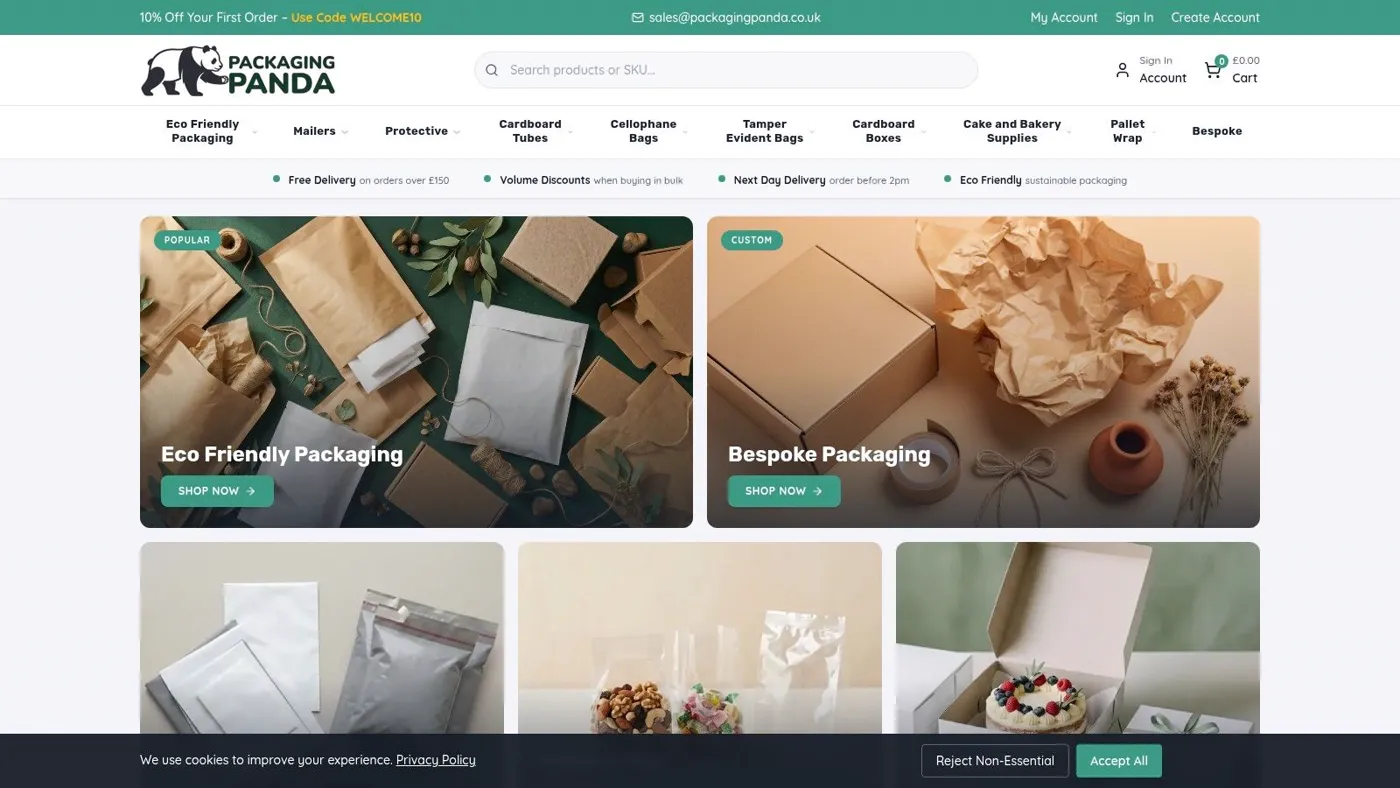
Why the 2pm cut-off matters
Packaging Panda offers next-day delivery on orders placed before 2pm on a working day for in-stock items. That cut-off isn't an arbitrary restriction. It's the operating control that allows the warehouse to pick, pack, prepare documentation, and release parcels before carrier collection.
That approach matches the reality covered earlier in this guide. A published cut-off protects service reliability more than a vague “order now for fast delivery” message ever could. It also supports the KPI discipline behind fast shipping. Cost per delivery matters when businesses run 2pm cut-offs because compressed windows raise resource use and transit pressure, as noted in BHA Courier's delivery KPI guidance.
Buyers who need the exact policy can check Packaging Panda's delivery information. For urgent restocking, the useful part is simple: order in-stock lines before the cut-off on a working day, and the despatch process is designed to support next-day arrival.
How to Reduce Failed Deliveries and Returns
Most sellers spend too much time arguing about carrier performance and not enough time fixing the parts they control. That's where the easiest gains sit.
Nearly 40% of delivery issues stem from failed first attempts, often because the customer isn't home. Better notifications and clearer instructions can reduce that problem substantially, as noted earlier in the article.
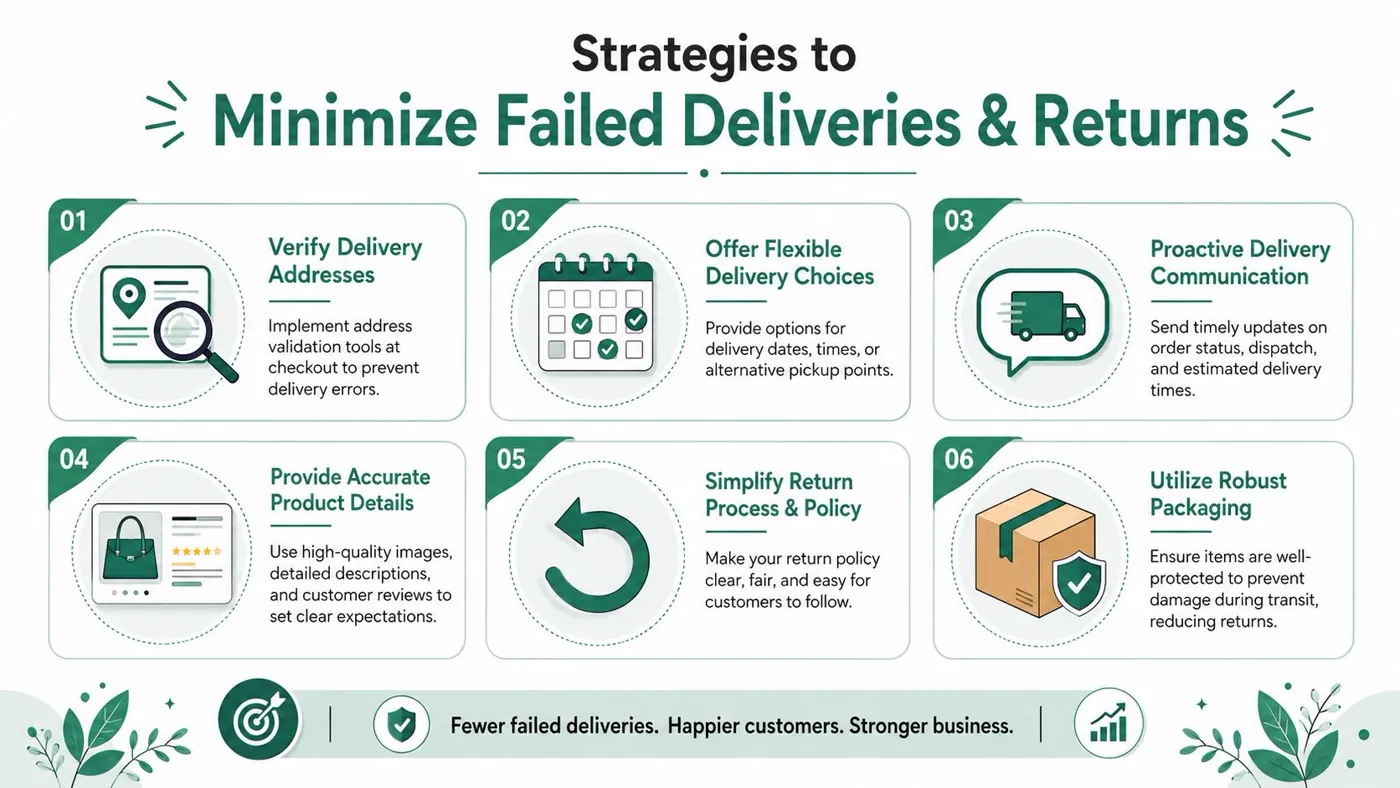
Fix problems before despatch
The cleanest failed delivery is the one that never enters the network with bad data.
Three controls usually make the biggest difference:
- Address validation at checkout: Catch missing house numbers, unit references, and postcode errors before payment completes.
- Delivery instructions field: Let customers add safe-place notes or access details in a structured format.
- Pre-despatch communication: Send despatch confirmation quickly so customers know a parcel is moving.
Clear pre-delivery communication often solves what support teams wrongly classify as a courier issue.
It also helps to separate customer language from warehouse language. A customer may write “deliver to reception”. A label may still need company name, site name, and the exact building identifier to land correctly.
For sellers reviewing the reverse side of the problem, Fleetalyse returns is a useful reference point for how returns workflows can be organised when failed delivery and customer-initiated returns start overlapping operationally.
Reduce returns after delivery
Not every return is a delivery failure. Some are expectation failures, and others are packaging failures.
A practical returns reduction plan usually includes:
- Improve product pages. Customers need accurate sizing, materials, colour representation, and use-case detail.
- Use stronger transit protection. Damage returns often start with poor void fill, weak edges, or inadequate mailers.
- Write a usable returns policy. Customers shouldn't have to decode legal language to understand the process.
Returns become much easier to manage when the policy is visible and operationally realistic. Packaging sellers and e-commerce merchants alike should make sure the returns route is easy to find, such as a clearly published returns policy.
A good test is whether support can answer these questions in one message without escalating:
| Customer problem | Seller control |
|---|---|
| Parcel couldn't be delivered | Better address data and delivery instructions |
| Item arrived damaged | More protective packaging and tighter pack checks |
| Wrong item ordered | Clearer product information before purchase |
| Customer unsure how to return | Simple published returns process |
The wider lesson is simple. Reliable next day delivery UK performance depends less on heroic carrier management and more on disciplined order handling, clearer communication, and packaging choices that fit both the product and the network.
Packaging buyers that need dependable replenishment can order in-stock items through Packaging Panda before the published working-day cut-off to support next-day despatch, while also using the site for protective, mailing, and carton formats that fit routine e-commerce fulfilment.