How to Calculate Volumetric Weight: A UK Shipper's Guide
A courier invoice usually tells the story after the damage is done. A parcel that looked light on the packing bench gets billed as if it were much heavier, and the line item often reads something like dimensional weight or volumetric weight.
Shop right-sized cardboard postal boxes →
That catches a lot of UK sellers because the product weight feels obvious, but the parcel size is what drives the charge. Gift sets, bakery boxes, apparel in oversized cartons, and homeware with too much void fill are common offenders. The mistake usually isn't the formula itself. It's the messy real-world part: measuring a parcel that isn't perfectly square, choosing a carrier with a different divisor, or missing a rounding rule that changes the chargeable weight.
Table of Contents
- Why Volumetric Weight Catches UK Shippers Out
- The Universal Formula and How to Measure Correctly
- Decoding UK Carrier Rules and Divisors
- Calculating Volumetric Weight in Practice Worked Examples
- How to Systematically Reduce Your Volumetric Charges
- Frequently Asked Questions About Dimensional Weight
Why Volumetric Weight Catches UK Shippers Out
The usual pattern is simple. A business owner packs an order, weighs it, books the shipment, and assumes the cost is settled. Then the monthly statement lands and several parcels have been re-rated because the courier charged for the space they occupied, not the figure shown on the scales.
That's volumetric weight. It's the carrier's way of pricing bulky parcels that don't weigh much but still take up valuable room in a van, trailer, or aircraft hold. A large carton of lightweight goods can block the same space as a much heavier shipment. The courier charges accordingly.
This hits smaller UK shippers harder because they often don't have rigid packing rules. One person uses the nearest stock box. Another adds extra void fill to be safe. Someone else leaves room because the product presentation looks better. None of those choices seem expensive at the bench. They become expensive when the parcel enters the carrier network.
Bulky packaging is often the problem, not the product.
A few situations come up again and again:
- Gift and subscription packs get packed into cartons with too much headroom.
- Clothing and soft goods go into boxes when a slim mailer would do.
- Bakery and presentation packaging protects the product but creates dead space around it.
- Mixed orders get forced into one oversized outer carton because it's quicker.
The result is predictable. The actual item may be light, but the parcel dimensions push the chargeable weight higher. That extra charge feels random if no one checked the parcel size properly before booking.
For most firms, the fix isn't complicated. It starts with understanding how to calculate volumetric weight, then applying that calculation to the parcel the courier will scan, not the idealised shape someone had in mind when they packed it.
The Universal Formula and How to Measure Correctly
The formula is simple. The measuring isn't.
The formula in plain English
To work out volumetric weight, multiply:
Length × width × height ÷ divisor
Most UK parcel bookings use centimetres for the dimensions. So the practical routine is:
- Measure the parcel in centimetres
- Multiply the three dimensions
- Divide by the carrier's divisor
- Compare that result with the actual weight
- Use the higher figure as the chargeable weight
That's the core of how to calculate volumetric weight. The trap is that many businesses measure loosely, or they measure the product instead of the finished parcel.
How to measure parcels the way carriers do
Measure the completed parcel, fully packed and sealed. If the carton bulges after taping, measure the bulge. If a flap bows out, measure the widest point. Carriers won't ignore distortion just because the original box spec was smaller.
For awkward parcels, use the outermost points on each axis:
- Irregular cartons. Take the longest length, the widest width, and the tallest height.
- Bulging boxes. Measure where the parcel is broadest, not where the board is flat.
- Soft mailing bags. Lay them naturally, don't compress them flat with your hand.
- Part-filled cartons. Measure the outside dimensions of the carton shipped, not the space the contents occupy inside it.
Practical rule: If the parcel shape would trigger a second look from warehouse staff, measure the most generous outer points before you book it.
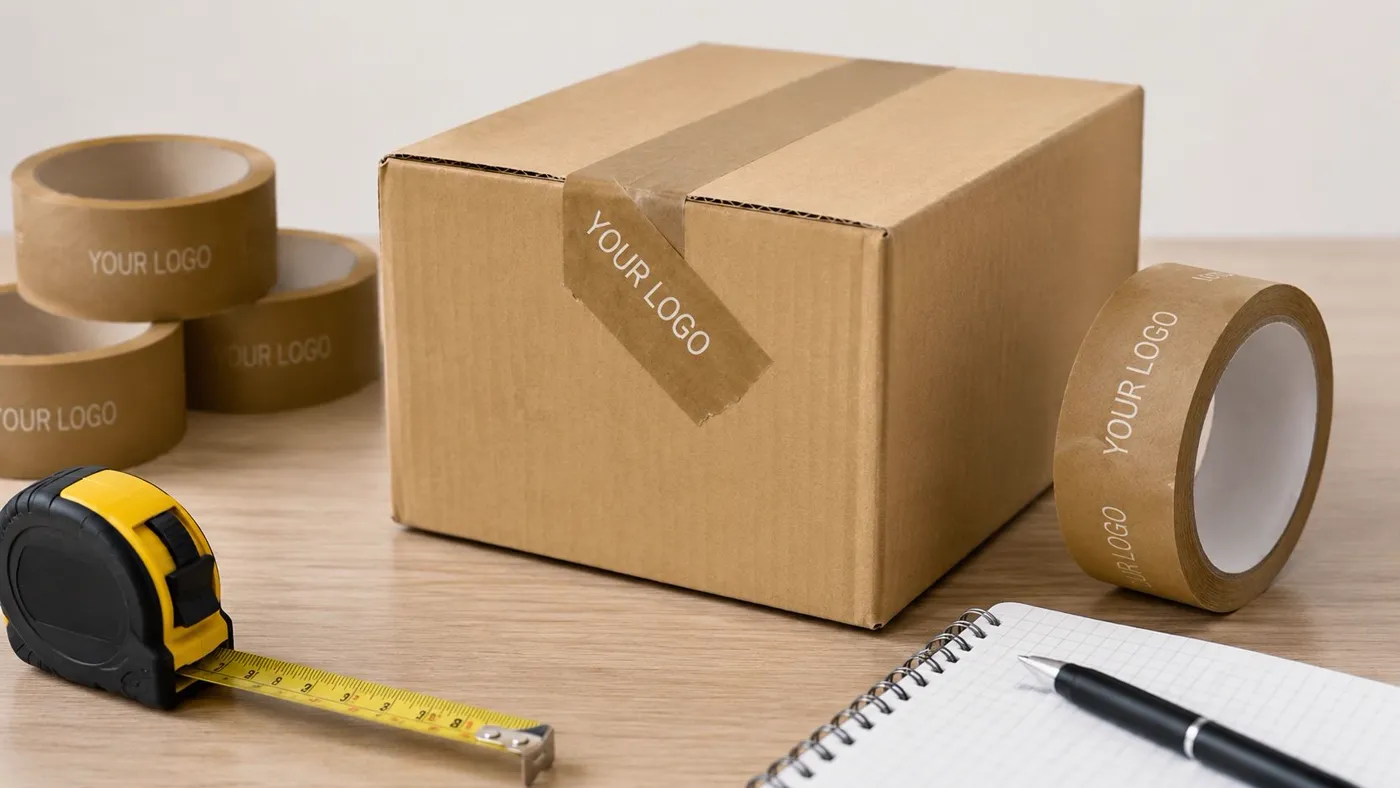
Sealing matters too. A poorly closed box can spread under tension and become effectively larger in transit. Products such as Paper Packing Tape are relevant here because the category includes gummed, self-adhesive and printed options, and the snapshot describes them as strong, recyclable and plastic-free. The point isn't branding. It's that clean, secure closure helps the packed box hold the dimensions you intended.
A good measurement routine saves more money than a rushed dispatch line. Keep a tape measure at every bench, write the final dimensions on the parcel checklist, and train staff to measure after packing, not before.
Decoding UK Carrier Rules and Divisors
The divisor is where many cost surprises begin. Businesses learn one formula, assume it applies everywhere, then discover the same parcel can price differently across services.
Why the divisor matters
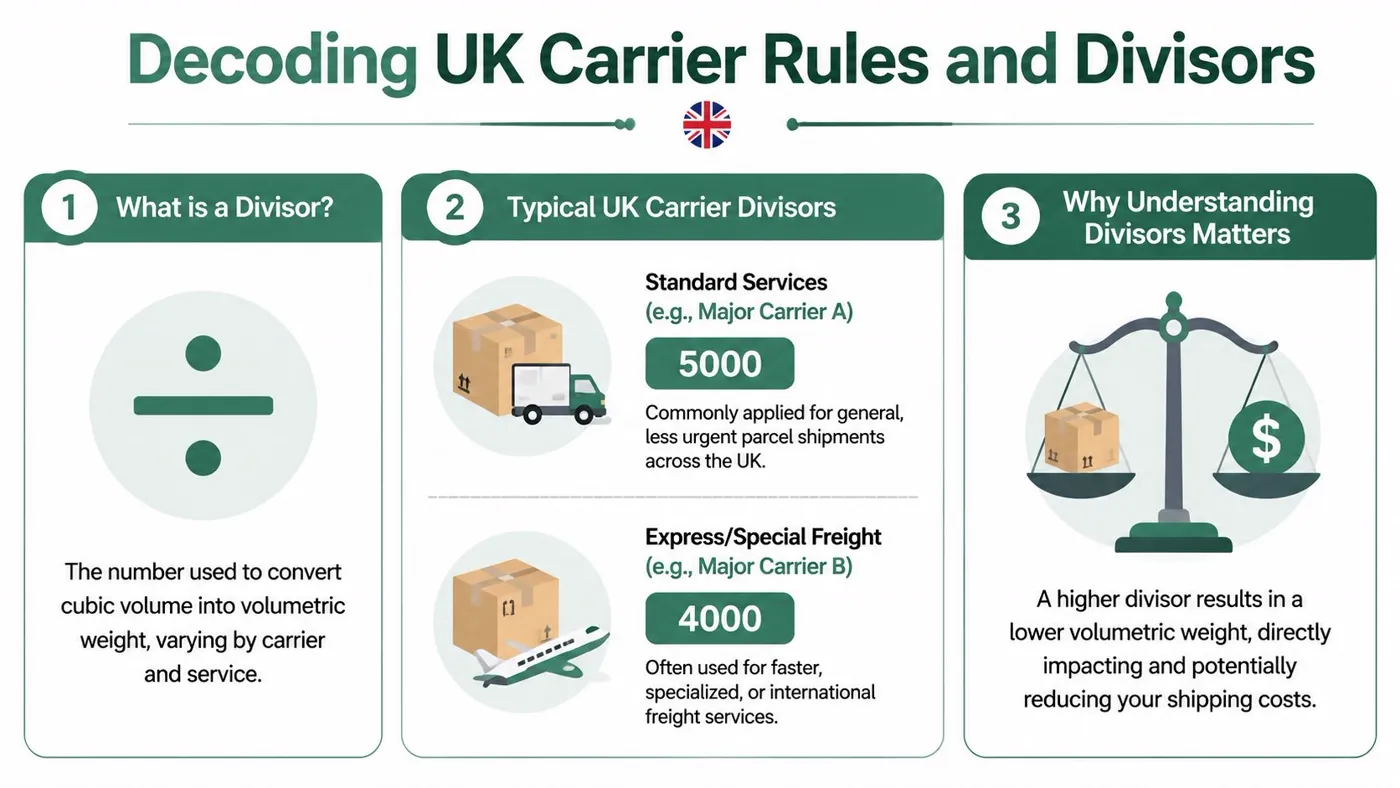
The divisor converts cubic volume into volumetric weight. A higher divisor produces a lower volumetric result. A lower divisor produces a higher one. That means the exact same carton can become cheaper or dearer depending on the carrier and service chosen.
In UK guidance, ParcelHero says volumetric weight is usually calculated by multiplying length, width, and height in centimetres and dividing by 5,000, while road freight and air freight often use 6,000. The same guidance also notes that UPS says each measurement should be rounded to the nearest whole number before dimensional weight is calculated. That combination of different divisors and different rounding approaches is a regular cause of unexpected fees for UK shippers and marketplace sellers, especially when parcels are awkwardly shaped or measured casually at dispatch (ParcelHero volumetric weight calculator guidance).
Common UK Courier Volumetric Divisors 2026
The table below is intentionally cautious. It shows the divisor values explicitly supported by the verified guidance above, and leaves other courier entries as carrier-specific checks rather than guessed figures.
| Courier | Typical Divisor | Notes |
|---|---|---|
| ParcelHero referenced parcel calculation | 5000 | ParcelHero states volumetric weight is usually calculated by dividing volume in cm by 5,000. |
| Road freight services | 6000 | ParcelHero notes road freight often uses 6,000. |
| Air freight services | 6000 | ParcelHero notes air freight often uses 6,000. |
| UPS | Carrier-specific check required | Verified guidance highlights UPS rounding rules before calculation. |
| Royal Mail | Carrier-specific check required | Check the booked service terms before rating bulky parcels. |
| DPD | Carrier-specific check required | Service rules can differ by account and shipment type. |
| Evri | Carrier-specific check required | Always confirm the parcel measurement method for the booked service. |
If the shipment also involves freight paperwork, teams often benefit from a plain-language guide to the shipping document explained, especially when parcel dispatch starts crossing into pallet or freight processes.
Rounding rules that trigger disputes
Rounding is where otherwise careful teams get caught. If a carrier wants each dimension rounded before calculation, the outcome can differ from a calculation that rounds only at the end. That matters most on custom cartons, soft packs, and outer boxes that aren't perfectly rectangular.
A sensible dispatch rule is to standardise the process:
- Measure after sealing so the parcel shape is final.
- Record each dimension clearly in centimetres.
- Check the service rules before booking.
- Use one internal method per carrier so staff don't improvise.
A parcel doesn't become cheaper because the shipper measured the neatest part of it.
For day-to-day operations, it also helps to keep courier terms, cut-off details, and parcel handling expectations in one place. The delivery information page is the sort of operational reference teams use to reduce avoidable dispatch mistakes.
Calculating Volumetric Weight in Practice Worked Examples
The formula becomes clear once it's applied to a real parcel. The difference between actual weight and chargeable weight becomes obvious when the box is bulky or the pack format is long and awkward.
Example one bulky but light carton
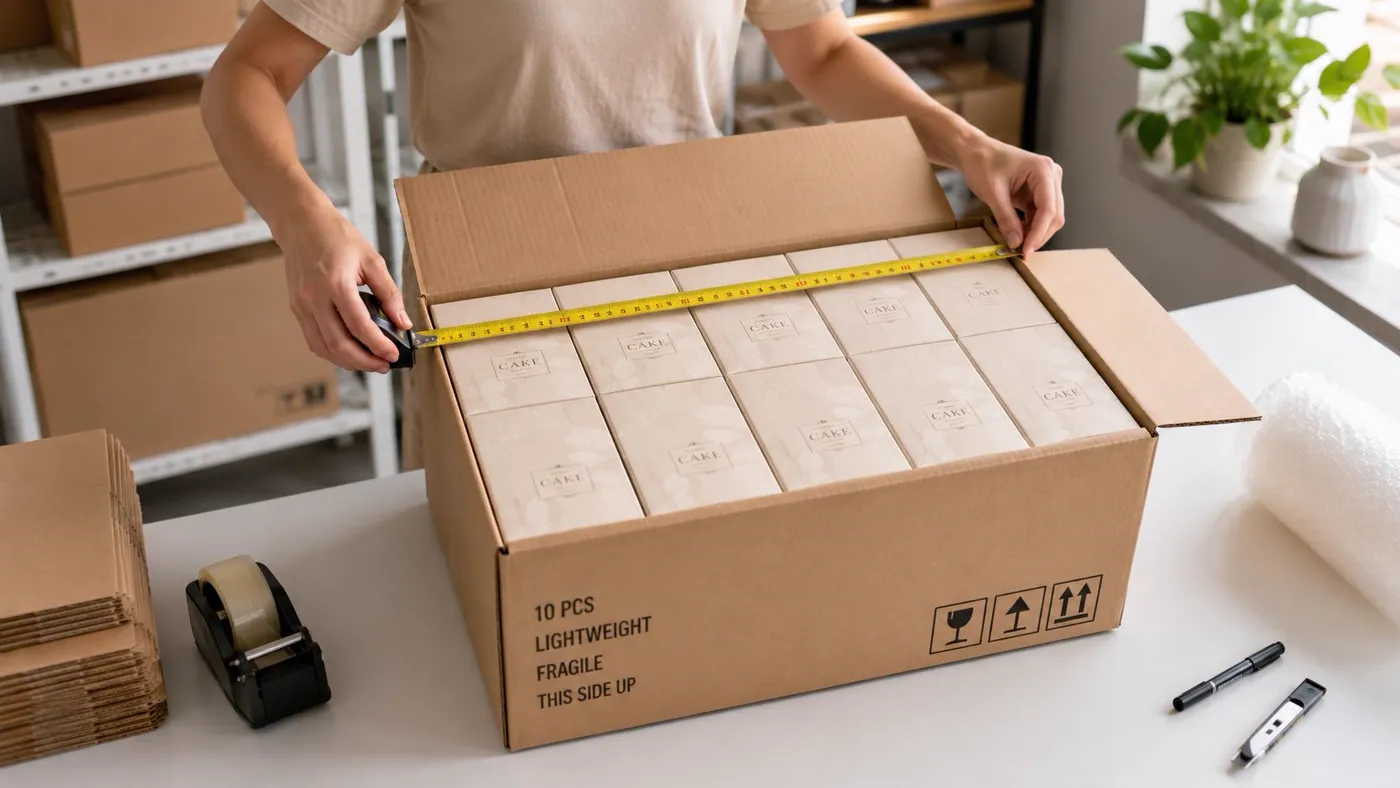
A bakery supplier sends a carton containing cake boxes. The finished parcel measures 45 cm × 35 cm × 25 cm. The actual weight is 2 kg.
First, calculate the volume:
45 × 35 × 25 = 39,375
Using a divisor of 5,000:
39,375 ÷ 5,000 = 7.875 kg
Using a divisor of 6,000:
39,375 ÷ 6,000 = 6.5625 kg
The actual weight is still 2 kg, so the courier would charge by the higher figure. That means this parcel is billed by volumetric weight under either divisor.
The lesson is blunt. The contents are light, but the carton is large enough to trigger a much higher chargeable weight than the scales suggest.
Example two long narrow tube
A retailer ships a poster in a tube. The parcel measures 65 cm × 8 cm × 8 cm. The actual weight is 0.8 kg.
Calculate the volume:
65 × 8 × 8 = 4,160
Using a divisor of 5,000:
4,160 ÷ 5,000 = 0.832 kg
Using a divisor of 6,000:
4,160 ÷ 6,000 = 0.6933 kg
This example shows why long items deserve their own packing rules. The dimensions look modest, but the length still drives the volumetric result. Depending on service terms and rounding, the chargeable weight can edge above the actual weight, or the actual weight can remain the billable figure.
Tubes and long cartons are easy to underestimate because one dimension does most of the damage.
Teams comparing formats for rolled goods often find it useful to read about shipping posters in cardboard tubes vs flat, because the packing choice affects both protection and the parcel profile the carrier rates. For broader planning, a shipping calculator can help businesses estimate your logistics expenses before they lock in a dispatch method.
How to Systematically Reduce Your Volumetric Charges
Volumetric charges rarely fall because of one clever trick. They come down when packing becomes more disciplined. The businesses that control this best don't just negotiate courier rates. They stop sending air.

Tighten the box before chasing courier savings
Right-sizing fixes a surprising amount of overspend. If the product needs protection, build that protection into the carton choice rather than compensating with a larger box and excess void fill.
A practical review usually looks like this:
- Check the top gap. If there's unnecessary headspace above the product, the box is probably too deep.
- Look at side clearance. If fillers are doing the work that a smaller carton should do, the pack format is wrong.
- Review mixed orders separately. Combining items into one oversized carton can be slower to rate and more expensive to ship.
For common parcel sizes, stock ranges such as Royal Mail postage boxes can help businesses match the outer pack more closely to the order profile instead of defaulting to a catch-all carton.
Use leaner pack formats where the product allows it
Not every item belongs in a box. Apparel, textiles, some stationery, and other non-fragile goods often travel better in leaner packaging because the pack conforms more closely to the item.
Often, many firms overpack by habit. They choose a carton because it feels safer or looks more formal, even when the goods don't need rigid walls. That adds dimensions the courier can charge on.
Consider the product in three questions:
- Does it need crush protection?
- Does it need presentation space?
- Can the outer pack flex around the contents without damage?
If the answer to the third question is yes, a mailing format may reduce both material use and volumetric exposure.
The cheapest centimetre to ship is the one that never gets added to the parcel.
Move to bespoke sizes when repeat orders justify it
Custom packaging isn't only about print or presentation. For repeat lines, it's often a control measure. A box designed around the actual product profile removes guesswork from the bench and cuts down on the habit of “close enough” packing.
That matters most when a business ships the same SKU range every day. Standardising the outer dimensions makes booking more consistent, staff training easier, and invoice checks cleaner because the expected chargeable profile is known in advance.
This is also where one option among others is to use a supplier such as Packaging Panda, which provides UK wholesale packaging materials, including sustainable lines and made-to-order solutions. The value in bespoke work is operational, not cosmetic. It reduces wasted space and makes the packing process repeatable.
For importers, forwarders, or firms reviewing margin pressure more broadly, the Coreties blog for forwarders is a useful read because shipping cost control rarely sits in isolation from wider landed-cost decisions.
Frequently Asked Questions About Dimensional Weight
How do you calculate volumetric weight for cylinders like tubes
Use the parcel's length and the diameter. In practical parcel booking, the diameter usually stands in for both width and height, so the working method becomes:
Length × diameter × diameter ÷ divisor
Measure the tube at its widest points after end caps are fitted.
Am I always charged the higher of actual vs volumetric weight
In practice, chargeable weight means the carrier uses the higher figure. If the parcel is dense and compact, actual weight may win. If it's light but bulky, volumetric weight usually wins.
Are small items in mailing bags exempt
No. Small items can still attract volumetric charges if the finished pack is puffed up, overfilled, or measured at larger outer points than expected. This comes up often with apparel and soft goods in oversized bags.
A simple habit prevents most problems. Measure the final packed item exactly as it will travel, then check whether the chosen outer pack is doing a job the product needs.
If volumetric charges keep appearing on courier invoices, the fix usually starts with better pack choice rather than another argument with the carrier. Packaging Panda supplies UK businesses with cardboard boxes, mailers, tubes, tapes, and bespoke packaging options that can help reduce wasted parcel space and make dispatch dimensions more consistent.