Kraft Paper Roll: The Ultimate UK Business Buying Guide
A business owner stands at the packing bench with a familiar problem. Orders are going out, margins are tight, and the packaging needs to protect the product, look credible when it lands on the customer's doorstep, and avoid creating a compliance headache later. The kraft paper roll sitting beside the bench can help with all three, but only if it's the right one.
Shop kraft paper rolls in trade quantities →
Too many buyers still treat kraft paper as a basic consumable. It isn't. The wrong roll creates waste, slows packing, tears under pressure, looks cheap in the box, or causes trouble when packaging data has to be reported. The right roll does the opposite. It supports faster dispatch, cleaner presentation, and simpler material choices across the whole line.
That matters in a market that's getting more commercially important. The UK coated sack kraft paper market is valued at approximately £250 million and is projected to grow at a CAGR of 8–10% through 2028, with growth supported by a 5% year-over-year increase in packaging demand and a 15% rise in eco-friendly product initiatives among leading UK brands according to the UK coated sack kraft paper market forecast.
Table of Contents
- Why Choosing the Right Kraft Paper Roll Matters
- What Is Kraft Paper and How Is It Different
- How to Choose the Right GSM, Width, and Core Size
- From Void Fill to Branded Wrapping Practical Applications
- Turning Your Kraft Paper into a Marketing Tool
- Navigating Sustainability and EPR Compliance in the UK
- Making the Smartest Kraft Paper Choice for Your Business
Why Choosing the Right Kraft Paper Roll Matters
A kraft paper roll usually enters the conversation when a business is trying to fix something practical. Breakages are rising. Packaging costs are creeping up. Boxes look empty and underwhelming. Staff are using too much void fill because the current paper tears too easily or comes in a width that doesn't suit the product range.
That's why the buying decision matters more than it first appears. A roll that's too light may save money on paper but increase product movement in transit. A roll that's too wide can lead to constant trimming and wasted material. A roll that looks natural and premium for one brand can look unfinished for another.
Small specification errors become operating costs
One of the most common mistakes is buying by unit price alone. The paper looks similar on the product page, so the cheapest option wins. Then the warehouse team starts double-wrapping items to compensate for poor strength, or they wrestle with a roll that doesn't fit the existing dispenser.
Those extra seconds at the bench matter. So does overuse of tape. So does the cost of returns when a customer receives a chipped candle jar or a scuffed bakery box.
Practical rule: packaging materials should be judged by total handling outcome, not just purchase price.
Brand perception starts before the product is seen
For UK e-commerce brands, kraft paper often becomes the first tactile signal the customer receives. It says something before the product even appears. Natural brown paper can suggest simplicity, sustainability, craft, or quality. It can also look rough and inconsistent if the roll sheds dust, crumples badly, or arrives with uneven tension.
A buyer choosing kraft paper roll stock isn't just buying protection. That buyer is choosing how orders are packed, how quickly teams can work, how parcels are presented, and how easy the packaging mix will be to manage later.
A sensible purchase tends to balance four things:
- Protection needs: heavier or stronger paper for products with edges, weight, or abrasion risk.
- Packing speed: a roll format and width that staff can use without constant adjustment.
- Brand fit: colour, finish, and presentation that suits the product category.
- Compliance exposure: material choices that don't create avoidable reporting or recycling issues.
What Is Kraft Paper and How Is It Different
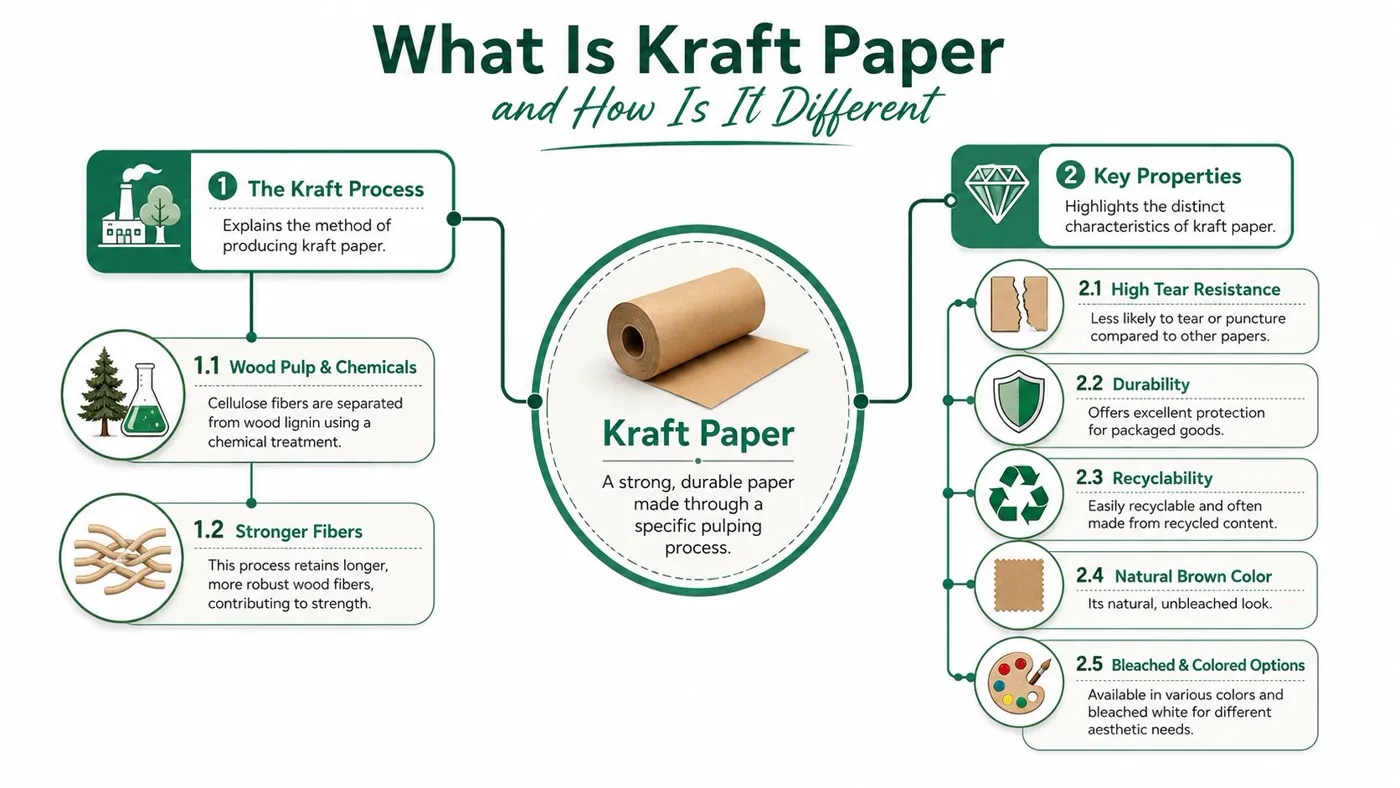
Kraft paper isn't just brown paper by another name. Kraft refers to the manufacturing process itself. The term describes a process that uses a strong alkaline mixture to chemically convert softwood chips into wood pulp, producing a 100% recyclable, tear-resistant material whose strength is directly related to its GSM, according to this explanation of what kraft paper is and how it is made.
Why the process matters
The easiest way to think about kraft paper is to compare it with fabric choices. Some materials are made for appearance first. Others are made to take stress, resist splitting, and hold up under repeated handling. Kraft sits in the second camp.
That's why it turns up so often in dispatch rooms, food packaging, protective wrapping, and industrial environments. The fibre structure gives it a tougher feel than many lighter presentation papers. It isn't waterproof, but it can offer moisture resistance when treated with wax or oil coatings, which is useful in some packaging contexts.
What buyers often confuse it with
A buyer searching quickly online can end up comparing kraft paper with parchment, butcher paper, tissue, or generic brown wrapping paper as if they all serve the same purpose. They don't.
Here's the practical difference:
| Material | Typical use | Commercial downside if misused |
|---|---|---|
| Kraft paper | Wrapping, void fill, box lining, protection | Can feel too rigid for delicate presentation if chosen too heavy |
| Tissue paper | Presentation, light wrapping | Tears too easily for real transit protection |
| Parchment or greaseproof styles | Food contact and moisture-related uses | Wrong choice for general warehouse wrapping |
| Generic thin brown paper | Basic wrapping or light covering | Often lacks the strength expected from kraft |
For businesses trying to simplify procurement, this matters. A single kraft paper roll can cover a surprising number of daily tasks. But it still needs to be matched to the job.
One broader option for companies reviewing paper-based alternatives is this range of Paper Packaging, which includes paper mailers, honeycomb bags, paper tape, kraft boxes and tissue in recyclable, plastic-free formats.
The useful question isn't “is it paper?” It's “what kind of paper performance does the packing bench actually need?”
How to Choose the Right GSM, Width, and Core Size
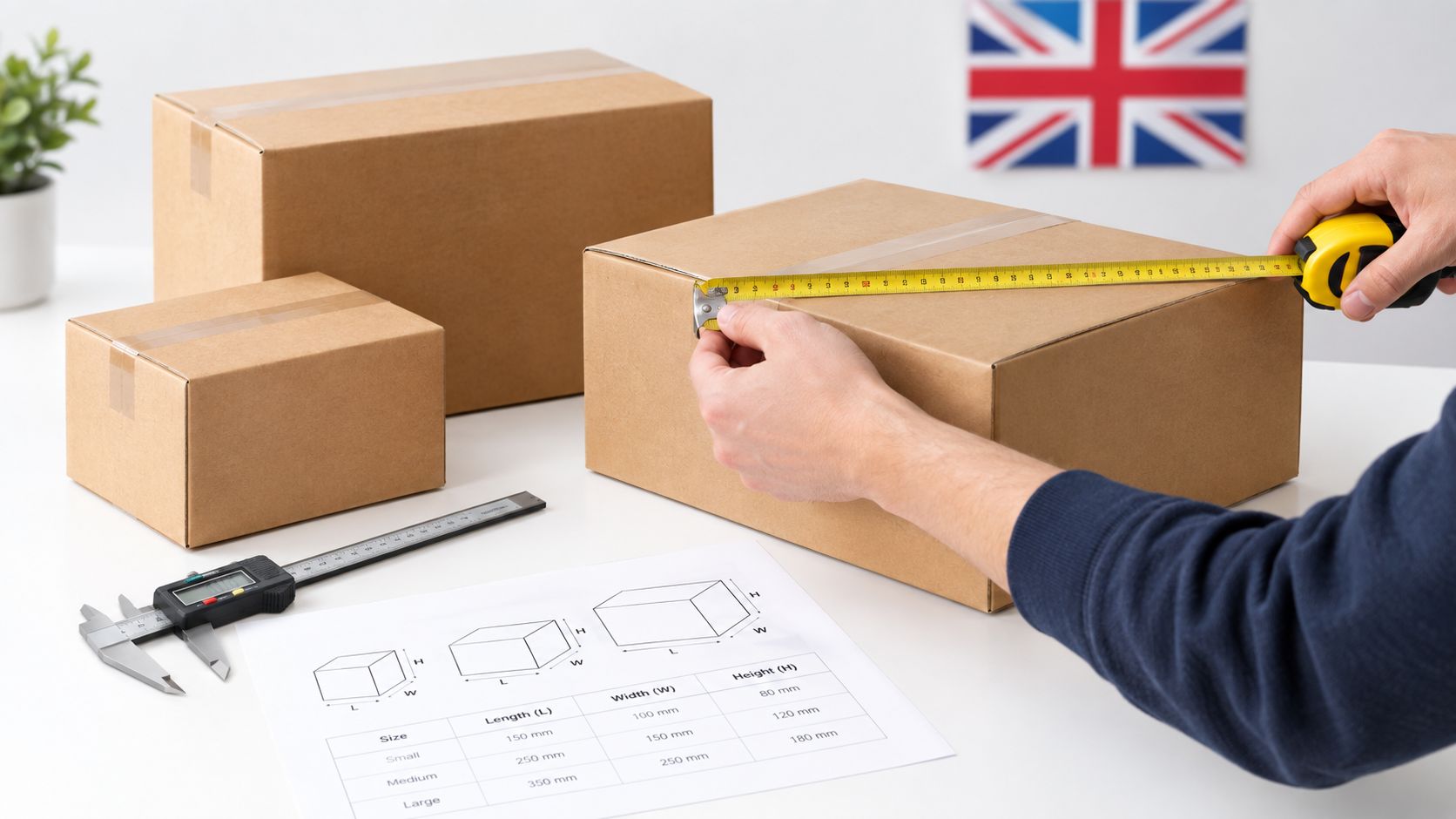
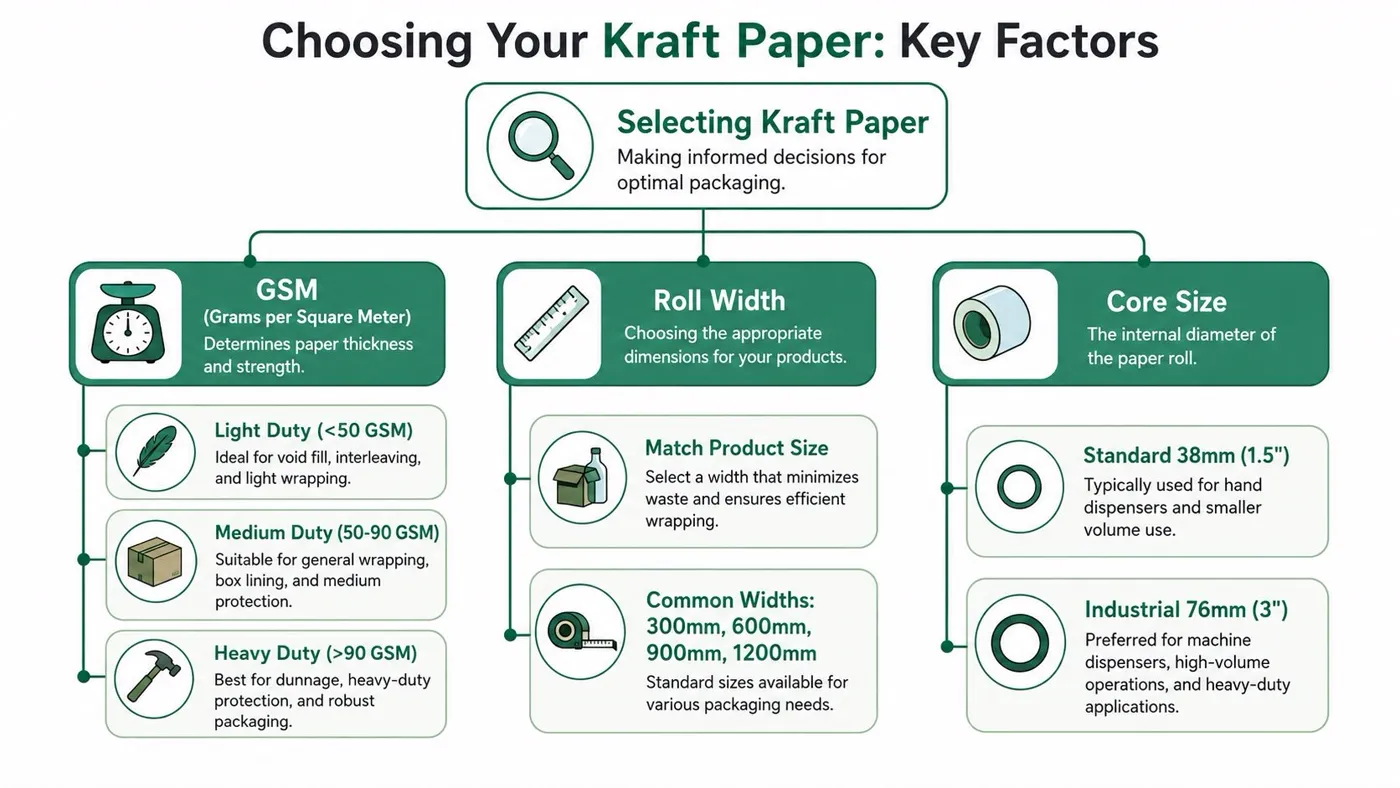
Most kraft paper roll buying errors happen in the specification line. Buyers focus on appearance, then gloss over GSM, width, and core size. Those three details determine how the paper behaves on the bench and what it costs to use properly.
A standard UK-grade pure kraft paper roll often features 70 g/m², a 900 mm width, and a 200-metre length, a specification engineered to balance tear resistance with material efficiency for e-commerce dispatch and surface protection, according to this UK kraft paper roll product specification.
GSM decides more than thickness
GSM tells a buyer how much paper mass sits in a square metre. In practical terms, it affects feel, tear resistance, and how much punishment the paper can take.
A simple buying framework works well:
- Lighter grades: better for interleaving, light wrapping, and jobs where flexibility matters more than toughness.
- Mid-range grades: often the safest all-round choice for general dispatch, box lining, and routine wrapping.
- Heavier grades: better suited to abrasive products, denser items, or dunnage-style use where the paper has to resist collapse.
The mistake is choosing heavy paper because it feels safer. If the products are light, a heavy sheet often adds cost and slows packing without adding meaningful protection.
Width affects waste more than most buyers realise
Width should be matched to the products packed most often, not the largest item packed once in a while. A wide roll looks versatile until staff start trimming every sheet for smaller orders.
A narrower roll can be more efficient for:
- Small goods: cosmetics, candles, accessories, bakery items.
- Bench work: hand wrapping where one operator needs control.
- Mixed orders: where smaller parcels dominate daily volume.
A wider roll makes more sense for larger boxed products, furniture parts, framed goods, or table-based wrapping where broad coverage is useful.
Core size is a compatibility issue
Core size is easy to ignore until the roll arrives and doesn't fit the dispenser. Then productivity drops immediately.
Before ordering, check:
| Spec detail | Why it matters | What to ask internally |
|---|---|---|
| GSM | Controls strength and handling | Does the paper need to wrap, cushion, or simply separate items? |
| Width | Affects waste and speed | What product sizes make up most daily orders? |
| Core size | Determines dispenser fit | Is the roll being used by hand, on a bench, or in a mounted setup? |
A practical selection method
Many businesses overcomplicate the choice. A simpler method works better:
- Start with the product category packed most frequently.
- Watch how the current paper fails, or where excess is being used.
- Match the new roll to the actual packing motion, not an idealised process.
- Confirm dispenser fit before placing a volume order.
A kraft paper roll should make the bench calmer, not more awkward. If staff need to fight the roll, double-wrap goods, or keep reaching for extra tape, the spec is wrong.
From Void Fill to Branded Wrapping Practical Applications
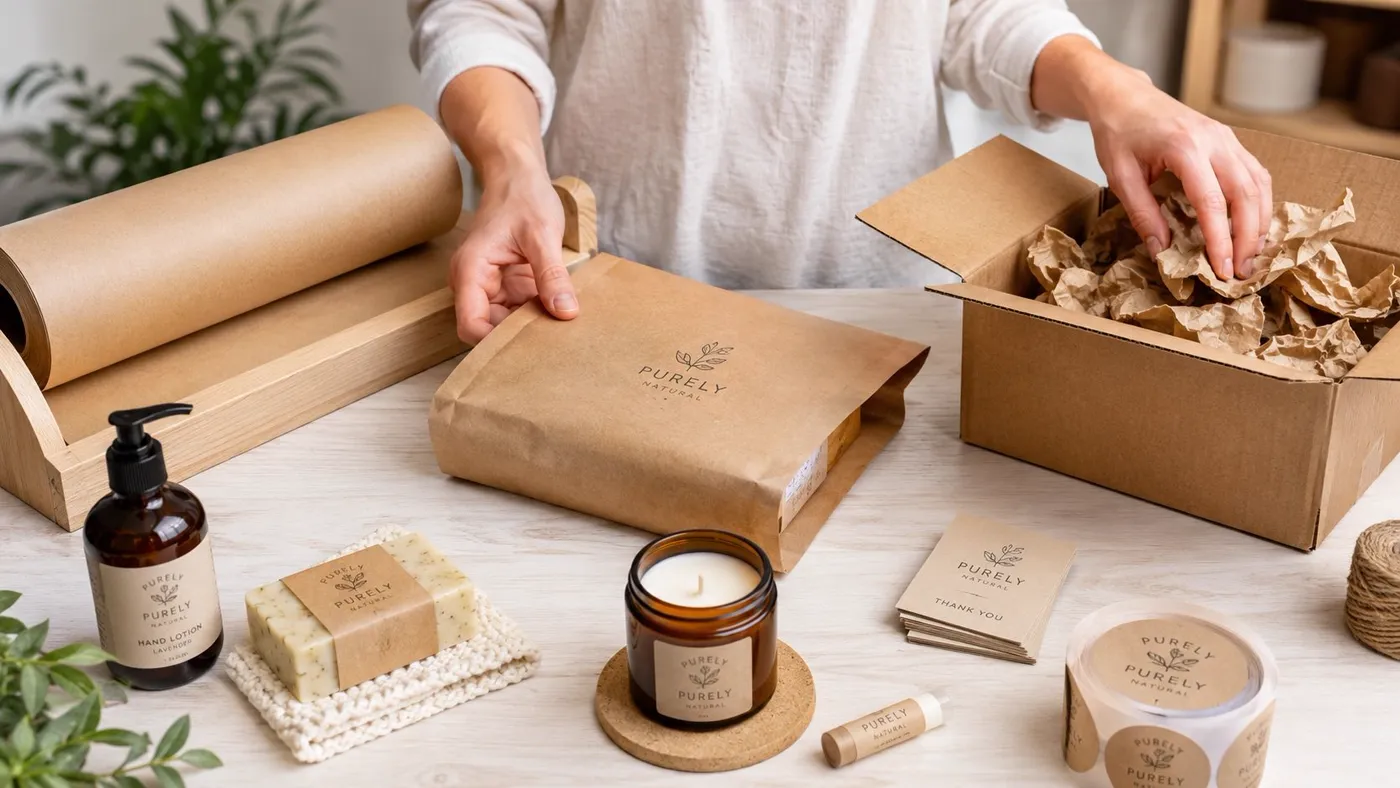
Kraft paper earns its keep because it adapts well. The same material can protect a ceramic mug, fill empty space around a tin of biscuits, line a gift box, or wrap a bakery item for collection. The value comes from using it properly, not putting paper into the parcel and hoping for the best.
Protective wrapping for fragile goods
When wrapping breakable products, the paper should create friction and light cushioning. It needs to stay in place around the item rather than slipping open the moment it's lifted.
Ceramics, glass jars, candle vessels, and hard giftware often benefit from multiple snug layers rather than one loose oversized sheet. The paper should be creased around edges and corners, where impact usually shows first.
Wrap to stabilise the product shape, not just to cover the surface.
Void fill that actually holds products in place
A lot of void fill is wasted because staff scrunch paper too tightly. Dense paper balls can leave open gaps around the product, which allows movement in transit.
Better void fill comes from looser crumpling with enough spring to absorb movement while still locking the item in place. That's especially useful for subscription boxes, mixed e-commerce orders, and retail shipments with several smaller units inside one carton.
For operations that want a paper-based protective option beyond plain rolls, Shredded Paper can suit gift packing, hamper assembly, and presentation-led void fill where colour and nest-style cushioning matter.
Layering and surface protection in busy packing areas
Kraft paper also works well as a separator. That use is less visible, but often just as valuable. Flat-packed items, printed cartons, coated surfaces, and products with delicate finishes can all pick up marks when stacked or moved across benches.
A simple interleaving layer can reduce:
- Scuffing between units: useful for painted or printed products.
- Dust transfer: especially in mixed storage spaces.
- Bench abrasion: where products are turned or packed at speed.
In workshops and warehouses, paper from a roll is often easier to control than pre-cut sheets because staff can pull exactly what they need.
Postal wrapping and retail presentation
Postal wrapping sits somewhere between protection and branding. Independent retailers, handmade product brands, and bakeries often use kraft paper to make a parcel feel considered without making it look over-packaged.
That's where finish matters. Crushed, torn, or badly cut paper undermines the effect. Clean folds, consistent sizing, and a simple closure method do more for presentation than overcomplicated decoration.
Some brands move from plain paper roll use into more engineered paper formats such as honeycomb mailers or coloured paper-based protective packs when they want stronger visual identity and a neater repeatable pack-out method. That's often a sensible next step once a business has stabilised its basic packing process.
Turning Your Kraft Paper into a Marketing Tool
Packaging is one of the few brand touchpoints every online customer physically handles. That gives even a plain kraft paper roll a marketing role. The question is whether the business uses it deliberately or leaves it as anonymous filler.
Plain paper can still build a recognisable look
A kraft wrap doesn't have to be custom printed to support the brand. A consistent fold, a branded sticker, a paper tape choice, or a repeatable insert card can make the parcel feel deliberate instead of generic.
That matters because customers don't separate packaging from the product experience. If the parcel feels careless, the brand feels careless. If the parcel feels measured and coherent, the product appears more trustworthy.
A useful way to frame this is to compare brand identity and branding. It helps explain why the visual system, tone, materials, and customer impression need to align rather than being treated as separate decisions.
When custom print makes sense
Custom print can work well for businesses with regular order volume and a stable packaging format. It's especially effective where the outer presentation supports gifting, repeat purchase, or social sharing.
It tends to make less sense when:
- product sizes vary constantly
- the business is still testing fulfilment methods
- several paper formats are being trialled at once
- damage reduction is still the main operational priority
In those cases, plain kraft plus a branded seal or tape is often the cleaner first move.
A branded pack doesn't need to be elaborate. It needs to feel intentional every single time.
The commercial trade-off
There is always a balance between presentation and efficiency. Heavier printed wraps can look strong but may slow hand packing. Decorative additions can improve unboxing but create material complexity if they're layered carelessly.
The strongest approach is usually restrained. Let the paper provide texture and warmth. Let the logo or closure method provide recognition. Keep the pack-out routine simple enough that staff can repeat it consistently on a busy day.
Navigating Sustainability and EPR Compliance in the UK
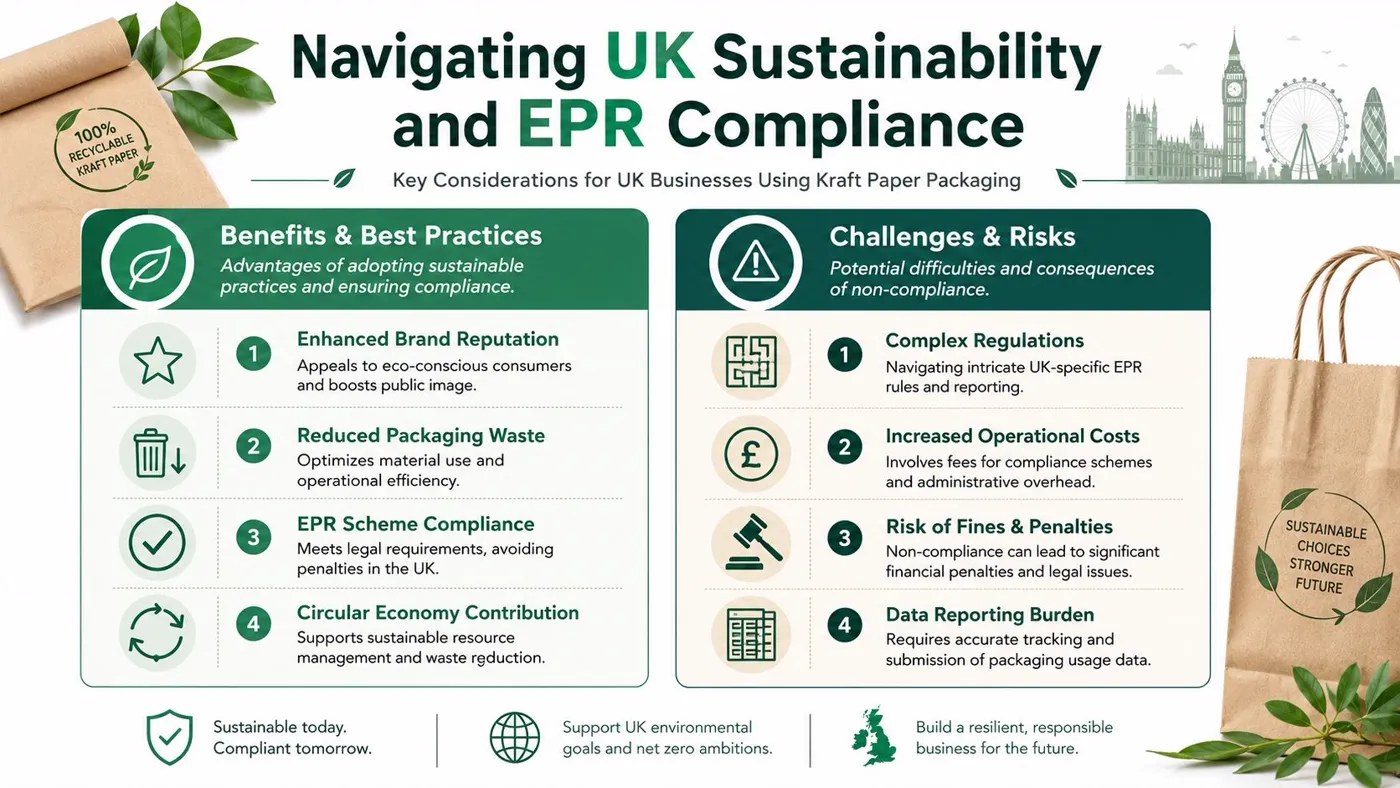
Many businesses assume kraft equals compliant. That's where trouble starts. A kraft paper roll can support a better packaging mix, but the environmental story depends on what has been added to it, how it is sourced, and how the final pack is assembled.
Why recyclable is only the starting point
Kraft paper has a strong baseline case because it is widely understood as recyclable and paper-based. That's useful. Customers recognise it, and internal teams often prefer working with a material that feels simpler than mixed plastic formats.
But “paper” on its own doesn't settle buying questions. A business still needs to know whether the roll includes coatings, added layers, or adhesive-related features that change how the packaging is classified and reported. For companies trying to stay current, this overview of UK packaging waste regulations is a useful starting point for the broader compliance context.
Where EPR problems usually start
Under 2025 UK EPR rules, using mono-materials such as pure kraft paper can reduce reporting burden and RAM fees, but adding non-compliant adhesives or coatings can disqualify the whole package from that status and increase obligations, as outlined in this guidance on sustainable packaging trends for 2025.
That has a direct implication for procurement. The roll itself may look compliant. The problem often appears when businesses add labels, laminated finishes, or surface treatments without checking how the full packaging line is treated.
A few practical checks help:
- Ask for material clarity: confirm whether coatings or treatments affect mono-material status.
- Review the full pack, not one item: tape, labels, windows, seals, and wrap all matter together.
- Keep reporting in mind at purchase stage: don't leave technical questions until finance or compliance teams are preparing submissions.
The costly mistake isn't choosing kraft paper. It's assuming every kraft-based pack automatically behaves as a mono-material pack under UK rules.
Deforestation risk is now a buying issue
There's another blind spot. A paper-based format can still raise sourcing questions if the supplier gives little visibility on recycled content or forest risk controls.
EcoEnclose advises businesses to prioritise recycled paper content where possible and examine supply chains to ensure purchases do not contribute to forest loss, in this discussion of sustainable packaging trends of 2025. For UK firms, that creates a practical procurement task. Supplier conversations need to go beyond “is it recyclable?” and move toward “what evidence exists on recycled content, source responsibility, and material treatment?”
For merchants selling online, sustainability also needs to be reflected in the storefront and customer communication. This guide to sustainable Shopify stores is useful for aligning packaging choices with the way those choices are presented to customers.
Making the Smartest Kraft Paper Choice for Your Business
The smartest kraft paper roll isn't the thickest, the cheapest, or the most obviously eco-looking. It's the one that fits the products, the bench setup, the customer experience, and the reporting reality of the business.
A buyer usually gets to the right answer faster by asking operational questions instead of browsing by price first.
A short buying checklist
| Question | Why it matters |
|---|---|
| What is being packed most often? | This determines the sensible GSM and width starting point. |
| Is the paper wrapping, filling, lining, or presenting? | One material can do several jobs, but not always equally well. |
| How do staff actually use it? | Bench workflow often matters more than catalogue description. |
| Does the roll fit existing dispensers or packing stations? | A mismatch creates immediate friction. |
| What does the packaging need to say about the brand? | Natural, minimal, premium, practical, giftable, or industrial all require different choices. |
| Could coatings, tapes, or added materials create compliance issues? | EPR consequences sit in the total packaging format, not only the roll itself. |
| What sourcing evidence is available? | Businesses need more than broad green language. |
What tends to work and what doesn't
What works is a controlled, repeatable paper setup. The product is wrapped securely, the void fill holds shape, the parcel looks tidy, and the material mix is simple enough to explain internally.
What doesn't work is chasing a low unit price while ignoring waste, speed, dispenser fit, and reporting complexity. Those costs always show up somewhere else.
A kraft paper roll should solve problems across dispatch, presentation, and packaging management. When chosen well, it becomes one of the most useful materials in the packing area. When chosen badly, it becomes another quiet source of waste.
For UK businesses reviewing paper-based packaging options, Packaging Panda supplies wholesale packaging materials including sustainable paper formats, bespoke packaging options, volume pricing, and next-day delivery on orders placed before 2pm. That makes it a practical point of comparison for teams that want to standardise packaging choices and discuss made-to-order requirements with a UK supplier.