How to Seal Cellophane Bags: A Practical UK Guide
A packing bench can look perfectly organised until a batch of clear bags starts opening during handling. The usual cause isn't a lack of effort. It's a material mismatch. A bag sold as “cello” may be true regenerated cellulose, polypropylene, or cellulose with a coating, and each behaves differently when someone reaches for a heat sealer.
That distinction affects more than appearance. The closure influences packing speed, product protection, food-contact compliance, equipment costs and waste. The practical answer to how to seal cellophane bags starts with identifying the film, then choosing the simplest closure that gives the product the protection and presentation it needs.
Table of Contents
- Understanding Cellophane Bag Types and Sealing Needs
- Choosing the Right Sealing Method for Your Operation
- Mastering Heat Sealing Techniques and Safety
- Effective Manual Sealing with Ties and Adhesives
- Sustainability and Compliance in Sealing Choices
Understanding Cellophane Bag Types and Sealing Needs
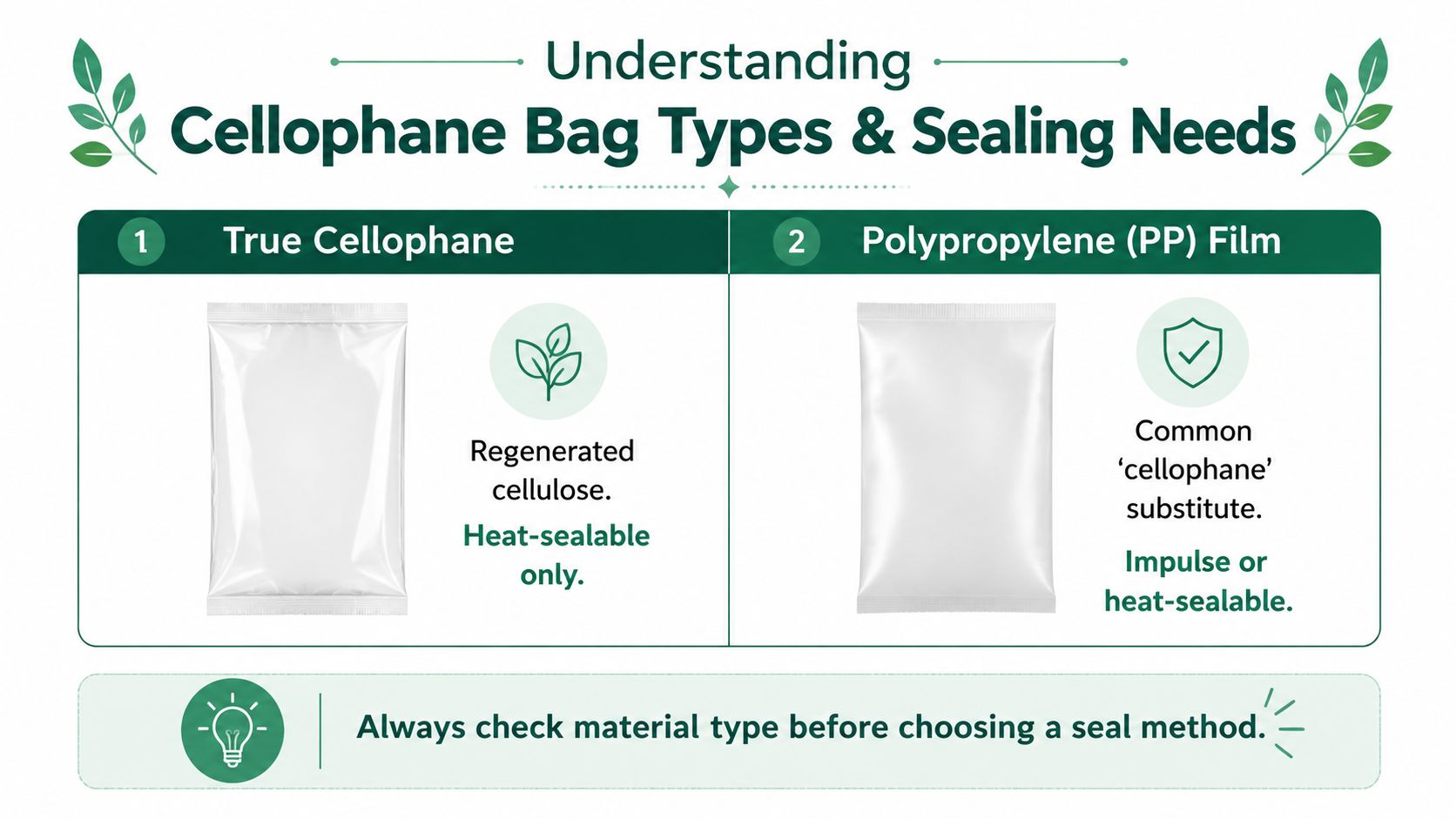
The word “cellophane” is used loosely in retail packaging. True cellophane is regenerated cellulose, a glossy, transparent film that's odourless, tasteless and biodegradable within approximately 100 days, according to UK standards material on plastic and cellulose films. Plain cellulose isn't heat sealable, so a standard flat polythene sealer may scorch it, fail to close it, or leave a weak and untidy edge.
That makes the first check simple. Read the supplier specification rather than relying on the bag's clarity or the product title. Polypropylene sleeves can look almost identical to true cellophane, while plastic-coated cellulose may have a heat-sealable surface that plain cellulose lacks.
Match the closure to the film
For a bag made from plain cellulose, use a fold, tie, adhesive label or clip. These methods suit products such as fresh bread and some sugar confectionery where a complete moisture or gas barrier isn't required. They also preserve the crisp, transparent retail appearance without exposing the film to unsuitable heat.
A bag made from polypropylene may be compatible with an impulse sealer, provided the manufacturer specifies that method. Plastic-coated cellulose can also be heat sealable, but the coating changes the technical and food-contact requirements. A heat-sealable surface doesn't mean every setting or sealer will produce a reliable closure.
Practical rule: Never select a sealing temperature from the bag's appearance. Select it from the film specification and confirm it with a small production test.
The UK standards material treats cellulose and plastic films as distinct packaging categories, reinforcing the point that composition, not appearance, determines sealing performance. For businesses sourcing clear cellophane bags, the material description should be checked before equipment is ordered.
Retail presentation still matters. A folded top with a neat sticker can suit handmade bakery goods, while a straight heat seal may look cleaner on a high-volume gift line. The right closure is the one that keeps the bag closed without obscuring the product, creating sharp edges, or adding equipment that the operation doesn't need.
Choosing the Right Sealing Method for Your Operation
The most suitable closure depends on film type, batch size, product shape and the required finish. A small cake shop packing varied products may gain more from self-seal flaps and labels than from a machine. A fulfilment line handling consistent bag sizes may justify heat-sealing equipment, provided the film supports it.
| Method | Operating cost | Speed and consistency | Suitable film or bag design |
|---|---|---|---|
| Impulse heat sealer | Equipment purchase, low routine handling | Fast for repeatable open edges | Heat-sealable polypropylene and specified coated films |
| Constant-heat crimp sealer | Equipment purchase and setup | Consistent crimp profile for suitable films | True cellophane or polypropylene where supplier guidance supports it |
| Twist tie, ribbon or clip | Low equipment requirement | Flexible, but operator-dependent | Plain cellulose and necked bags |
| Adhesive strip or sticker | Low equipment requirement | Quick for small batches | Plain cellulose, self-seal bags and presentation packs |
An impulse sealer applies a short burst of heat through a sealing wire. It's widely used for cellophane-style bags, poly tubing, layflat tubing and foil-containing packaging, as described by UK packaging guidance on impulse heat sealers. It's a sensible choice when the material is confirmed as heat sealable and the operator needs a clean, straight closure.
A crimp-style or constant-heat sealer is often more practical for true cellophane. Supplier guidance distinguishes true cellophane from polypropylene and specifies a crimp sealer for cellophane, polypropylene and barrier foil, with a 150mm x 15mm crimp seal in one UK example, as shown in this UK heat-sealer guidance. The crimp profile helps create a closure without treating plain cellulose like ordinary plastic.
When manual closure wins
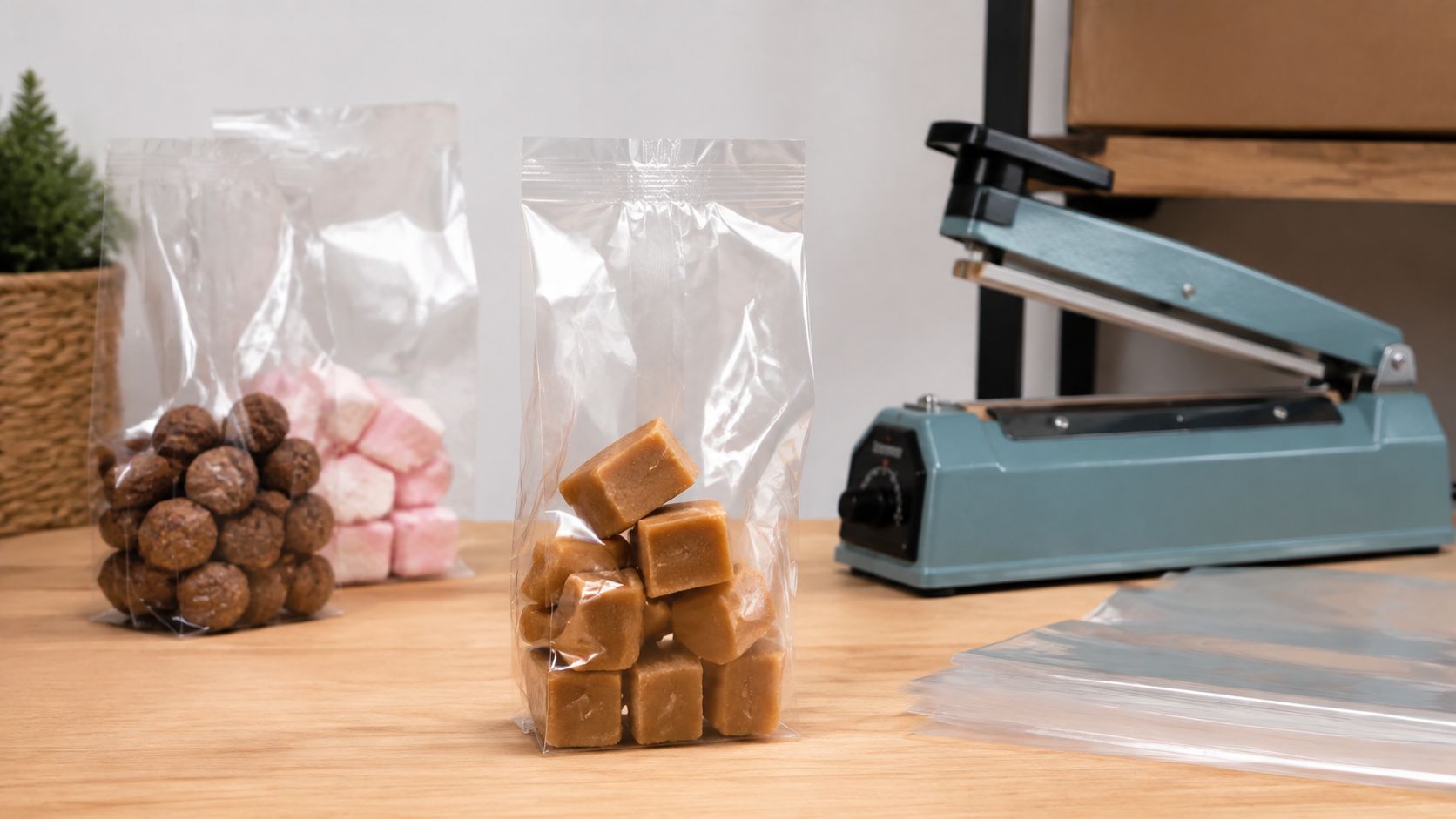
Manual methods work well when pack sizes vary, products have irregular shapes, or the operation values a crafted appearance. A tie or sticker also avoids buying a machine for a product that doesn't require a permanent sealed barrier.
Self-seal designs use a peel-and-stick strip and fold-over flap, allowing quick closure with two hands and no tape dispenser, according to UK guidance on self-seal cellophane bags. Bags without a resealable flap can be tied with ribbon, closed with a sticker or heat sealed.
The practical choice is therefore not “machine versus no machine”. It's the lowest-complexity closure that stays closed through the intended handling process. Clear Cellophane Bags are used for retail display, gift packaging and food presentation, with compostable options available and free delivery over £150. Those applications can call for very different closure decisions.
Mastering Heat Sealing Techniques and Safety
Heat sealing works by applying heat so compatible packaging layers soften and fuse into a secure, tamper-evident seal. That mechanical principle is set out in the UK packaging glossary definition of heat sealing, but the practical result depends on film, machine condition and operator control.
Before production begins, the operator should confirm that the bag is heat sealable. Plain regenerated cellulose mustn't be treated as if it were polypropylene or coated cellulose. If the supplier has provided recommended settings, those should take priority over generic machine guidance.
Using an impulse sealer
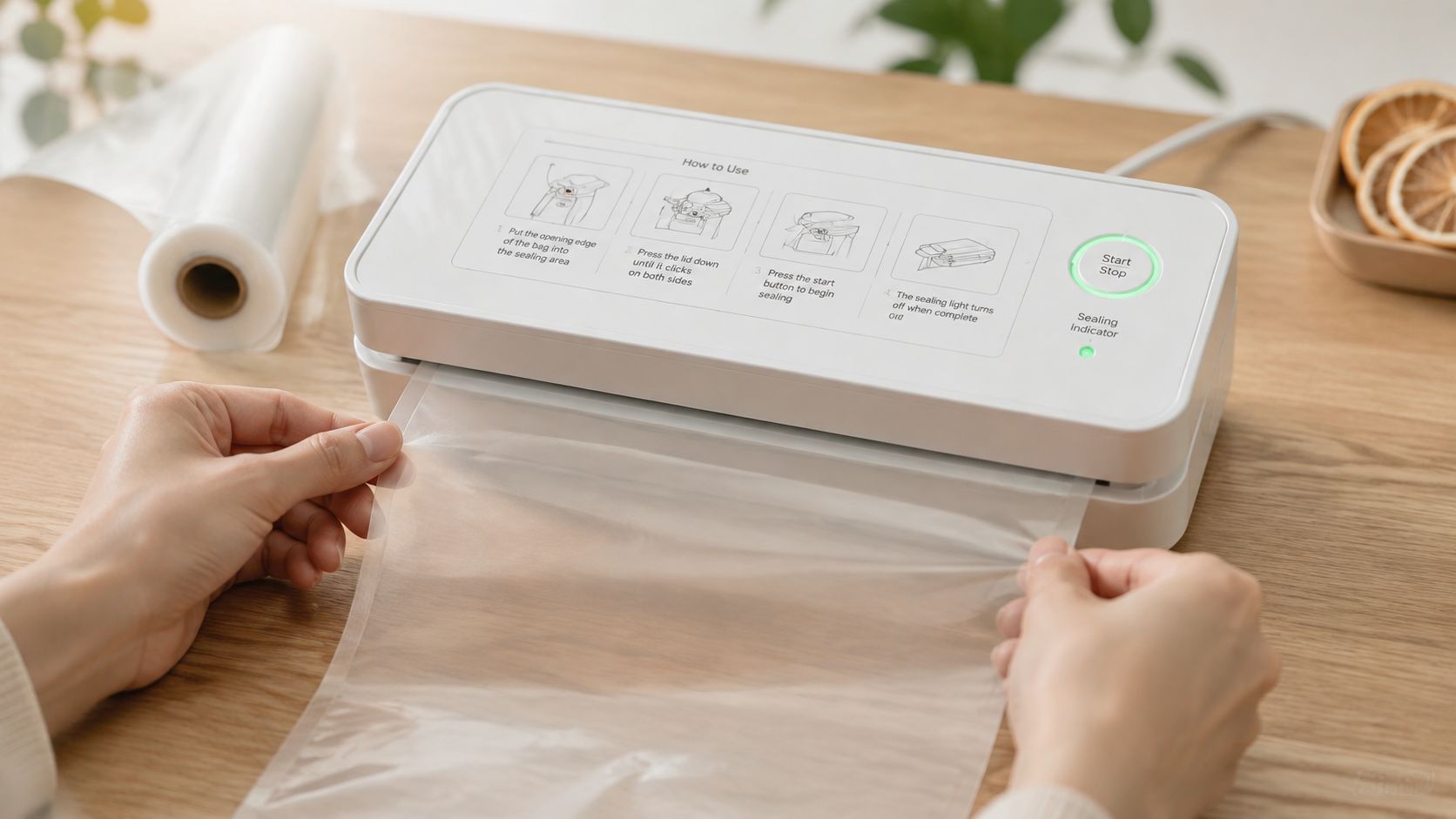
An impulse sealer is best approached as a controlled test rather than a device that can be set once for every film.
- Prepare the opening. Remove crumbs, oil, moisture and folds from the sealing area. Contamination prevents the layers from meeting evenly.
- Align the film. Keep the open edge flat and straight across the sealing jaw. A crooked presentation can create channels where the closure doesn't fuse.
- Begin with the manufacturer's setting. Use the lowest setting that produces a continuous seal, then inspect the result after cooling.
- Test the closure. A sound seal should be continuous and firmly attached, without holes, scorching, excessive thinning or visible distortion.
- Repeat under production conditions. Test with the actual product inside, because filling tension and crumbs can change how the film sits in the jaw.
The operator should adjust time or heat gradually, not both aggressively at once. Too little energy leaves an incomplete seal. Too much can melt, wrinkle or weaken delicate film.
Using a crimp sealer safely
A constant-heat crimp sealer creates a patterned closure rather than a simple flat line. It's useful where the equipment and film specification support that profile, particularly for cellophane and barrier materials.
Keep hands clear of heated jaws, use guards where supplied and place the machine on a stable bench. Busy packing areas also need sensible ventilation, especially when a material or coating produces an odour during testing. Operators should isolate power before clearing scraps or carrying out cleaning, and training should cover burn prevention as well as seal quality.
A vacuum sealer isn't automatically the answer. True cellophane can be unsuitable for vacuum applications, and a strong-looking closure may still be wrong for the film or product. For related material decisions, teams can also review guidance on compostable mailing bags, but the bag specification must always govern the equipment choice.
Effective Manual Sealing with Ties and Adhesives
Manual closure is often the most sensible option for small batches, changing product sizes and delicate goods. It avoids heat near chocolate, decorated cakes or sensitive labels, and it lets operators close a bag without flattening the contents.
For a plain cellulose bag, the process starts with a controlled fold. The operator should gather the open neck above the product, remove excess slack without crushing the contents, and fold the material consistently before applying the tie or label. The fold gives the closure a defined shape and stops a loose top from looking unfinished on the shelf.
Choosing ties and clips
Twist ties suit routine packing because they're quick to apply and easy for customers to remove. Ribbon gives a more decorative finish, while a clip works well on a necked bag that may need to be opened and closed during display.
The closure must match the load. A heavy or awkward product needs a tie that grips the gathered film without cutting into it. A sharp tie edge can puncture thin cellulose, so the operator should check finished packs for tears rather than judging the closure by appearance alone.
A neat tie is not a secure tie if the gathered film is under tension or the product can push into the closure during transit.
For self-seal bags, the adhesive strip removes much of that variation. The operator should keep the flap and receiving surface clean, peel back the liner without touching the adhesive, fold the flap along its intended crease and press across the full strip. A partial press can leave an opening at one corner.
Adhesive labels and hot-melt use
A sticker can close a plain cello bag while adding branding or a batch mark. It isn't a substitute for a moisture or gas barrier, so the product and distribution conditions should determine whether that level of closure is adequate.
Adhesive choice matters. Packaging teams considering hot-melt applications can refer to guidance on hot-melting glue, but glue should never be allowed to contact food unless the complete packaging system has been assessed for its intended use. For food display, a simple external label is usually easier to inspect and replace than an improvised adhesive bond.
Manual closure also creates a quality-control task. Sample packs during a run, check that the film hasn't split around the fold, and confirm that the chosen tie, clip or strip survives normal picking and presentation. Where failure would expose food or cause returns, a machine-sealed or purpose-designed self-seal format may justify its added cost.
Sustainability and Compliance in Sealing Choices
The strongest closure isn't automatically the most responsible choice. A permanent heat seal can support product protection, but it may add equipment, energy use or material complexity where a fold, label or self-seal flap would perform adequately. UK packaging policy is increasingly focused on reducing packaging placed on the market and increasing recyclable material use, so the closure should be judged as part of the complete pack.
The 2025 UK EPR base fee for plastic packaging is £423 per tonne, with modulated fees tied to recyclability ratings for 2026 to 2027, according to the PackUK interim strategy. Those figures don't determine the correct seal on their own, but they make material and closure choices commercially relevant. A simpler closure may support easier separation or lower material complexity, while a coated structure can require more careful assessment.
Food-contact checks
Food packaging must be suitable for its intended use. UK rules for regenerated cellulose film coated with plastic set an overall migration limit of 10 mg/dm2, or 60 mg/kg where the item is a container or sealing device such as a cap, gasket or stopper, as stated in UK food-contact legislation.
The regulation also requires appropriate food-contact marking where the use isn't obvious, including the words “for food contact” or the fork-and-glass symbol. A closure system using heat-sealable coated cellulose therefore needs two checks: it must seal effectively, and its materials must be appropriate for contact with the food and the intended conditions.
For brands reviewing a wider food-packaging range, it can be useful to find sustainable coffee packaging solutions alongside the bag and closure review. The same questions apply: what barrier is required, how will the pack be opened, what materials are present, and how will the packaging be managed after use?
The best decision may be not to seal permanently. A label, tie or clip can reduce equipment spend and improve openability when the product doesn't need a complete barrier. The correct approach is to test the finished pack for handling, hygiene, presentation and disposal, then document why that closure was selected.
Packaging Panda supplies cellophane bags for retail display, gift packaging and food presentation, alongside other UK packaging formats for fulfilment and dispatch. Visit Packaging Panda to compare suitable bag options and choose a closure approach that fits the film, product and packing operation.